


A new cross-country study published in Frontiers in Sustainability has found that households in Ghana, Sierra Leone, and Zambia are broadly willing to separate their plastic waste for recycling, but that a combination of missing infrastructure, absent economic incentives, and low technical knowledge is preventing good intentions from becoming good outcomes. The research, led by Elijah Afeliga of Dr. Hilla Limann Technical University in Ghana, surveyed 216 respondents across the three Sub-Saharan African countries and used statistical tools including the Chi-square test and the Kruskal-Wallis H test to compare household behavior, disposal practices, and recycling awareness.
The study is grounded in the Social Ecological Model, a framework that holds that individual behavior is shaped not only by personal knowledge but also by interpersonal, community, institutional, and policy-level factors. In the context of plastic waste, this means that household recycling is not simply a matter of personal willingness but depends on enabling conditions such as segregation bins, educational campaigns, incentive programs, and regulatory enforcement. The researchers argue that understanding these multiple interacting levels is essential for designing interventions that actually work, rather than relying on awareness campaigns alone.
Plastic pollution is a particularly acute problem in the region. Sub-Saharan Africa’s annual plastic importation and production are estimated at 117.6 million metric tons, with roughly 80 percent ending up as solid waste. In Ghana alone, about 8.2 billion sachets of drinking water are consumed each year, and improper disposal has resulted in approximately 86 percent of the country’s plastic waste clogging stormwater drains, rivers, and streams, with an estimated 250,000 metric tons eventually reaching the Atlantic Ocean. Sierra Leone imported 9 million kilograms of plastic in 2019 alone, 92 percent of which came from Ghana, illustrating the regional nature of the problem.
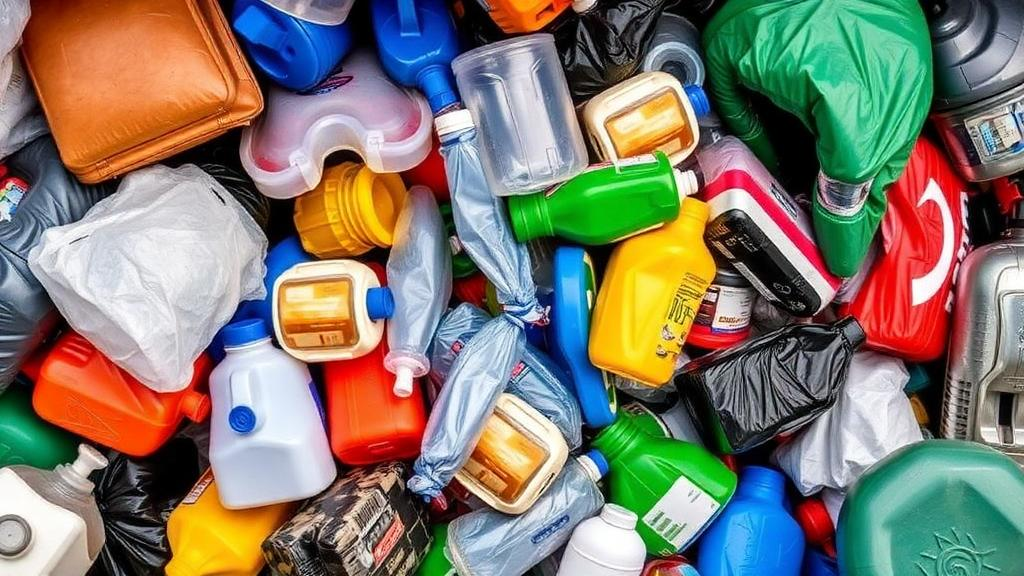
The survey found that households across all three countries generate similar forms of plastic waste, dominated by sachet bags, plastic bottles, shopping bags, food packaging, and detergent packs. In Ghana, more than half of respondents reported generating all five waste types, reflecting the country’s high consumption of packaged goods. When asked how they dispose of plastic waste, the most common practice in all three countries was dumping it in bins, with burning as the second most frequent method. The persistence of open burning, the researchers note, has serious implications for air quality, greenhouse gas emissions, and human health, and reflects deficiencies in waste collection services and the absence of alternative disposal mechanisms.
One of the most striking findings concerns knowledge of plastic recycling symbols. The Society of the Plastics Industry introduced a coding system in 1988 that places a numbered triangle on most plastic products to indicate the type of polymer, ranging from PETE (polyethylene terephthalate) used in beverage bottles to HDPE, PVC, LDPE, PP, PS, and a miscellaneous category labeled OTHER. Despite the high educational attainment of the sample, with 96.3 percent of respondents holding tertiary qualifications, awareness of these symbols was generally low. Knowledge of the PETE symbol was comparatively higher, particularly in Zambia at 51.35 percent and Ghana at 34.45 percent, while Sierra Leone recorded just 12.28 percent. Awareness of PS and OTHER symbols was particularly poor, with roughly one-tenth of respondents reporting knowledge of these classifications.
Chi-square analysis revealed statistically significant differences among the three countries in knowledge of the PETE and HDPE symbols, suggesting that exposure to recycling activities and public awareness campaigns varies across national contexts. However, knowledge of PVC, LDPE, PP, PS, and OTHER symbols did not differ significantly, indicating that poor awareness of less common polymer classifications is a shared challenge across the region. The researchers interpret this as evidence that formal education does not necessarily translate into technical understanding of recycling systems, and that environmental literacy depends more on exposure to recycling information than on educational attainment alone.
The study also examined the role of economic incentives and institutional support. A significant majority of respondents, 77.31 percent, had never received rewards in the form of money or household goods in exchange for their plastic waste, and only 8.33 percent had been given dustbins by authorities for plastic waste segregation. Furthermore, 85.19 percent of respondents had never received visits from regulators or officials to educate them about waste segregation. These findings point to weak institutional engagement and largely absent incentive mechanisms within household recycling systems across all three countries.
Despite these barriers, respondents expressed broad support for potential interventions. Overall, 74.54 percent believed that measures such as household goods exchange programs, provision of segregation buckets, and periodic visits by officials would effectively increase household waste segregation. Notably, the Kruskal-Wallis H test found no statistically significant difference among the three countries in perceptions of intervention effectiveness, suggesting that households across different national contexts share broadly similar views on what would help. The researchers cite previous work in Mozambique, where providing sorting bins and conducting periodic home visits significantly boosted household waste segregation, as evidence that such approaches can succeed when implemented.
The study’s authors conclude that improving household plastic waste segregation in Ghana, Sierra Leone, and Zambia requires integrated interventions that combine public education, provision of segregation facilities, incentive schemes, and strengthened regulatory support. They argue that policies aimed at improving plastic waste management should be tailored to country-specific conditions rather than adopting a uniform approach across Sub-Saharan Africa, given the variations in socio-economic and institutional contexts observed. They also note that introducing deposit-refund systems, plastic buy-back schemes, and household goods exchange programs could increase the supply of recyclable materials and strengthen the circular economy in the region.
The research contributes to a growing body of literature on household plastic waste management in developing countries and provides empirical evidence to support the design of sustainable waste management policies. By demonstrating that household behavior is shaped by interactions between individual awareness and institutional support systems rather than by personal attitudes alone, the findings underscore the need for coordinated efforts addressing behavioral, institutional, and infrastructural barriers simultaneously if Sub-Saharan Africa is to transition from a linear take-make-dispose model toward a functioning circular plastic economy.
Subject of Research: Household plastic waste segregation, disposal practices, and recycling awareness in Ghana, Sierra Leone, and Zambia
Article Title: Comparative assessment of household plastic waste segregation, disposal practices, and recycling awareness in Ghana, Sierra Leone, and Zambia
Article References: Afeliga, E., Essuman, M. A., Hamidu, I., Asamoah, K., Munyenyembe, H., Odis, A. I., & Lavalie, E. D. M. (2026). Comparative assessment of household plastic waste segregation, disposal practices, and recycling awareness in Ghana, Sierra Leone, and Zambia. Frontiers in Sustainability, 7, Article 1816953. https://doi.org/10.3389/frsus.2026.1816953
Image Credits: AI Generated
DOI: 10.3389/frsus.2026.1816953
Keywords: plastic waste, recycling, household segregation, Sub-Saharan Africa, circular economy, waste management, Ghana, Sierra Leone, Zambia, recycling symbols, economic incentives, Social Ecological Model
Cite Scienmag News
Reese Ellison. (October 16, 2026). Households Across Ghana, Sierra Leone, and Zambia Want to Recycle Plastic, but Barriers Keep Getting in the Way. Scienmag. https://scienmag.com/households-across-ghana-sierra-leone-and-zambia-want-to-recycle-plastic-but-barriers-keep-getting-in-the-way/
Reese Ellison. "Households Across Ghana, Sierra Leone, and Zambia Want to Recycle Plastic, but Barriers Keep Getting in the Way." Scienmag, 16 October 2026, https://scienmag.com/households-across-ghana-sierra-leone-and-zambia-want-to-recycle-plastic-but-barriers-keep-getting-in-the-way/. Accessed 16 October 2026.
Reese Ellison. "Households Across Ghana, Sierra Leone, and Zambia Want to Recycle Plastic, but Barriers Keep Getting in the Way." Scienmag. October 16, 2026. https://scienmag.com/households-across-ghana-sierra-leone-and-zambia-want-to-recycle-plastic-but-barriers-keep-getting-in-the-way/


