


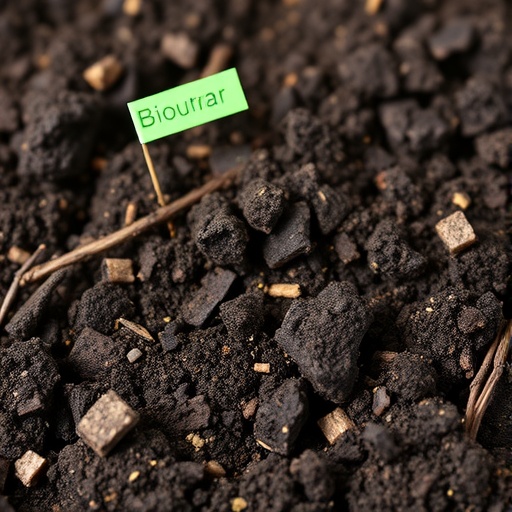
In the realm of environmental science, understanding soil contamination and remediation pathways is vital for sustainable agriculture and ecosystem management. Recent advancements in bioremediation practices draw attention to innovative amendments capable of sequestering heavy metals in the soil, effectively mitigating their detrimental effects on crops and the wider environment. A remarkable study conducted by researchers Gholami and Rahimi has surfaced, highlighting the potential of thiourea-modified biochar derived from wheat straw for the adsorption of hazardous metals including cadmium (Cd), nickel (Ni), and zinc (Zn).
Biochar, a carbon-rich material produced from the thermal decomposition of organic matter, is increasingly recognized for its multifaceted benefits in soil health. Derived from renewable biomass sources, such as agricultural residues, biochar not only improves soil structure but also enhances nutrient retention and microbial activity. However, the application of plain biochar may not be sufficient in addressing the challenges posed by metal contamination. Thus, the modification of biochar has emerged as a pivotal area of research aimed at increasing adsorption capacities for specific pollutants.
The study delves deep into the modification process, with a focus on thiourea, a compound known for its chelating properties. By treating biochar with thiourea, researchers have aimed to enhance its surface characteristics and functional groups. This modification mechanism is crucial because it allows the biochar to form stable complexes with heavy metal ions, effectively increasing its adsorption capacity. The research is not merely theoretical; it is underpinned by a series of meticulous laboratory experiments that quantify the efficiency of thiourea-modified biochar in soil adsorption scenarios.
Initial results from the study indicate a significant improvement in the binding of Cd, Ni, and Zn when thiourea-modified biochar is introduced into contaminated soil samples. This finding is pivotal, considering that heavy metal uptake by plants poses direct threats to human health through the food chain. By leveraging such modifications, researchers hope to develop a more effective and environmentally friendly approach to soil remediation, thereby safeguarding agricultural productivity and public health.
In addition to the elemental focus on heavy metals, the study also emphasizes the broader implications of utilizing agricultural waste for biochar production. Wheat straw is abundantly available in numerous regions, often viewed as a waste product with limited economic value. By converting this surplus biomass into an effective soil amendment, we not only tackle the issue of waste management but also contribute to the circular economy. It is a striking example of how agricultural practices can be reimagined to align with environmental sustainability goals.
Moreover, the impact of thiourea-modified biochar extends beyond just absorption rates. The study discusses how these modifications can influence the microbial dynamics within the soil. Healthy soil ecosystems are founded on complex interactions between plants, microorganisms, and organic matter. Enhancing microbial interactions through biochar contributes to improved soil health, which is critical for maintaining soil fertility and resilience against future contaminations.
The research findings are timely and relevant, given the escalating concerns over soil health and food security in the context of climate change. Global agri-food systems are under increasing stress due to declining soil quality, making studies like this an integral part of developing responses to these challenges. The innovative use of thiourea-modified biochar exemplifies how interdisciplinary approaches can yield practical solutions to complex environmental problems.
On a practical level, the implementation of thiourea-modified biochar offers a dual benefit. Farmers and land managers can improve the agricultural viability of contaminated lands while also contributing to environmental remediation. By integrating such practices, the agricultural sector can play a crucial role in combating pollution and enhancing sustainability. This aligns with global efforts aimed at enhancing the resilience of agriculture in the face of emerging environmental challenges.
Furthermore, prospects for future research in this area are vast. The exploration of different agricultural residues in the biochar synthesis process, combined with various chemical modifications, presents opportunities for developing tailored amendments suited for specific contaminants or soil types. This adaptability could prove essential in regions where specific metals are of greater concern, thus optimizing remediation strategies.
As regulatory frameworks surrounding soil contamination tighten globally, the necessity for effective remediation technologies becomes increasingly pertinent. Thiourea-modified biochar may not only provide a remedy for existing soil pollution but also an operational blueprint for sustainable agriculture practices that work in harmony with natural ecosystems. The study by Gholami and Rahimi sheds light on a path forward, advocating for the need to rethink soil management strategies in the modern agricultural paradigm.
In conclusion, the implications of this recent research are profound and multifaceted, addressing not only immediate environmental concerns but also enhancing agricultural resilience and sustainability. The innovative utilization of agricultural waste in the form of thiourea-modified biochar presents a compelling case for integrating science, environmental stewardship, and agricultural practices. With ongoing research and development, the potential for transformative change in how we approach soil health is within reach, promising a healthier planet for future generations.
Cite Scienmag News
Alan Morgan. (December 2, 2025). Thiourea-Modified Biochar Enhances Metal Adsorption in Soil. Scienmag. https://scienmag.com/thiourea-modified-biochar-enhances-metal-adsorption-in-soil/
Alan Morgan. "Thiourea-Modified Biochar Enhances Metal Adsorption in Soil." Scienmag, 2 December 2025, https://scienmag.com/thiourea-modified-biochar-enhances-metal-adsorption-in-soil/. Accessed 3 September 2026.
Alan Morgan. "Thiourea-Modified Biochar Enhances Metal Adsorption in Soil." Scienmag. December 2, 2025. https://scienmag.com/thiourea-modified-biochar-enhances-metal-adsorption-in-soil/


