


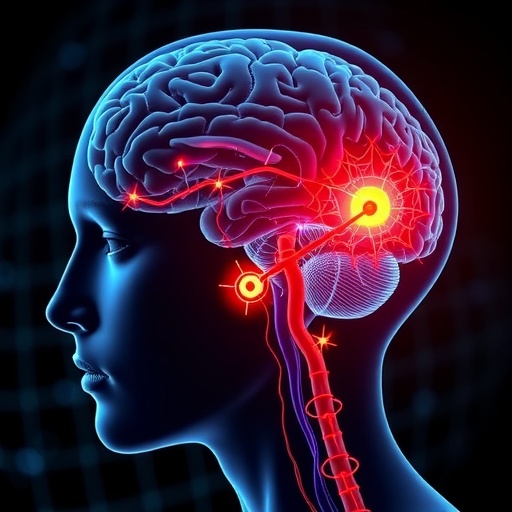
In a groundbreaking new study published in Translational Psychiatry, researchers have uncovered a critical neural circuit that underpins the dual burden of pain and anxiety experienced by individuals suffering from diabetic neuropathy. This discovery elegantly dissects the excitatory coupling between the paraventricular thalamus (PVT) and the posterior insular cortex (pIC), pinpointing it as a pivotal mediator in the comorbidity of pain and anxiety. This advancement offers promising avenues for targeted therapeutic interventions that could simultaneously address the overlapping pathologies often seen in chronic diabetic pain and its psychological toll.
Diabetic neuropathy, a prevalent complication of diabetes mellitus, manifests not only as persistent, debilitating pain but also as heightened anxiety and emotional distress. The dual diagnosis of chronic pain and anxiety has long confounded clinicians, owing to the complex interplay between neural mechanisms governing sensory processing and emotional regulation. The study by Wei et al. meticulously explores this integrative neurocircuitry, shedding light on how excitatory transmission within the PVT-pIC pathway exacerbates the intertwined symptomatology.
At the heart of this research lies the paraventricular thalamus, a midline thalamic nucleus traditionally implicated in arousal and stress responses. The authors demonstrate that PVT projections to the posterior insular cortex — a crucial region involved in interoceptive awareness and nociceptive processing — become hyperactive in diabetic neuropathy models. This hyperactivity creates an excitatory feedback loop that does not merely amplify pain signals but also concurrently elevates anxiety-related behaviors, revealing a compelling neural substrate for the often inseparable emotional and sensory distress in diabetic neuropathic sufferers.
Utilizing a combination of electrophysiological recordings, optogenetics, and behavioral paradigms in rodent models of diabetic neuropathy, the researchers observed that heightened excitatory synaptic transmission in the PVT-pIC pathway correlates strongly with increased mechanical hypersensitivity and anxiety-like phenotypes. These functional alterations are underscored by synaptic potentiation mechanisms, including long-term potentiation (LTP), within the PVT terminals innervating the pIC, suggesting that maladaptive synaptic plasticity plays a fundamental role in perpetuating this comorbid state.
The study goes further to investigate the molecular underpinnings of these circuit changes. Notably, the upregulation of glutamatergic signaling within this pathway implicates NMDA receptor-mediated excitatory postsynaptic potentials as a key driver of synaptic strengthening and plasticity. This molecular insight reinforces the hypothesis that excitatory neurotransmission imbalances contribute to the persistent pain and anxiety seen in diabetic neuropathy, offering targets for pharmacological modulation that could disrupt this maladaptive circuitry.
Importantly, the findings emphasize that dampening PVT-to-pIC excitatory transmission via optogenetic silencing or pharmacological blockade significantly alleviates both nociceptive hyperresponsiveness and anxiety-like behaviors. This dual effect underscores the synergistic potential of targeting this pathway for comprehensive symptom relief, as the circuit simultaneously mediates sensory-discriminative and affective-motivational dimensions of the disease. Thus, the PVT-pIC axis stands as a promising node for therapeutic intervention.
Moreover, this trajectory-setting study integrates behavioral neuroscience with systems neurobiology and molecular pharmacology, marrying the precision of modern neurotechnologies with clinically relevant phenotypes. The translational value of these findings is elevated by the resemblance of rodent behavioral assays to human symptomatology, providing a credible preclinical platform to evaluate future therapeutic candidates aiming to disentangle the comorbid experience of pain and anxiety.
The challenges inherent in treating diabetic neuropathy have traditionally revolved around the dissociation between pain management and emotional well-being. Conventional analgesics frequently fail to address the profound anxiety component, and anxiolytics may not impact nociceptive processing effectively. By unraveling the PVT-pIC circuitry as a locus integrating both symptom clusters, this research heralds a paradigm shift that could inform novel neuromodulatory strategies—ranging from deep brain stimulation to circuit-specific drug development—tailored to this multifaceted condition.
Furthermore, the implications extend beyond diabetic neuropathy. The vivid description of PVT-pIC excitatory mechanisms may illuminate pathogenetic processes in other chronic pain conditions accompanied by affective disorders. Anxiety and pain often coexist in diverse clinical populations, yet a clear mechanistic link has remained elusive. This study’s demonstration of shared circuit elements provides a conceptual framework with broad neurological and psychiatric relevance.
Another noteworthy aspect of the research is the elucidation of temporal dynamics in circuit remodeling. The authors delineate how diabetic neuropathy induces a progressive enhancement of excitatory synapses over weeks, corresponding with the worsening of pain and anxiety symptoms. This temporal evolution suggests a window for early intervention, which might prevent the consolidation of maladaptive plasticity and subsequent chronicity.
In terms of neuroanatomical specificity, the focus on the insular cortex is particularly informative. The insula’s role in integrating pain, emotional state, and interoceptive inputs has been recognized, but this study clarifies how direct thalamic excitation modulates insular excitability in pathological states. This refines our understanding of insular contributions and highlights the importance of thalamocortical communication in pain–emotion comorbidity.
Critically, the study also addresses mechanistic questions regarding how peripheral diabetic damage translates into central maladaptive changes. While peripheral nerve injury is the primary trigger, this research maps the downstream central nervous system reorganization, demonstrating how peripheral pathology can drive specific central circuit adaptations that sustain and exacerbate symptoms beyond the initial insult.
From a clinical perspective, translating these findings into human therapeutics will require further validation. Nonetheless, the identification of a discrete, druggable pathway mediating complex emotional and sensory phenomena is a remarkable step forward. It invites exploration of glutamatergic receptor modulators and advanced neuromodulation techniques to target the PVT-pIC axis with precision.
Moreover, the study’s integration of anxiety-like behavioral paradigms simultaneously with nociception assays underlines the necessity of holistic assessment in preclinical pain models. This comprehensive approach ensures that future analgesic developments consider the full spectrum of patient suffering, paving the way for more effective and humane treatments.
In conclusion, the elegant dissection of the excitatory paraventricular thalamus–posterior insular cortex circuit by Wei et al. provides a transformative understanding of how diabetic neuropathy engenders a combined pain and anxiety phenotype. This research shifts the narrative from treating symptoms in isolation to addressing neural substrates orchestrating complex comorbidities, potentially revolutionizing therapeutic strategies and improving patient quality of life for millions affected by diabetes-related chronic pain and emotional distress.
As research advances, ongoing examination of the molecular signaling cascades within this circuit will be crucial. Detailed mapping of receptor subtypes, intracellular pathways, and gene expression changes can uncover further therapeutic targets. The intersection of neuroinflammation, synaptic plasticity, and circuit-level dysfunction remains a fertile ground for future studies inspired by these findings.
Altogether, this landmark study underscores the necessity of circuit-based research in unraveling the pathophysiology of chronic disease comorbidities. It champions a holistic neuroscience approach that bridges cellular, systems, and behavioral domains, charting a promising course toward integrated management of diabetic neuropathic pain and anxiety.
Cite Scienmag News
Glenn Wilkins. (May 27, 2026). Thalamus-Insular Circuit Links Pain and Anxiety. Scienmag. https://scienmag.com/thalamus-insular-circuit-links-pain-and-anxiety/
Glenn Wilkins. "Thalamus-Insular Circuit Links Pain and Anxiety." Scienmag, 27 May 2026, https://scienmag.com/thalamus-insular-circuit-links-pain-and-anxiety/. Accessed 5 September 2026.
Glenn Wilkins. "Thalamus-Insular Circuit Links Pain and Anxiety." Scienmag. May 27, 2026. https://scienmag.com/thalamus-insular-circuit-links-pain-and-anxiety/


