


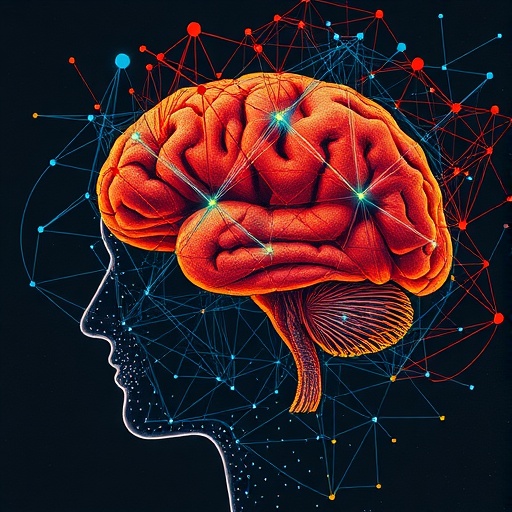
A new study is drawing attention to the possibility that intensive arts experiences may influence the way the adolescent brain organizes itself in depression. Published in Translational Psychiatry, the research by K.R. Cullen, D. Roediger, Z. Başgöze and colleagues examines changes in resting-state functional connectivity between large-scale brain networks after an arts intervention for adolescents with depression. The paper, titled “Changes in resting-state functional connectivity between large-scale brain networks after an intensive arts intervention for adolescents with depression,” focuses on a question at the frontier of neuroscience and mental-health research: can a structured, creative experience alter communication among the brain systems involved in emotion, attention, self-reflection and behavior?
Depression in adolescence is not simply a smaller version of adult depression. The teenage brain is undergoing rapid remodeling, particularly in networks that support emotional regulation, reward processing, social understanding and the ability to shift attention. During this period, communication between brain regions is being refined through a combination of biological maturation and experience. Depression can disrupt these processes, contributing to persistent negative thinking, reduced motivation, social withdrawal and difficulty responding to rewarding experiences. Because adolescence is also a period of heightened neural plasticity, researchers are increasingly investigating interventions that extend beyond medication and conventional talk therapy.
The Cullen-led study uses resting-state functional connectivity, a technique that allows scientists to examine the brain’s internal communication patterns while a person is not performing a specific task. During a resting-state scan, participants typically lie quietly in a magnetic resonance imaging scanner while researchers measure fluctuations in blood oxygenation. These fluctuations are captured through functional magnetic resonance imaging, or fMRI. When two brain regions show synchronized patterns of activity over time, scientists describe them as functionally connected. This does not necessarily mean that one region directly causes activity in the other; rather, it indicates that their activity is statistically coordinated.
The study’s emphasis on large-scale brain networks is especially significant. Instead of examining isolated brain structures, contemporary neuroscience often views the brain as a collection of interacting systems. The default mode network, for example, is associated with self-referential thought, autobiographical memory and mental reflection. The salience network helps identify information that deserves attention and assists in switching between internal thought and engagement with the outside world. The executive control network supports planning, working memory and flexible decision-making, while attention, sensory and reward-related systems help the brain respond to the environment and evaluate experiences. Depression has been linked to altered coordination within and between several of these networks.
An arts intervention offers a particularly interesting way to study these systems because creative activity requires the brain to combine multiple forms of processing. Depending on the artistic discipline, participants may need to coordinate movement, perception, memory, language, emotion, social interaction and sustained attention. Group-based creative work can also introduce collaboration, feedback and shared emotional experiences. These demands may provide repeated opportunities for participants to practice cognitive flexibility and emotional expression in an environment that differs from a clinical interview or a standardized laboratory task.
The word “intensive” is important in interpreting the research. A concentrated intervention provides repeated exposure over a relatively compressed period, potentially allowing investigators to observe changes that might be difficult to detect after occasional participation. Repetition can strengthen learned patterns through experience-dependent plasticity, the capacity of neural circuits to modify their function in response to behavior and environmental demands. However, neural plasticity should not be understood as a simple rewiring process, nor does a change in connectivity automatically demonstrate recovery. Brain networks fluctuate naturally, and connectivity measurements can be influenced by mood, sleep, medication, movement inside the scanner and other factors.
The study’s central outcome is therefore not artistic performance but the relationship between brain networks before and after the intervention. A change in resting-state connectivity could suggest that communication among systems involved in internal thought, emotional significance, attention or cognitive control has shifted. Researchers may examine whether networks become more strongly synchronized, less tightly coupled or reorganized in a way that corresponds with clinical improvement. Each pattern would carry a different interpretation. Increased connectivity might reflect improved coordination, but in some contexts excessive synchronization could indicate rigidity. Reduced connectivity might represent disruption, yet it could also signal greater independence between systems that had previously been locked into unhelpful patterns.
This distinction is crucial for understanding depression. Symptoms such as rumination can involve persistent inward attention and repetitive self-focused thinking, while impaired motivation may reflect altered communication between reward systems and regions that guide action. Difficulties regulating emotion can emerge when systems that generate emotional responses interact inefficiently with executive control networks. An intervention that changes the balance between these systems could theoretically affect how adolescents shift from negative internal states toward purposeful activity or social engagement. Still, functional connectivity is an indirect measure. It cannot by itself reveal exactly what a participant was thinking, whether a network change is beneficial in every individual or whether the arts experience caused the change rather than merely accompanying it.
The research also arrives amid a broader movement toward personalized and multimodal mental-health care. Standard treatments for adolescent depression can be effective, but not every young person responds to medication or psychotherapy, and access to care remains uneven. Arts-based programs may be attractive because they can provide structure, identity, social connection and a sense of achievement while engaging psychological processes that are difficult to reach through symptom-focused treatment alone. If neuroimaging can identify consistent patterns associated with improvement, it may eventually help researchers understand which adolescents benefit most from particular interventions. That possibility remains exploratory, and brain scans are not currently a substitute for clinical assessment.
What makes the new paper potentially influential is its attempt to connect a socially meaningful intervention with measurable changes in whole-brain organization. The findings may help move the conversation about arts and mental health beyond the question of whether creative activities “feel good” and toward a more precise examination of how experience interacts with developing neural systems. At the same time, the results will need to be interpreted alongside the study’s design, sample size, comparison conditions, clinical measures and follow-up period. Replication in larger and independent groups will be essential. For now, the study adds to an emerging scientific narrative: in adolescent depression, recovery may involve not only changing symptoms, but also reshaping the communication patterns that allow the brain to move between reflection, emotion, attention and action.
Cite Scienmag News
Glenn Wilkins. (August 17, 2026). Intensive arts therapy reshapes brain network connectivity in adolescents with depression. Scienmag. https://scienmag.com/intensive-arts-therapy-reshapes-brain-network-connectivity-in-adolescents-with-depression/
Glenn Wilkins. "Intensive arts therapy reshapes brain network connectivity in adolescents with depression." Scienmag, 17 August 2026, https://scienmag.com/intensive-arts-therapy-reshapes-brain-network-connectivity-in-adolescents-with-depression/. Accessed 4 September 2026.
Glenn Wilkins. "Intensive arts therapy reshapes brain network connectivity in adolescents with depression." Scienmag. August 17, 2026. https://scienmag.com/intensive-arts-therapy-reshapes-brain-network-connectivity-in-adolescents-with-depression/


