

Wednesday, October 21, 2026
Science
No Result
View All Result
  • Login
  • HOME
  • SCIENCE NEWS
  • CONTACT US
  • HOME
  • SCIENCE NEWS
  • CONTACT US
No Result
View All Result
Scienmag
No Result
View All Result
Home Science News Biology

Taxonomic study identifies two new capitellid species from southern China

October 21, 2026
in Biology, Science News
Drew Townsend
By Drew Townsend Scienmag Editorial Profile - Cell Biology
Reading Time: 3 mins read
0
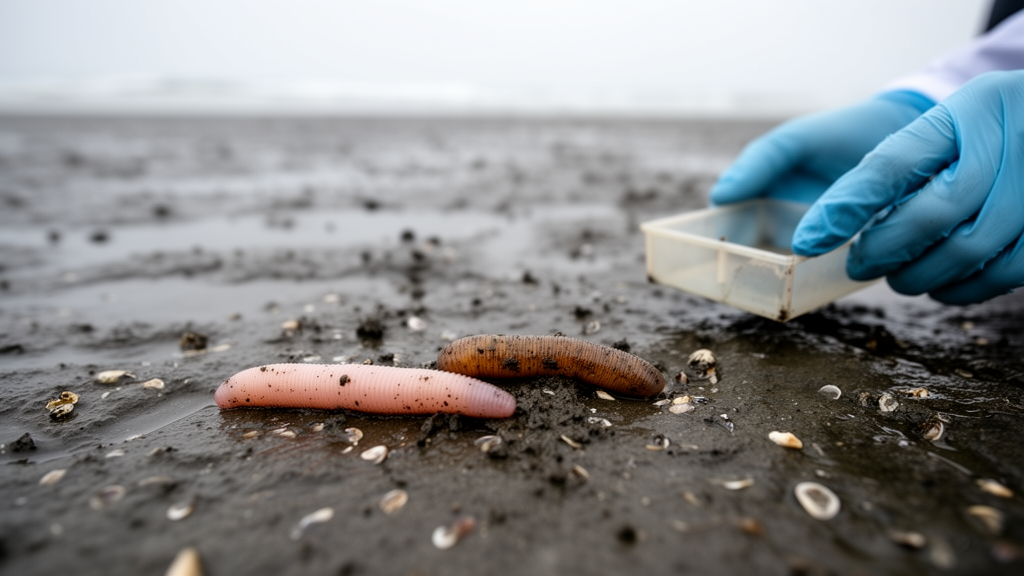
Two New Species of Mud-Dwelling Marine Worms Discovered on China’s Southern Coast

Two New Species of Mud-Dwelling Marine Worms Discovered on China's Southern Coast

65
SHARES
587
VIEWS
Share on FacebookShare on Twitter
ADVERTISEMENT

An integrated morphological and molecular taxonomic study has described two new species of the annelid family Capitellidae from southern China: Barantolla multibranchia and Parheteromastus simplex. The findings add two species to a family that had remained comparatively poorly documented in Chinese waters.

The authors sampled sediments along China’s southern coast from Zhejiang Province in the east to Guangxi Province in the west between 2019 and 2026. They collected material with a 0.05-square-metre grab sampler during high tide, washed sediment through a 0.5-millimetre sieve and preserved the retained specimens in 100% ethanol.

Morphological examinations included stereomicroscopy, compound microscopy, scanning electron microscopy and methyl green staining to identify glandular areas. DNA analyses covered five partial gene fragments: the mitochondrial COI and 16S rRNA genes and the nuclear 18S rRNA, 28S rRNA and H3 genes. Genetic distances were calculated with the Kimura 2-parameter model in MEGA X, and examined specimens were deposited at the Third Institute of Oceanography in Xiamen.

The complete holotype of B. multibranchia measured 47.78 millimetres long and 1.20 millimetres wide and had about 173 chaetigers. Diagnostic features included a short prostomial palpode, mixed chaetae in both rami of chaetiger 6 and numerous dorsal abdominal branchiae. The species was found in intertidal or shallow-water estuarine and inner-bay habitats containing mud, muddy sand or sandy mud.

Twelve B. multibranchia specimens from nine localities were sequenced. Within-species Kimura 2-parameter distances ranged from 0 to 4.3% for COI, 0 to 0.9% for 16S, 0% for 18S, 0 to 0.1% for 28S and 0 to 1.6% for H3. COI distances among specimens from Guangxi were substantially higher than those within the other sampled localities, suggesting possible population divergence that remains unconfirmed.

A sequence from Hainan was 1.3% from a paratype and fell within the observed within-species range, leading the researchers to assign that specimen to B. multibranchia. The new species differed from sequenced members of its genus by 22.3% to 44.6% based on COI. An 18S distance of 1.2% from B. lepte also exceeded the 0% within-species divergence recorded for B. multibranchia.

The complete holotype of P. simplex measured 20.11 millimetres long and 0.55 millimetres wide and had about 104 chaetigers. It lacked branchiae and differed from the previously described P. tenuis in having an areolated anterior thoracic epithelium and a clearly constricted transition between thorax and abdomen. The species is currently known from intertidal sites near Dadeng Island in Xiamen Bay and may occur in Fujian mangrove wetlands.

Two P. simplex specimens yielded all five gene markers, providing the first molecular data reported for the genus Parheteromastus. No within-species genetic variation was detected across the markers except for one nucleotide substitution in COI. The limited material available for this species restricts the extent of its documented geographic and genetic variation.

Detailed comparison with P. tenuis was also constrained because the earlier species had no published description or illustration of its abdominal hooks. In contrast, B. multibranchia was sampled across a wider geographic range and compared with available molecular sequences for other Barantolla species, although the higher COI distances among Guangxi specimens require further sampling to determine whether they represent a distinct population.

Subject of Research: Taxonomic description of two new Capitellidae species from southern China

Article Title: Two new species of Capitellidae ( Annelida , Polychaeta ) from the southern coasts of China

Article References: Lin, J.-H., García-Garza, M. E., Zhang, S.-Y., & Lin, H.-S. (2026). Two new species of Capitellidae (Annelida, Polychaeta) from the southern coasts of China. ZooKeys, 1292, 227-241. https://doi.org/10.3897/zookeys.1292.203560

Image Credits: AI Generated

DOI: 10.3897/zookeys.1292.203560

Keywords: Capitellidae, taxonomy, marine annelids, Polychaeta, new species, integrative taxonomy, morphology, molecular analysis, southern China, species, Annelida, southern

Cite Scienmag News

Drew Townsend. (October 21, 2026). Taxonomic study identifies two new capitellid species from southern China. Scienmag. https://scienmag.com/taxonomic-study-identifies-two-new-capitellid-species-from-southern-china/

Drew Townsend. "Taxonomic study identifies two new capitellid species from southern China." Scienmag, 21 October 2026, https://scienmag.com/taxonomic-study-identifies-two-new-capitellid-species-from-southern-china/. Accessed 21 October 2026.

Drew Townsend. "Taxonomic study identifies two new capitellid species from southern China." Scienmag. October 21, 2026. https://scienmag.com/taxonomic-study-identifies-two-new-capitellid-species-from-southern-china/


Tags: AnnelidaCapitellid annelid taxonomyCapitellidaecoastal invertebrate diversitydescription of new polychaete speciesDNA barcoding marine wormselectron microscopy in taxonomyholotype specimen documentationintegrated morphological molecular analysisintegrative taxonomymarine annelidsmarine biodiversity southern Chinamarine sediment collection methodsmolecular analysismolecular phylogenetics in annelidsmorphologynew marine species Chinanew speciesPolychaetasediment sampling marine invertebratessouthernsouthern Chinaspeciestaxonomy
Share26Tweet16
Previous Post

One-year field study measures golden grey mullet reproduction and growth in Tunisia’s Bizerte Lagoon

Next Post

A new Psammitis species (Araneae, Thomisidae) from an extinct volcano in Georgia with reevaluation of the generic position of Xysticus marmoratus Thorell, 1875

Related Posts

Jurassic gut fossils reveal prey inside decapitated predator fish
Science News

Late Jurassic Aspidorhynchus skulls preserve evidence of fish and crustacean prey

October 21, 2026
Relict boreal forests of Kazakh Uplands revealed in first open-access vegetation dataset
Biology

Kazakh Uplands vegetation dataset documents 117 plots across forests, steppes and other habitats

October 21, 2026
DNA Barcodes Reveal Dozens of Spider Species New to Georgia and the Caucasus
Science News

CaBOL field survey adds 23 spider species to Georgia’s documented fauna

October 21, 2026
A South American Nightshade Is Quietly Colonizing Europe’s Disturbed Ground
Science News

Observational study links emerging non-native Solanum nitidibaccatum to ruderal community structure in Poland

October 21, 2026
New Crab Spider Species Discovered on Extinct Volcano in Georgia
Science News

A new Psammitis species (Araneae, Thomisidae) from an extinct volcano in Georgia with reevaluation of the generic position of Xysticus marmoratus Thorell, 1875

October 21, 2026
Reproductive and growth parameters of Chelon auratus (Actinopterygii, Mugiliformes, Mugilidae) in Bizerte Lagoon, Tunisia
Science News

One-year field study measures golden grey mullet reproduction and growth in Tunisia’s Bizerte Lagoon

October 21, 2026
Next Post
New Crab Spider Species Discovered on Extinct Volcano in Georgia

A new Psammitis species (Araneae, Thomisidae) from an extinct volcano in Georgia with reevaluation of the generic position of Xysticus marmoratus Thorell, 1875

  • Mothers who receive childcare support from maternal grandparents show more optimized

    Mothers who receive childcare support from maternal grandparents show more parental warmth, finds NTU Singapore study

    27656 shares
    Share 11059 Tweet 6912
  • University of Seville Breaks 120-Year-Old Mystery, Revises a Key Einstein Concept

    1061 shares
    Share 424 Tweet 265
  • Bee body mass, pathogens and local climate influence heat tolerance

    682 shares
    Share 273 Tweet 171
  • Researchers record first-ever images and data of a shark experiencing a boat strike

    546 shares
    Share 218 Tweet 137
  • Groundbreaking Clinical Trial Reveals Lubiprostone Enhances Kidney Function

    531 shares
    Share 212 Tweet 133
Science

Embark on a thrilling journey of discovery with Scienmag.com—your ultimate source for cutting-edge breakthroughs. Immerse yourself in a world where curiosity knows no limits and tomorrow’s possibilities become today’s reality!

RECENT NEWS

  • Late Jurassic Aspidorhynchus skulls preserve evidence of fish and crustacean prey
  • Kazakh Uplands vegetation dataset documents 117 plots across forests, steppes and other habitats
  • CaBOL field survey adds 23 spider species to Georgia’s documented fauna
  • Observational study links emerging non-native Solanum nitidibaccatum to ruderal community structure in Poland

Categories

  • Agriculture
  • Anthropology
  • Archaeology
  • Athmospheric
  • Biology
  • Biotechnology
  • Blog
  • Bussines
  • Cancer
  • Chemistry
  • Climate
  • Earth Science
  • Editorial Policy
  • Marine
  • Mathematics
  • Medicine
  • Pediatry
  • Policy
  • Psychology & Psychiatry
  • Science Education
  • Science News
  • Social Science
  • Space
  • Technology and Engineering

Subscribe to Blog via Email

Enter your email address to subscribe to this blog and receive notifications of new posts by email.

Join 5,150 other subscribers

© 2025 Scienmag - Science Magazine

Welcome Back!

Login to your account below

Forgotten Password?

Retrieve your password

Please enter your username or email address to reset your password.

Log In
No Result
View All Result
  • HOME
  • SCIENCE NEWS
  • CONTACT US

© 2025 Scienmag - Science Magazine

Discover more from Science

Subscribe now to keep reading and get access to the full archive.

Continue reading