

Wednesday, October 21, 2026
Science
No Result
View All Result
  • Login
  • HOME
  • SCIENCE NEWS
  • CONTACT US
  • HOME
  • SCIENCE NEWS
  • CONTACT US
No Result
View All Result
Scienmag
No Result
View All Result
Home Science News

CaBOL field survey adds 23 spider species to Georgia’s documented fauna

October 21, 2026
in Science News
Margaret Porter
By Margaret Porter Scienmag Editorial Profile - Biodiversity Science
Reading Time: 3 mins read
0
DNA Barcodes Reveal Dozens of Spider Species New to Georgia and the Caucasus

DNA Barcodes Reveal Dozens of Spider Species New to Georgia and the Caucasus

65
SHARES
587
VIEWS
Share on FacebookShare on Twitter
ADVERTISEMENT

A field survey supported by the Caucasus Barcode of Life (CaBOL) project recorded 23 spider species new to Georgia, including 11 species reported for the first time in the Caucasus. Three genera—Apostenus, Evippa and Pulchellodromus—were also documented in the country for the first time.

The findings bring Georgia’s recorded spider fauna to 792 species in 289 genera and 44 families. The study is the third contribution in a series examining Georgian spider diversity and follows earlier work in which 111 species and 27 genera were added to the country’s documented fauna.

Researchers examined 142 subadult or adult spiders collected across Georgia: 46 males, 95 females and one juvenile. The material represented 33 species from 28 genera and 13 families and had been gathered during expeditions and short field trips to protected and unprotected areas through the CaBOL project.

Specimens were collected using aspirators, soil sifters, hand collection and light traps. Their elevations and WGS84 coordinates were recorded with a Garmin GPS MAP 64s. After preservation in 96% ethanol, the material was stored at −22 °C in collections at Ilia State University in Tbilisi and the Leibniz Institute for the Analysis of Biodiversity Change in Bonn.

Identification combined literature on Caucasian spiders with microscopic examination of diagnostic anatomy. Female epigynes and endogynes were prepared with a 30% potassium hydroxide solution, while drawings commonly showed the left male palp, female epigyne and endogyne. DNA extraction followed German Barcode of Life protocols at the Bonn institute and customised protocols at Ilia State University.

The researchers submitted COI sequences to the Barcode of Life Data Systems and compared them with BOLD records using p-distance. They obtained 59 quality barcodes, each 658 base pairs long and free of stop codons, indels and deletions, representing 22 species. Twelve barcodes covering seven species were the first submissions for those species to BOLD.

Among the new Georgian records were Clubiona reclusa, Brigittea innocens, Lathys lehtineni, Pelecopsis parallela, Apostenus humilis, Evippa sjostedti, Oxyopes badhyzicus, Philodromus fuscolimbatus, Latrodectus pallidus, Bassaniodes pseudorectilineus and Tmarus piochardi, all reported for the first time in the Caucasus.

This was a field inventory combining morphological identification, specimen documentation and DNA barcoding, not a controlled experiment. Several identifications remained provisional because of limited material. The two female Lathys lehtineni specimens could not be identified reliably without a male, while a male Pelecopsis parallela resembled P. odontophora, leaving possible synonymy unresolved.

Barcodes for Brigittea innocens and Poecilochroa senilis did not produce good matches, and similarities between Bassaniodes pseudorectilineus and the previously reported B. loeffleri required further taxonomic assessment. The results are therefore bounded by sampling scope, incomplete barcode matches and the need for additional specimens or examination of type material to resolve some taxonomic questions.

Subject of Research: Field inventory and DNA barcoding of spider diversity in Georgia

Article Title: Picking pearls from the Silk Road: Insights into the spider ( Arachnida , Araneae ) diversity in Georgia from the Caucasus Barcode of Life (CaBOL) project. Part III

Article References: Seropian, A., Bulbulashvili, N., Krammer, H.-J., Thormann, J., Hein, N., Karalashvili, E., Kachlishvili, N., & Datunashvili, A. (2024). Picking pearls from the Silk Road: Insights into the spider (Arachnida, Araneae) diversity in Georgia from the Caucasus Barcode of Life (CaBOL) project. Part III. Caucasiana, 3, 89-118. https://doi.org/10.3897/caucasiana.3.e120883

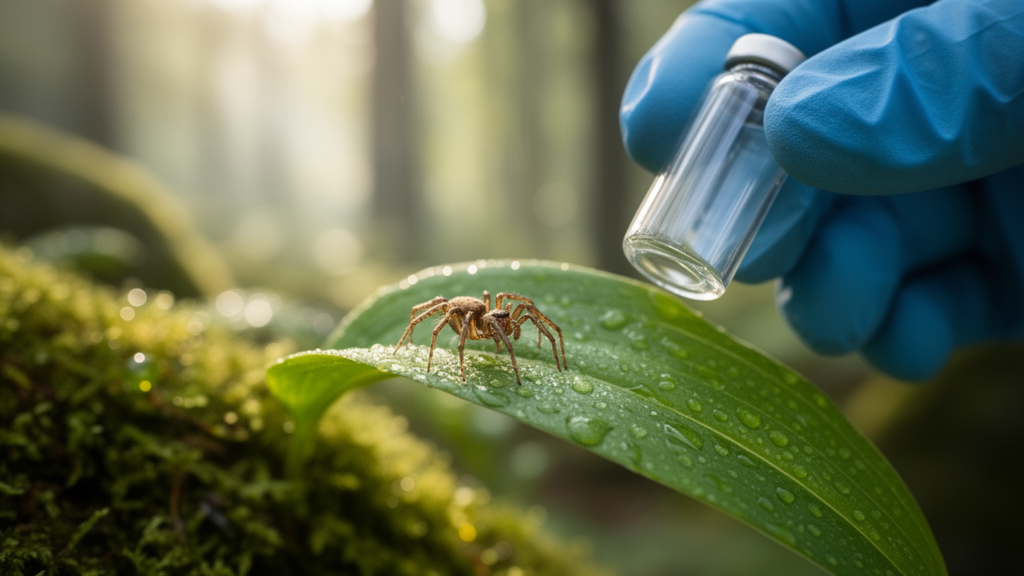
Image Credits: AI Generated

DOI: 10.3897/caucasiana.3.e120883

Keywords: spider diversity, Georgia, Caucasus, CaBOL project, DNA barcoding, morphological identification, faunal inventory, COI sequences, taxonomic records, Picking, pearls, Silk

Cite Scienmag News

Margaret Porter. (October 21, 2026). CaBOL field survey adds 23 spider species to Georgia’s documented fauna. Scienmag. https://scienmag.com/cabol-field-survey-adds-23-spider-species-to-georgias-documented-fauna/

Margaret Porter. "CaBOL field survey adds 23 spider species to Georgia’s documented fauna." Scienmag, 21 October 2026, https://scienmag.com/cabol-field-survey-adds-23-spider-species-to-georgias-documented-fauna/. Accessed 21 October 2026.

Margaret Porter. "CaBOL field survey adds 23 spider species to Georgia’s documented fauna." Scienmag. October 21, 2026. https://scienmag.com/cabol-field-survey-adds-23-spider-species-to-georgias-documented-fauna/


Tags: CaBOL projectCaBOL project Georgia findingsCaucasusCaucasus spider species discoveryCOI sequencescontribution to Caucasus arachnology researchDNA barcodingfaunal inventoryfield survey of Georgian spidersfirst record of Apostenus Evippa Pulchellodromusgeographic distribution of Georgian spidersGeorgiaGeorgia spider biodiversityGeorgia spider species documentationGeorgian fauna biodiversity surveymorphological identificationnew spider species in CaucasuspearlsPickingprotected and unprotected area biodiversitySilkspider collection and identification methodsspider diversitytaxonomic records
Share26Tweet16
Previous Post

Observational study links emerging non-native Solanum nitidibaccatum to ruderal community structure in Poland

Next Post

Kazakh Uplands vegetation dataset documents 117 plots across forests, steppes and other habitats

Related Posts

Relict boreal forests of Kazakh Uplands revealed in first open-access vegetation dataset
Biology

Kazakh Uplands vegetation dataset documents 117 plots across forests, steppes and other habitats

October 21, 2026
A South American Nightshade Is Quietly Colonizing Europe’s Disturbed Ground
Science News

Observational study links emerging non-native Solanum nitidibaccatum to ruderal community structure in Poland

October 21, 2026
New Crab Spider Species Discovered on Extinct Volcano in Georgia
Science News

A new Psammitis species (Araneae, Thomisidae) from an extinct volcano in Georgia with reevaluation of the generic position of Xysticus marmoratus Thorell, 1875

October 21, 2026
Two New Species of Mud-Dwelling Marine Worms Discovered on China’s Southern Coast
Biology

Taxonomic study identifies two new capitellid species from southern China

October 21, 2026
Reproductive and growth parameters of Chelon auratus (Actinopterygii, Mugiliformes, Mugilidae) in Bizerte Lagoon, Tunisia
Science News

One-year field study measures golden grey mullet reproduction and growth in Tunisia’s Bizerte Lagoon

October 21, 2026
Birds, islands and dry forests: how a tropical tree genus conquered the world’s Tropics
Earth Science

Phylogenetic analysis links Xylopia’s pantropical spread to dispersal and habitat shifts

October 21, 2026
Next Post
Relict boreal forests of Kazakh Uplands revealed in first open-access vegetation dataset

Kazakh Uplands vegetation dataset documents 117 plots across forests, steppes and other habitats

  • Mothers who receive childcare support from maternal grandparents show more optimized

    Mothers who receive childcare support from maternal grandparents show more parental warmth, finds NTU Singapore study

    27656 shares
    Share 11059 Tweet 6912
  • University of Seville Breaks 120-Year-Old Mystery, Revises a Key Einstein Concept

    1061 shares
    Share 424 Tweet 265
  • Bee body mass, pathogens and local climate influence heat tolerance

    682 shares
    Share 273 Tweet 171
  • Researchers record first-ever images and data of a shark experiencing a boat strike

    546 shares
    Share 218 Tweet 137
  • Groundbreaking Clinical Trial Reveals Lubiprostone Enhances Kidney Function

    531 shares
    Share 212 Tweet 133
Science

Embark on a thrilling journey of discovery with Scienmag.com—your ultimate source for cutting-edge breakthroughs. Immerse yourself in a world where curiosity knows no limits and tomorrow’s possibilities become today’s reality!

RECENT NEWS

  • Kazakh Uplands vegetation dataset documents 117 plots across forests, steppes and other habitats
  • CaBOL field survey adds 23 spider species to Georgia’s documented fauna
  • Observational study links emerging non-native Solanum nitidibaccatum to ruderal community structure in Poland
  • A new Psammitis species (Araneae, Thomisidae) from an extinct volcano in Georgia with reevaluation of the generic position of Xysticus marmoratus Thorell, 1875

Categories

  • Agriculture
  • Anthropology
  • Archaeology
  • Athmospheric
  • Biology
  • Biotechnology
  • Blog
  • Bussines
  • Cancer
  • Chemistry
  • Climate
  • Earth Science
  • Editorial Policy
  • Marine
  • Mathematics
  • Medicine
  • Pediatry
  • Policy
  • Psychology & Psychiatry
  • Science Education
  • Science News
  • Social Science
  • Space
  • Technology and Engineering

Subscribe to Blog via Email

Enter your email address to subscribe to this blog and receive notifications of new posts by email.

Join 5,150 other subscribers

© 2025 Scienmag - Science Magazine

Welcome Back!

Login to your account below

Forgotten Password?

Retrieve your password

Please enter your username or email address to reset your password.

Log In
No Result
View All Result
  • HOME
  • SCIENCE NEWS
  • CONTACT US

© 2025 Scienmag - Science Magazine

Discover more from Science

Subscribe now to keep reading and get access to the full archive.

Continue reading