


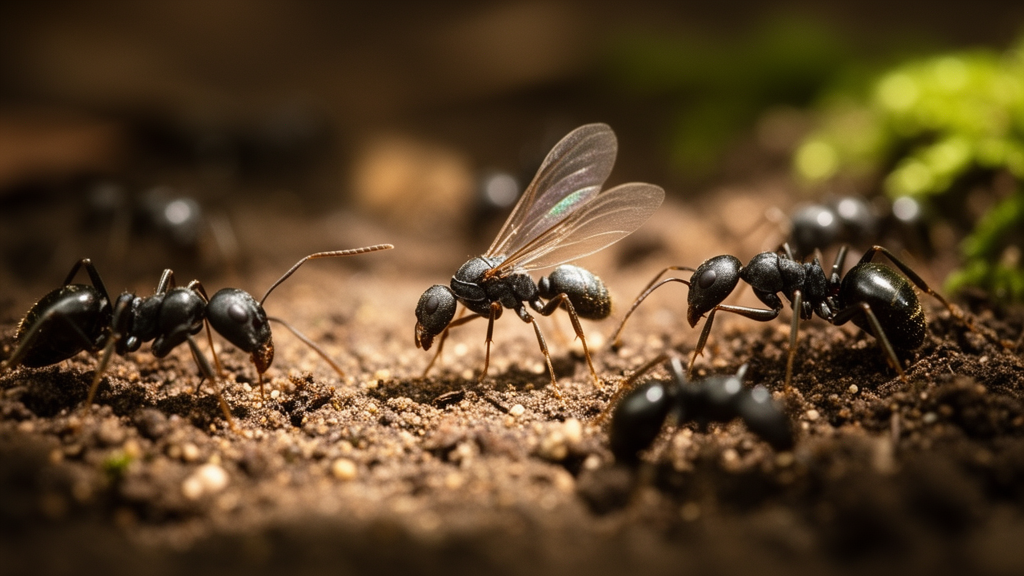
A taxonomic review of the minute diapriid wasp genus Lepidopria examined the morphology and known biology of its described species, clarified diagnostic features of the genus and related taxa, and described Lepidopria bicarinata sp. nov. from South Korea. The study also transferred Lepidopria aberrans to the Nearctic genus Bruesopria as Bruesopria aberrans comb. nov.
The review evaluated museum material from several institutions in Italy, the United Kingdom, the Republic of Korea, the United States and Russia. Most images were obtained with a Nikon SMZ25 stereomicroscope, with additional images taken using an Olympus E-M5 Mark II camera and a 60 mm macro lens before stacking with Helicon Focus 7.6. Morphological terminology, abbreviations and measurements followed established diapriid and hymenopteran anatomical references. This was a morphology-based taxonomic assessment rather than an experimental biological study.
Before the revision, Lepidopria was treated as containing four species: L. aberrans from Maryland, United States; L. lloydi from Tanganyika, now Tanzania; L. masneri from Japan and South Korea; and L. pedestris from Europe. The authors reassessed the type and other available specimens and concluded that L. aberrans shares the diagnostic characters of Bruesopria. Its holotype had been reared from the puparium of a possibly identified tachinid fly, Cryptomeigenia theutis, found within an adult Phyllophaga inversa beetle.
Lepidopria wasps are small, measuring 1.0–1.8 mm. The revised generic diagnosis includes a subglobular head, reduced female eyes, a four-segmented or indistinct female antennal club, 12-segmented female antennae and 14-segmented male antennae. Dense setation or foamy structures occur on several parts of the body, while the petiole is humped dorsally and elevated above the base of the second tergite. The genus diagnosis and the key to species are based on combinations of antennal, pronotal, scutellar, propodeal and petiolar characters.
The new species was collected at a site near the Gwaneum Temple rest area on Jeju Island, South Korea. The female holotype was collected between 1 and 24 September 2022 and is deposited in the National Institute of Biological Resources. Three paratypes—one female and two males—were collected from the same locality during two July 2022 sampling periods and are deposited in the Zoological Institute of the Russian Academy of Sciences. The species name refers to the well-developed carinae on the male third and fourth antennomeres.
Females of L. bicarinata have a globular head in frontal view, stout antennae with transverse ninth through eleventh antennomeres, a single transverse scutellar pit, a densely setose propodeum with a median carina, and a dorsally foamy petiole. Males have a carina on the third antennomere, while the fourth is slightly enlarged and has a shallow emargination and membranous, pale carina. The female holotype measures 1.5 mm in body length, with antennae measuring 0.85 mm and the fore wing measuring 1.4 mm. The biology of the new species remains unknown.
The review also documented an ant association for L. masneri, for which biological information had previously been unavailable. A dealated female was found in March in a soil chamber near Busan, Republic of Korea, alongside Solenopsis japonica. The authors observed that the wasp moved freely within the colony without being attacked and appeared integrated into it. The specimen was collected near Igidae Park in Busan in March 2024, while other examined records came from Japan, South Korea and the Russian Far East.
Earlier research had examined L. pedestris in considerably greater detail. It lives in close association with Solenopsis fugax, using tactile signals resembling those of ants and producing cuticular secretions associated with intense grooming or licking by workers. Secretory-cell clusters open into tufts of hairs on the petiole and anterior part of the second metasomal sternite, while fore-leg tapping and antennal contacts resemble ant behavior. Workers have been observed regurgitating food to newly introduced wasps within about 10 minutes, with little aggression.
Phenological research by Lachaud and Passera found that L. pedestris uses S. fugax nests for protection, feeding and winter hibernation, but neither reproduces in them nor uses the ants as a host. Most of its life cycle occurs outside the nest, where adults mate, parasitize a primary host and develop; the wasps return to ant nests in winter. Its primary host was subsequently reported as a tachinid fly developing in the scarabaeid beetle Melolontha melolontha. In contrast, the African L. lloydi was reared from puparia of Glossina palpalis.
The revised diagnosis distinguishes Lepidopria from Bruesopria using female antennal structure, the posterior margin of the propodeum, petiole shape and the surface of the second metasomal sternite. It also notes that the biodiversity and morphological variability of Lepidopria, Bruesopria and Solenopsia remain insufficiently studied. Additional morphological, molecular and biological data are required to assess their relationships or possible synonymy, and the authors state that the three genera may have arisen independently through convergent evolution. Based on the limited biological information available, they assess the known species diversity of these myrmecophilous wasps as significantly greater than currently recognized, while acknowledging that additional discoveries could alter the boundaries among the genera.
Subject of Research: Taxonomic revision of myrmecophilous diapriid wasps in the genus Lepidopria
Article Title: Revision of the genus Lepidopria Kieffer ( Hymenoptera , Diapriidae , Diapriinae ) of the world fauna
Article References: Chemyreva, V. G., Yoon, S., & Ku, D.-S. (2025). Revision of the genus Lepidopria Kieffer (Hymenoptera, Diapriidae, Diapriinae) of the world fauna. Journal of Hymenoptera Research, 98, 1107-1126. https://doi.org/10.3897/jhr.98.169802
Image Credits: AI Generated
Keywords: Lepidopria, Diapriidae, taxonomic revision, new species, Bruesopria, Solenopsis, myrmecophily, South Korea, wasp morphology, Hymenoptera, Revision, genus
Cite Scienmag News
Gavin Prescott. (October 20, 2026). Taxonomic review of Lepidopria wasps describes South Korean species and revises genus boundaries. Scienmag. https://scienmag.com/taxonomic-review-of-lepidopria-wasps-describes-south-korean-species-and-revises-genus-boundaries/
Gavin Prescott. "Taxonomic review of Lepidopria wasps describes South Korean species and revises genus boundaries." Scienmag, 20 October 2026, https://scienmag.com/taxonomic-review-of-lepidopria-wasps-describes-south-korean-species-and-revises-genus-boundaries/. Accessed 20 October 2026.
Gavin Prescott. "Taxonomic review of Lepidopria wasps describes South Korean species and revises genus boundaries." Scienmag. October 20, 2026. https://scienmag.com/taxonomic-review-of-lepidopria-wasps-describes-south-korean-species-and-revises-genus-boundaries/


