


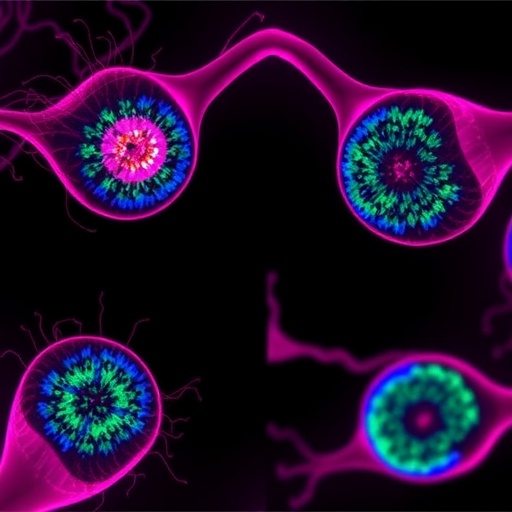
In an intriguing exploration of the intersection between reproductive health and metabolic disorders, a recent study has shed light on the intricate mechanisms involving Dipeptidyl Peptidase-4 (DPP4), ferroptosis, and endometrial receptivity, particularly in the context of Polycystic Ovary Syndrome (PCOS). This comprehensive research, conducted by Zhang, Wang, and Tian, articulates how targeting DPP4 could modulate ferroptosis and possibly enhance the endometrial receptivity in individuals diagnosed with PCOS, thereby introducing a new therapeutic avenue for managing this complex condition.
Polycystic Ovary Syndrome affects a significant subset of women globally, leading to an array of symptoms that encompass hormonal imbalances, ovulatory dysfunctions, and metabolic issues. One of the lesser-discussed, yet critically important aspects of PCOS is its impact on the endometrium, which is vital for successful implantation and overall reproductive success. The endometrial receptivity frequently becomes compromised in women suffering from this syndrome, necessitating a deeper understanding of the underlying biological mechanisms.
Researchers have recently turned their attention to DPP4, a multifunctional enzyme with roles extending beyond carbohydrate metabolism. DPP4 is implicated in various physiological and pathological processes, including immune response modulation and cell signaling pathways. The enzymatic activity of DPP4 can influence several substrates, which can lead to varying effects on cellular functions. Consequently, the exploration into how DPP4 regulation might intersect with ferroptosis—a form of regulated cell death characterized by iron-dependent lipid peroxidation—has gathered momentum.
Ferroptosis stands out as a crucial biological process potentially linking metabolic dysfunctions and reproductive challenges in women with PCOS. Recent evidence suggests that the induction of ferroptosis could adversely affect the viability and manipulation of endometrial tissues, presenting hurdles to implantation. Thus, establishing a connection between DPP4 inhibition and ferroptosis may illuminate a pathway toward improving endometrial receptivity, vital for successful pregnancy outcomes.
The pivotal findings of the study underscore the significance of DPP4 as a therapeutic target in the modulation of ferroptotic processes. By inhibiting DPP4, the research posits that the adverse effects of ferroptosis on endometrial tissues can be mitigated. Specifically, the team conducted a series of experiments that demonstrated a correlation between DPP4 activity and markers of ferroptosis. Notably, reduced DPP4 activity led to decreased levels of lipid peroxidation, suggesting that the enzyme’s inhibition could favorably alter the cellular environment of the endometrium.
Intriguingly, the research goes beyond merely showcasing a correlation; it delves into the mechanistic underpinnings that facilitate the observed modulation of ferroptosis by DPP4. Experimental models highlighted the activation of specific signaling pathways that are crucial in the response of endometrial cells to ferroptosis. These insights reveal a network of interactions that could be manipulated to restore endometrial receptivity in patients suffering from PCOS.
Given the multifactorial nature of PCOS, targeting DPP4 could offer a multi-pronged approach not just in addressing endometrial issues but also in ameliorating metabolic dysfunctions commonly associated with the syndrome. The authors suggest that a combined therapeutic strategy focusing on DPP4 inhibition may enhance overall health outcomes for women suffering from PCOS, particularly those intending to conceive.
Furthermore, the implications of this research extend beyond just reproductive health. The interplay between DPP4 and ferroptosis may also alter broader metabolic parameters, thus contributing to improved insulin sensitivity and metabolic wellness in affected individuals. This discovery paves the way for integrated care protocols, where reproductive endocrinology and metabolic health can be addressed concurrently.
As this area of research develops, future studies are expected to build upon these findings, exploring not only the direct implications of DPP4 inhibition on reproductive health but also the broader systemic effects on overall health. The potential for DPP4 inhibitors to reshape the narrative surrounding PCOS and its complications opens the door to innovative treatment frameworks that personalize care based on individual metabolic and reproductive profiles.
In conclusion, Zhang, Wang, and Tian’s study lays the groundwork for groundbreaking advancements in the understanding of PCOS and its management. By illuminating the relationship between DPP4 and ferroptosis in relation to endometrial receptivity, the research not only highlights a critical area in women’s health but also sets the stage for future investigation and clinical application aimed at improving reproductive outcomes for women grappling with PCOS.
This interconnected approach may not only enhance our understanding of the pathophysiology of PCOS but could also catalyze the development of potential biomarkers for assessing treatment efficacy as we venture further into this promising area of research. The quest for effective therapeutic interventions in PCOS is ongoing, and studies like this one are vital in propelling the field forward toward new horizons in reproductive health.
Zhang, J., Wang, R., Tian, X. et al. The mechanism study of targeting DPP4 in regulating ferroptosis and its influence on endometrial receptivity in PCOS.
Biol Sex Differ 16, 107 (2025). https://doi.org/10.1186/s13293-025-00786-5
Cite Scienmag News
Drew Townsend. (December 23, 2025). Targeting DPP4: Ferroptosis and Endometrial Receptivity in PCOS. Scienmag. https://scienmag.com/targeting-dpp4-ferroptosis-and-endometrial-receptivity-in-pcos/
Drew Townsend. "Targeting DPP4: Ferroptosis and Endometrial Receptivity in PCOS." Scienmag, 23 December 2025, https://scienmag.com/targeting-dpp4-ferroptosis-and-endometrial-receptivity-in-pcos/. Accessed 5 September 2026.
Drew Townsend. "Targeting DPP4: Ferroptosis and Endometrial Receptivity in PCOS." Scienmag. December 23, 2025. https://scienmag.com/targeting-dpp4-ferroptosis-and-endometrial-receptivity-in-pcos/


