

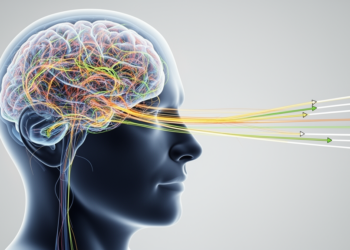
Drivers’ Brains Simplify: Eye, Head and Steering Movements Collapse Onto Few Dimensions at Hazardous Moments
An immersive virtual driving study of 284 people shows that eye, head, steering and vehicle movements compress onto fewer effective ...
An immersive virtual driving study of 284 people shows that eye, head, steering and vehicle movements compress onto fewer effective ...

A new Frontiers in Neurology mini review argues that gains achieved in virtual reality and game-based neurorehabilitation often fail to ...

A new Perspective argues that immersive virtual reality, by reducing the salience of the social audience and capturing motor and ...
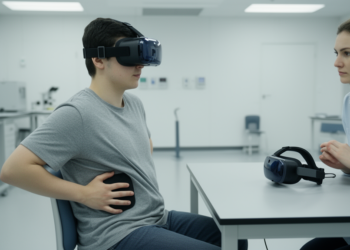
A controlled study of 12 adults found that hip pressure opposing a stationary virtual turn shifted rotation-gain judgments and altered ...

A 2026 narrative review finds that continuous performance tests reveal group-level attentional differences in children with ADHD but remain too ...

A 26-item questionnaire showed strong reliability and a four-factor structure for assessing transversal competencies in 58 undergraduates using VR-supported physiology ...

A 10-person pilot study found that increasing virtual elevation made participants underestimate vertical distance and report more fear, without significant ...

A randomized study of 68 fourth-year medical students found higher supervisor-rated feedback-literacy scores after two AI- and VR-supported intervention configurations ...
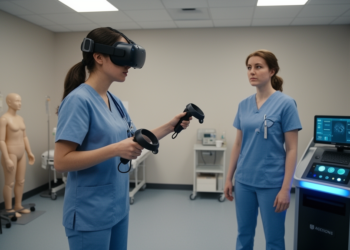
A seven-person pilot found that AI-scored speech in a virtual-reality nursing simulation agreed with expert labels in 96.10% of 77 ...

A systematic review of 43 South Korean studies finds that avatar-based metaverse counseling improves interpersonal and behavioral outcomes through protected ...


Embark on a thrilling journey of discovery with Scienmag.com—your ultimate source for cutting-edge breakthroughs. Immerse yourself in a world where curiosity knows no limits and tomorrow’s possibilities become today’s reality!