


Mapping the Urban Wild: How Spatial Ecology Is Redefining City Conservation
A new research collection argues that the spatial arrangement of resources, disturbances, and human activity in cities is the key ...
A new research collection argues that the spatial arrangement of resources, disturbances, and human activity in cities is the key ...

A hybrid multi-criteria decision-making framework combining CRITIC, TOPSIS, and COPRAS has identified Tambaram as the optimal site for a battery ...

A three-sensor comparison over Lahore shows the PRISMA hyperspectral satellite dramatically improves classification of transitional urban-density classes, while confirming that ...

A 15-year study finds Guadalajara's Digital Creative City matches global innovation district design standards but fails on governance and equity, ...

A new framework called NUSIF translates the 15-minute city, the 3-30-300 rule and the walking-public transport interface into comparable spatial ...
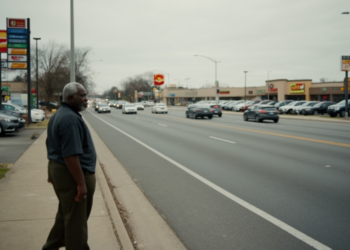
A large All of Us analysis finds that while neighborhood walkability showed no overall link to diabetes outcomes, Black residents ...

A study of a mid-size Canadian city reveals how young and socially marginalized people were overlooked in a $80 million ...
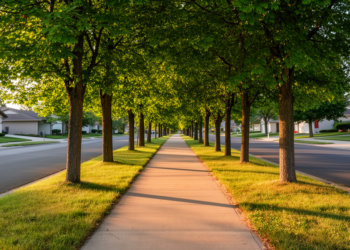
A Michigan State University visual perception study of nearly 9,000 ratings found that landscape buffers with street trees were associated ...
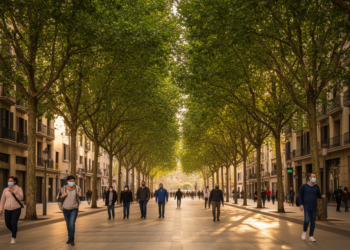
A study of 519,005 people in Northern Ireland found that neighbourhoods with more woodland had lower COVID-19 infection odds while ...

A new Perspective in Discover Sustainability argues that the shared greenery surrounding apartment blocks is a vast, overlooked layer of ...


Embark on a thrilling journey of discovery with Scienmag.com—your ultimate source for cutting-edge breakthroughs. Immerse yourself in a world where curiosity knows no limits and tomorrow’s possibilities become today’s reality!