


When AI Helps and When It Hurts: The Cognitive Partition That Decides STEM Learning
A new theoretical framework argues that whether generative AI builds or undermines STEM learning depends not on the tool itself ...
A new theoretical framework argues that whether generative AI builds or undermines STEM learning depends not on the tool itself ...

A new editorial in the International Journal of STEM Education argues that generative AI has broken the core inference behind ...

A new review argues that motivation research in STEM education has been race-evasive and proposes a systems framework centering belonging, ...

A new framework argues that generative AI is an arrival technology that breaks the evidence-first logic of past STEM education ...

A new case study shows how the Firmata protocol and Google's MediaPipe library let students control Arduino devices with hand ...

A new classroom study found ChatGPT-5's rubric scores agreed moderately to well with instructor and peer evaluations in undergraduate biology ...
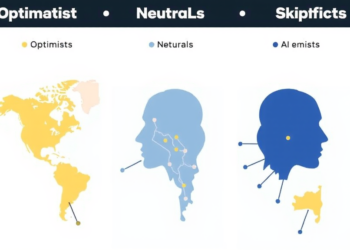
A cluster analysis of 237 U.S. university students reveals three distinct perception profiles of generative AI—optimists, neutrals, and skeptics—with frequency ...

A new study finds that undergraduates used generative AI in three distinct cognitive modes—passive, active, and constructive—while no evidence emerged ...
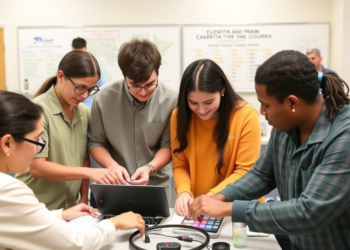
A redesigned junior-level bioinstrumentation course at Widener University embeds service-learning through Arduino laboratories and community partnerships, boosting technical and professional ...

A new Australian study shows that a planned series of connected play activities, guided by educators as play partners, can ...


Embark on a thrilling journey of discovery with Scienmag.com—your ultimate source for cutting-edge breakthroughs. Immerse yourself in a world where curiosity knows no limits and tomorrow’s possibilities become today’s reality!