

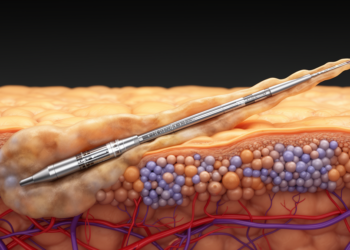
Spatial Niches May Explain Why Brain Implants Lose Their Signal Over Time
A new analytical framework proposes that spatial niches — recurring local cellular and molecular neighborhoods around implanted microelectrodes — could ...
A new analytical framework proposes that spatial niches — recurring local cellular and molecular neighborhoods around implanted microelectrodes — could ...

A spatial transcriptomics study of fatal COVID-19 lungs reveals progressive loss of endothelial and immune cells, explosive peribronchial fibroblast expansion, ...
A large trans-disease meta-analysis of more than 6,900 brain scans finds that Alzheimer's disease and multiple sclerosis share a common ...
Spatial NT-seq combines metabolic RNA labeling with in situ chemical recoding to co-map newly synthesized and pre-existing RNAs, revealing the ...

Researchers have shown that the four-eyed fish Anableps anableps evolved its aerial vision through developmental expansion of the ventral retina ...
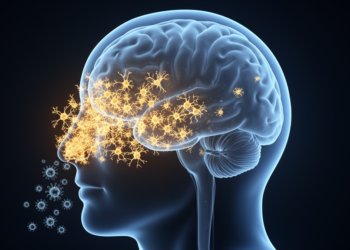
A multiomic study in PLOS Pathogens shows that intranasal HSV-1 infection drives localized, interferon-dominated remodeling of microglia in discrete brainstem ...

A new review argues that triple-negative breast cancer's heterogeneity and therapy resistance emerge from spatially organized paracrine signaling networks between ...
Researchers have developed SpatialZoomer, a spectral graph-based tool that automatically identifies the biologically meaningful scales in spatial transcriptomics data, revealing ...
Researchers at MD Anderson developed an AI tool called SPACER that decodes the spatial signals attracting or repelling immune cells ...
New research shows that loss of the tumour suppressor LATS1 on chromosome 6q drives Hippo pathway dysregulation in ultra-high-risk PFA ...


Embark on a thrilling journey of discovery with Scienmag.com—your ultimate source for cutting-edge breakthroughs. Immerse yourself in a world where curiosity knows no limits and tomorrow’s possibilities become today’s reality!