

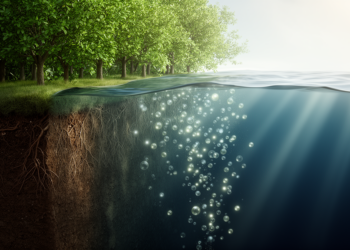
NASA’s New Earth System Model Tracks Carbon From Forest Canopy to Ocean Depths
NASA's Goddard Institute for Space Studies has released ModelE2.1-CC2, a fully interactive Earth system model with upgraded ocean and land ...
NASA's Goddard Institute for Space Studies has released ModelE2.1-CC2, a fully interactive Earth system model with upgraded ocean and land ...

A 90-day incubation study of Malaysian tropical soil shows that compost-induced carbon dioxide emissions are driven primarily by shifts in ...
A ten-model comparison reveals that tropical vegetation carbon gained under rising emissions is likely to be lost even after humanity ...
New research from the Australian Alps shows that peatland degradation disrupts the depth- and water-table-dependent organization of microbial communities and ...
A new PNAS modeling study from PIK and Kiel University finds that losing plant diversity could cut global grassland CO₂ ...
A long-term grazer-exclusion experiment in the Trans-Himalaya reveals that large mammalian herbivores shape the seasonal deployment of microbial extracellular enzymes, ...
A new study of Inner Mongolian desert grasslands shows that heavy grazing erodes soil microbial diversity and produces complex but ...
A new study in Forest Ecosystems reveals that maturing temperate forests redistribute soil carbon rather than simply storing more, with ...
A new study in Global Change Biology Communications reveals that sustained livestock grazing enhances soil organic carbon storage in sub-arctic ...
A new isotope-tracing study finds that mucus-like microbial secretions contribute to stable mineral-associated soil carbon at rates rivaling dead microbial ...

Embark on a thrilling journey of discovery with Scienmag.com—your ultimate source for cutting-edge breakthroughs. Immerse yourself in a world where curiosity knows no limits and tomorrow’s possibilities become today’s reality!