


Ugandan Farming Network Demonstrates Collaborative Agroecology for Local Climate Change Adaptation
A study of 25 member organisations in Uganda shows how networked agroecology supports climate adaptation among smallholder farming communities.
A study of 25 member organisations in Uganda shows how networked agroecology supports climate adaptation among smallholder farming communities.

A study in southwestern Ethiopia identified institutional, socioeconomic, and farm-level factors that significantly influence farmers' adoption of soil and water ...

Researchers developed DETS-Net, a dual-encoder deep learning model combining CNN and Transformer architectures to accurately extract mountainous terraced fields from ...

A cross-sectional investigation in Ethiopia's Yayu Coffee Forest Biosphere Reserve found that 72 percent of smallholders adopted agroecological practices, with ...

A GIS-based morphometric and hypsometric analysis of eight micro-watersheds in Karnataka's Cauvery River Basin ranks Dholenahalli as the most erosion-vulnerable ...
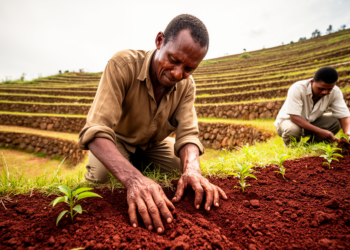
A Jema Watershed household survey found that training, conservation knowledge, information sources and extension services were positively associated with adoption, ...
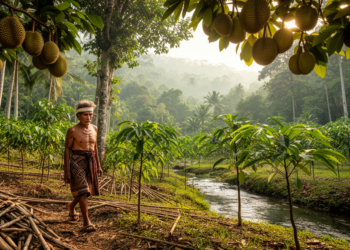
A new study finds that traditional Dayak tembawang forest gardens in West Kalimantan possess the multilayered structure and diversity needed ...

A new cost-benefit analysis of 385 households and 726 plots in Ethiopia's Upper Blue Nile Basin shows that the profitability ...
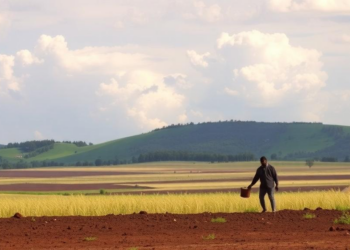
A new satellite-based modeling study shows that widespread soil and water conservation could nearly halve severe soil loss in Ethiopia's ...
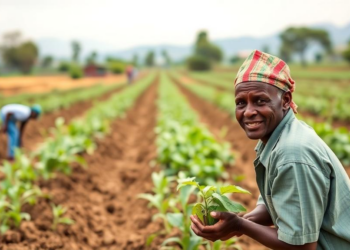
A new panel study of 1,400 Ethiopian farm households shows that credit access, extension services, and household resources determine whether ...


Embark on a thrilling journey of discovery with Scienmag.com—your ultimate source for cutting-edge breakthroughs. Immerse yourself in a world where curiosity knows no limits and tomorrow’s possibilities become today’s reality!