

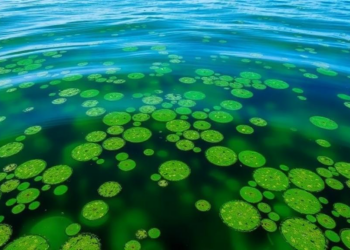
NOAA funds FAU study of persistent harmful algal blooms
A three-university project funded by NOAA will combine field observations, experiments, sediment analysis and modeling to investigate why harmful algal ...
A three-university project funded by NOAA will combine field observations, experiments, sediment analysis and modeling to investigate why harmful algal ...

A new community dataset called TORRENT links 42,466 reported flash-flood episodes with stream gauges, watersheds, and rainfall data across the ...
Researchers have repackaged NOAA's operational HRRR weather model into an energy-ready toolkit that outperforms existing wind resource datasets and extends ...
A nine-year validation study shows satellite chlorophyll measurements reliably track toxic algal blooms in Chesapeake Bay tributaries, but converting chlorophyll ...
The San Diego Zoo Wildlife Alliance has won the Academia & Research category at the inaugural 2026 Global Drone Operations ...
The University of Oklahoma has received a five-year, up-to-$220 million renewal from NOAA and the Department of Commerce to continue ...
A new analysis shows that misplaced rainfall forecasts and a failed USGS gauge caused operational models to severely underpredict the ...
Researchers have shown for the first time that assimilating satellite measurements of naturally occurring water vapor isotopes into weather models ...
Researchers at the University of São Paulo have released DatavizAmz, an open-source pipeline and web dashboard that converts NOAA global ...
NOAA has chosen Mississippi State University to host its new Cooperative Institute in the Northern Gulf of America, a consortium ...

Embark on a thrilling journey of discovery with Scienmag.com—your ultimate source for cutting-edge breakthroughs. Immerse yourself in a world where curiosity knows no limits and tomorrow’s possibilities become today’s reality!