

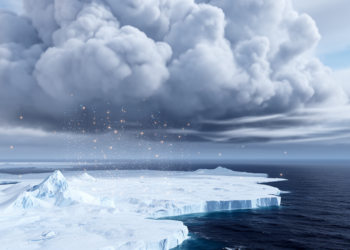
Arctic Cloud Seeds Split: Warming Boosts Particles in the High Arctic but Cuts Them at Sea
A landmark analysis of two decades of Arctic aerosol observations shows that warming will increase cloud-seeding particles in the ice-covered ...
A landmark analysis of two decades of Arctic aerosol observations shows that warming will increase cloud-seeding particles in the ice-covered ...

A new global analysis finds that rain-induced dilution of the ocean surface nearly doubles previous estimates of rain's contribution to ...

Atmospheric simulations suggest gravity waves over the Martian volcano Arsia Mons can trigger spontaneous ice nucleation, forming clouds without the ...
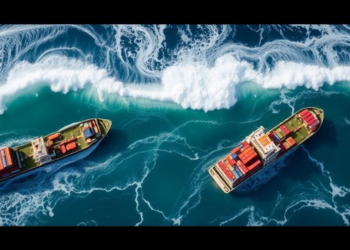
New palaeoceanographic evidence indicates the Agulhas Leakage did not drive Atlantic overturning circulation during the Pliocene, challenging assumptions about the ...

New modelling based on ESA's Mars Express data shows that Mars's elongated Arsia Mons cloud forms through homogeneous nucleation, a ...
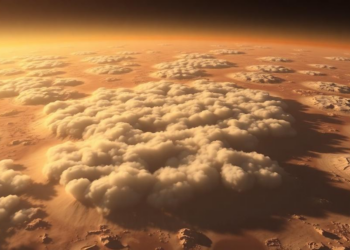
A new modelling study of Mars's Arsia Mons Elongated Cloud suggests that water ice clouds can form by homogeneous nucleation ...
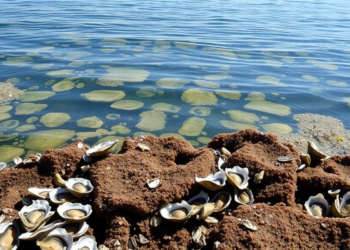
A 2,000-year record of North Carolina oyster reefs shows that accelerating sea-level rise triples reef accretion, yet the carbon dioxide ...

High-resolution thallium isotope records from two ocean basins reveal that global oceanic oxygen peaked early in the Last Interglacial and ...
A new Nature Geoscience study projects that global warming will sharply weaken the South Asian monsoon's remote influence on Mediterranean ...
A new isotope-tracing study finds that mucus-like microbial secretions contribute to stable mineral-associated soil carbon at rates rivaling dead microbial ...


Embark on a thrilling journey of discovery with Scienmag.com—your ultimate source for cutting-edge breakthroughs. Immerse yourself in a world where curiosity knows no limits and tomorrow’s possibilities become today’s reality!