

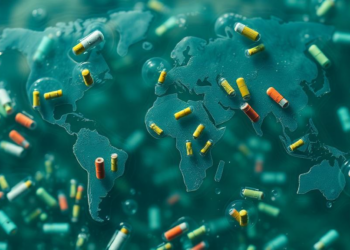
Pharmaceutical Waste Is Breeding Superbugs in Rivers and Wastewater Worldwide
A comprehensive review of 167 studies shows that pharmaceutical and clinical effluents are transforming aquatic ecosystems into hotspots where multidrug ...
A comprehensive review of 167 studies shows that pharmaceutical and clinical effluents are transforming aquatic ecosystems into hotspots where multidrug ...

Paired sampling across four North Sea oil fields shows that produced water, long used as a proxy for reservoir microbiomes, ...
A field study in a twenty-year-unmanaged wild tea plantation in Hainan, China, shows that natural habitat heterogeneity, from open sites ...
An open-label pilot trial found that a single fecal microbiota transplantation cleared adherent-invasive E. coli from the gut lining of ...
Metagenomic tracking of oolong tea waste decomposition reveals a three-phase microbial succession that breaks down lignocellulose and cuts antibiotic resistance ...
A reciprocal litterbag experiment in Taiwan reveals that fire-tolerant and fire-avoiding pine species drive distinct fungal successions during needle decomposition, ...
Wageningen researchers enriched mixed microbial communities that simultaneously consume carbon monoxide and acetate to produce butyrate, with Eubacterium emerging as ...
Metagenomic and transcriptomic analysis of an acidic German fen reveals nearly 10,000 biosynthetic gene clusters, 97 percent of them new ...
A shotgun metagenomic study of 10,003 American women shows that microbial signatures of recent bacterial vaginosis and urinary tract infection, ...
Researchers at Nanjing Tech University have developed SuSha, a machine learning tool that predicts microbial salt tolerance directly from genome ...

Embark on a thrilling journey of discovery with Scienmag.com—your ultimate source for cutting-edge breakthroughs. Immerse yourself in a world where curiosity knows no limits and tomorrow’s possibilities become today’s reality!