

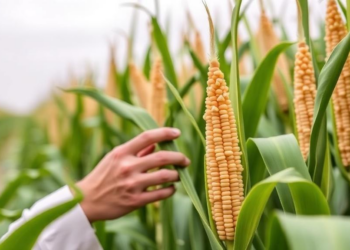
Sniffing Out Trouble: Scientists Detect Pest Attacks on Maize in Real Time by Reading Plant Odors
Researchers have shown that real-time mass spectrometry and electronic noses can detect the chemical distress signals maize plants emit when ...
Researchers have shown that real-time mass spectrometry and electronic noses can detect the chemical distress signals maize plants emit when ...

A modified North Carolina Design III mapping study in maize has identified 14 major QTLs and new candidate genes underlying ...

A six-model genome-wide association study of 239 maize inbred lines has identified 200 genetic variants linked to kernel fat content ...

A three-year, multi-site experiment across China's major maize regions shows that location and post-flowering weather, rather than sowing date, largely ...
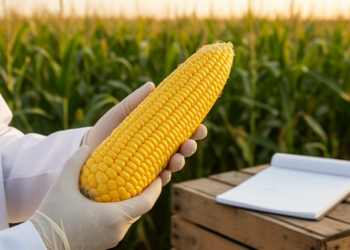
An integrated genetic mapping study in a 530-line multi-parent maize population has prioritized four candidate genes controlling kernel number per ...

Empirical modelling of northern Ghana projects crop yield losses of 25 to 60 percent by 2050 as rising temperatures and ...

A new Nature Communications study estimates that maize-soybean intercropping on up to 20 million hectares could cover three-quarters of the ...

A calibrated watershed model shows that combining irrigation, high-density planting and improved maize hybrids can raise yields and stabilise them ...
Researchers at the University of Minnesota have developed and validated the first analytical framework for estimating genetic covariance between plant ...

Researchers in China have sequenced two endophytic fungi from maize that suppress southern corn rust by up to 87.9 percent ...


Embark on a thrilling journey of discovery with Scienmag.com—your ultimate source for cutting-edge breakthroughs. Immerse yourself in a world where curiosity knows no limits and tomorrow’s possibilities become today’s reality!