

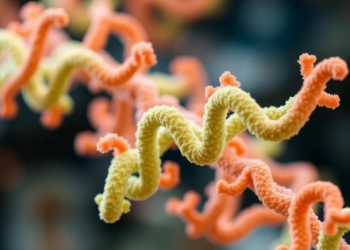
Scientists Receive Up to $51.7 Million to Predict Protein Misfolding Before Disease Begins
A co-led Buck Institute and Georgetown University team has won an ARPA-H award of up to $51.7 million to predict ...
A co-led Buck Institute and Georgetown University team has won an ARPA-H award of up to $51.7 million to predict ...
A Stowers Institute scientist will help lead a $28.6 million ARPA-H effort to generate billions of protein aggregation measurements and ...
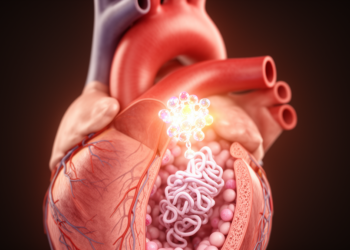
Genetic variants in the heat-resistant obscure chaperone protein Hero11, encoded by C19orf53, are associated with coronary artery disease risk and ...

A multi-species bioinformatics analysis of four tardigrade genomes reveals new Dsup diversity, conserved protein motifs, and statistical signatures of convergent ...

Researchers at UC Berkeley used active learning and a model called ADhunter to discover and characterize nearly 10,000 transcriptional activator ...
Researchers found that sublethal rifampicin exposure drives Lactobacillus delbrueckii subsp. bulgaricus into a reversible dormant state in which protein aggregates ...
Intrinsically disordered proteins (IDRs)—segments that do not adopt a single stable 3D structure—are common across life and perform crucial cellular ...
In the realm of protein science, a significant frontier has emerged, focusing on intrinsically disordered proteins (IDPs). Unlike their well-folded ...
In a groundbreaking study that promises to reshape our understanding of cellular signal transduction, researchers have unveiled the pivotal role ...
In a groundbreaking advancement poised to revolutionize biomarker detection, researchers have unveiled an innovative method employing a novel amylin binder ...


Embark on a thrilling journey of discovery with Scienmag.com—your ultimate source for cutting-edge breakthroughs. Immerse yourself in a world where curiosity knows no limits and tomorrow’s possibilities become today’s reality!