


Biogenic Metal Oxide Nanoparticles Achieve Up to 98.5 Percent Dye Degradation
A comprehensive review reveals that plant-derived metabolites resolve the long-standing precision-toxicity trade-off in metal oxide nanoparticle fabrication.
A comprehensive review reveals that plant-derived metabolites resolve the long-standing precision-toxicity trade-off in metal oxide nanoparticle fabrication.

Researchers have identified how catalyst identity and potential-dependent surface states govern whether glucose undergoes selective functional-group oxidation or extensive carbon-carbon ...

Researchers synthesized urchin-like microspheres containing both CuO and Cu2O phases and traced a copper-rich core giving way to a more ...

Electron and soft X-ray imaging beams changed the products of a copper-oxide nanocube reaction, producing gold coatings under electrons and ...

A ternary blend of ZnO, CuO and NiO nanoparticles enhances the crystallinity, dielectric response and flexibility of PVDF films, though ...
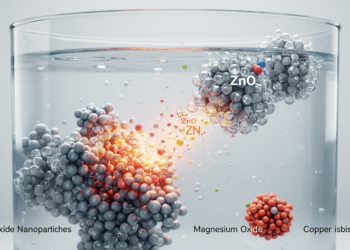
In a controlled comparison, zinc oxide nanoparticles degraded 85 percent of methyl red dye under xenon-lamp irradiation, outperforming magnesium oxide ...

X-ray experiments at SwissFEL reveal that magnons in copper oxide survive surprisingly long before handing their energy to the crystal ...
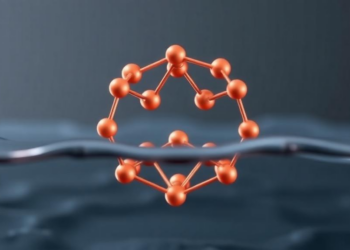
Researchers have synthesized urchin-like copper oxide nanostructures that are superhydrophobic and superoleophilic without organic modifiers, enabling highly efficient oil-water separation ...
Researchers show that activating the copper MOF HKUST-1 and converting it into copper oxide yields sunlight-driven catalysts that destroy methylene ...

Researchers used ultraviolet femtosecond laser pulses to chemically reduce and brighten black copper oxide surfaces, achieving an 80 percent relative ...


Embark on a thrilling journey of discovery with Scienmag.com—your ultimate source for cutting-edge breakthroughs. Immerse yourself in a world where curiosity knows no limits and tomorrow’s possibilities become today’s reality!