

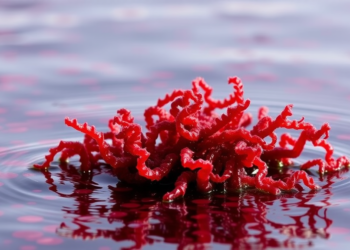
Red Seaweeds Turn Shrimp Farm Waste Into Clean Water in Just Days
Five native Indian red seaweed species removed up to 100 percent of nitrate and most phosphate and ammonium from shrimp ...
Five native Indian red seaweed species removed up to 100 percent of nitrate and most phosphate and ammonium from shrimp ...

A non-pathogenic soil bacterium uses its metal-resistant biofilm scaffold to convert toxic selenite into valuable crystalline selenium nanorods at ambient ...
A new review in Blue Biotechnology details how bacteria, archaea, algae and fungi metabolize everything from oil spills and pesticides ...
A new Microbial Biotechnology editorial shows how engineered microbes and enzymes are being deployed against fungal disease, diabetes, plastic waste ...
Researchers show that the white-rot fungus Trametes versicolor switches on a universal genetic stress program to detoxify toxic hydrothermal liquefaction ...
A genomic survey of thousands of bacterial and archaeal genomes shows that reductive dehalogenase genes split into a highly mobile ...
A new review maps how CRISPR gene editing and diagnostics are being applied to pathogenic microbes, antibiotic resistance, and invasive ...
Bacteria isolated from Nigeria's polluted Ologe Lagoon can degrade up to 85 percent of crude oil hydrocarbons while tolerating lead, ...
A new review reveals that entomopathogenic fungi, long valued as insect biocontrol agents, also act as endophytes that boost crop ...
Researchers at Carnegie Mellon University have developed BTEXgenie, a curated hidden Markov model-based tool that dramatically improves substrate-specific annotation of ...

Embark on a thrilling journey of discovery with Scienmag.com—your ultimate source for cutting-edge breakthroughs. Immerse yourself in a world where curiosity knows no limits and tomorrow’s possibilities become today’s reality!