One of the most stubborn classes of synthetic insecticides may finally have met its match, and the weapon is not a chemical scrubber or an industrial filtration plant but a microbe pulled from extreme environments and a nanoparticle built by biology itself. In a study published in Applied Microbiology and Biotechnology, researchers report the isolation of a novel bacterial strain, Proteus mirabilis JB1, that produces an alkaline-pH-stable laccase, an extremozyme whose catalytic power survives conditions that would denature most ordinary enzymes. When this enzyme was paired with biogenic selenium nanoparticles, the resulting nano-biocatalyst achieved complete degradation of cypermethrin, a widely used pyrethroid pesticide, within 72 hours, without generating any detectable toxic intermediates. The finding, published as open access research with a permanent DOI, offers a replicable end-to-end technique spanning microbial isolation, enzyme optimization, nanobiocatalyst fabrication, and field-relevant application.
Cypermethrin is a synthetic pyrethroid insecticide deployed across agriculture, livestock management, and household pest control, prized for its potency against a broad spectrum of insects. Yet its persistence in soil and water has raised persistent environmental concerns, because residual cypermethrin and its breakdown products can harm non-target organisms, from aquatic invertebrates to beneficial soil microbes. Conventional remediation approaches, including advanced oxidation processes and physicochemical adsorption, often demand high energy inputs, generate secondary waste, or leave behind partially degraded fragments that can be more toxic than the parent compound. Biological degradation, in contrast, uses enzymes to cleave the pesticide’s chemical bonds under mild conditions, but the Achilles heel of most biocatalysts has always been fragility: enzymes typically lose activity outside a narrow range of temperature, pH, and salinity. This is precisely the problem that extremozymes are engineered by evolution to solve.
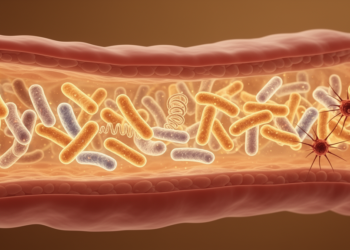
Extremozymes are enzymes produced by microorganisms that thrive in extreme environments, whether hot springs, acidic lakes, hypersaline basins, or alkaline soils. Because their host microbes survive at the edges of habitability, their enzymes have evolved structural features, including robust folding, salt bridges, and hydrophobic cores, that maintain catalytic activity under conditions that would destroy conventional proteins. The research team behind the new study screened and isolated Proteus mirabilis JB1, a bacterium that produces a laccase stable at alkaline pH between 7 and 10. Laccases are multi-copper oxidoreductases capable of oxidizing a wide range of aromatic and phenolic substrates, which makes them particularly attractive for breaking down persistent organic pollutants, including pesticides. The alkaline stability of the JB1 laccase is a critical technical advantage, because many contaminated environments, especially those affected by industrial runoff or agricultural liming, sit at pH values well above neutral.
To coax maximum enzyme yield from the newly isolated strain, the researchers first conducted a one-factor-at-a-time, or OFAT, screening across a remarkably broad parameter space. They tested nine carbon sources, including glucose, lactose, xylose, sucrose, starch, glycerol, cellulose, trisodium citrate, and sodium acetate; seven nitrogen sources, including ammonium sulfate, sodium nitrate, urea, beef extract, peptone, casein, and gelatin; and a panel of metal salts at two concentrations, 0.1 millimolar and 0.01 millimolar, including CuSO4, KCl, ZnCl2, MgCl2, MnCl2, NiCl2, NaCl, and CaCl2. They also varied pH from 7 to 10. The highest enzyme activity recorded in this initial phase was 0.999 units per milliliter, achieved using 0.25 percent weight-per-volume cellulose, 0.8 percent urea, 0.1 millimolar MnCl2, MgSO4, CaCl2, NaCl, and KCl, and 0.01 millimolar CuSO4, FeSO4, and NiCl2 at pH 9. Notably, the resulting enzyme showed good stability in the presence of surfactants such as Tween 80 and SDS, organic solvents including acetone, ethanol, and methanol, and the chelating inhibitor EDTA, a profile that suggests the enzyme could tolerate the messy, chemically heterogeneous conditions of real contaminated sites.
OFAT screening, while useful for identifying promising variables, cannot capture the interactions between parameters that often determine real-world performance. To address this limitation, the team deployed two statistical design-of-experiments approaches: Plackett-Burman Design, or PBD, to screen which variables exert the largest influence on enzyme yield, and Central Composite Design, or CCD, to optimize the critical parameters identified by PBD. Through this two-stage statistical refinement, the researchers converged on an optimized formulation of 1.5 percent cellulose, 0.7 percent urea, and 0.05 millimolar MgSO4. Under these conditions, enzyme activity rose to 2.3 units per milliliter, a 9.58-fold increase over the initial screening value. The magnitude of this improvement demonstrates the power of response surface methodology in bioprocess engineering, where subtle interactions between carbon source, nitrogen source, and metal cofactors can either suppress or dramatically amplify enzyme production. The optimized laccase yield provides a much stronger starting point for fabricating an effective nano-biocatalyst.
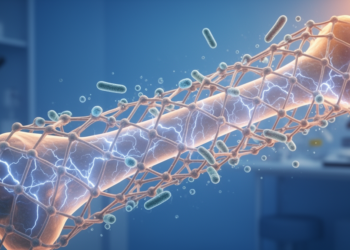
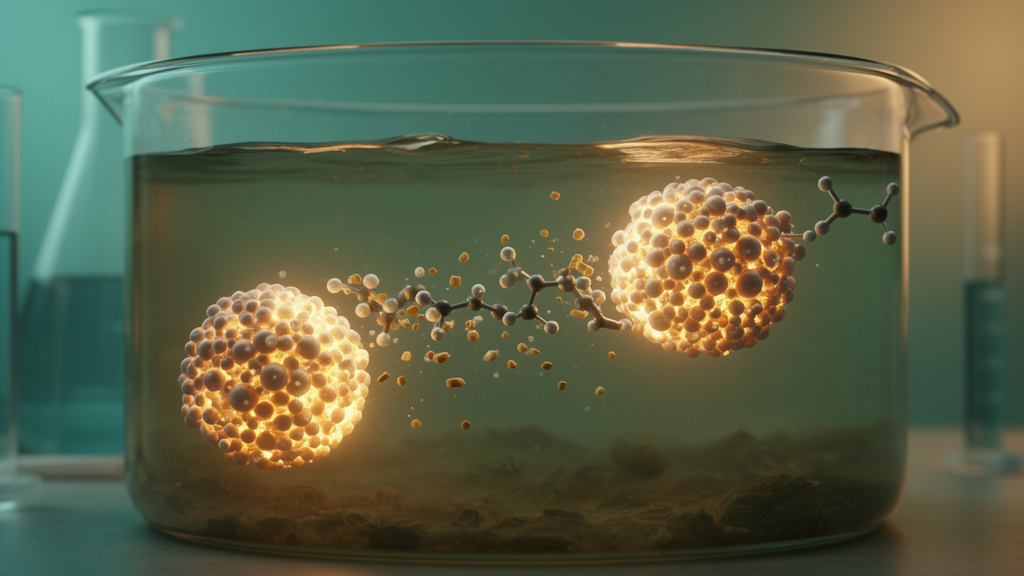
With a high-yield extremozyme in hand, the researchers turned to nanotechnology to amplify its catalytic reach. They fabricated biogenic selenium nanoparticles, or Bio-SeNPs, meaning the particles were produced through biological rather than purely synthetic routes. Biogenic nanoparticles often exhibit superior biocompatibility and colloidal stability compared with chemically synthesized counterparts, because biological fabrication can cap and stabilize the particles with organic molecules derived from the producing organism. Selenium itself is an intriguing nanomaterial: at the nanoscale it displays enhanced surface area, tunable electronic properties, and low toxicity compared with many heavy-metal nanoparticles, making it a favored scaffold for enzyme immobilization. When the extremozyme laccase was integrated with the Bio-SeNPs, the resulting nano-biocatalyst combined the enzyme’s substrate specificity and alkaline stability with the nanoparticle’s high surface area and structural support, creating a hybrid system capable of sustained catalytic turnover under conditions that would quickly exhaust free enzymes.
The performance of this nano-biocatalyst against cypermethrin is the study’s headline result. Within 72 hours, the Bio-SeNP-based system achieved 100 percent degradation of cypermethrin, and, critically, the researchers report that no toxic intermediates were formed during the breakdown process. This latter point carries substantial technical and regulatory weight, because incomplete pesticide degradation often generates metabolites, such as substituted phenols or carboxylic acid derivatives, that can be more persistent or more acutely toxic than the parent compound. A remediation technology that fully mineralizes or safely transforms the pesticide without leaving hazardous fragments addresses one of the central objections to bioremediation as a field. The complete detoxification within a relatively short timeframe also suggests the system could be scaled for practical deployment in contaminated soil or water treatment scenarios.
What makes this study particularly valuable from a methodological standpoint is its comprehensiveness and replicability. The researchers provide a full workflow, beginning with the isolation and screening of an extremozyme-producing microbe, moving through systematic OFAT, PBD, and CCD optimization of enzyme production parameters, continuing with the fabrication of a biogenic nanoparticle scaffold, and ending with the application of the resulting nano-biocatalyst to pesticide degradation. Each stage is documented with sufficient technical detail that other laboratories could reproduce the technique, which is essential for translating a laboratory proof-of-concept into a deployable remediation technology. The study also highlights the broader potential of extremozymes beyond pesticide breakdown, since alkaline-stable laccases and similar enzymes could be applied to the degradation of dyes, pharmaceuticals, industrial phenols, and other persistent organic pollutants that resist conventional treatment.
The research team, led by Juhi Barot and Nafisa Patel of Naran Lala College of Professional and Applied Sciences in Navsari, India, in collaboration with Vimal Prajapati of Aspee Shakilam Biotechnology Institute at Navsari Agriculture University, Nadiah S. Alzharani of Al Baha University in Saudi Arabia, and Andrea Mastinu of the University of Brescia in Italy, published the work as open access under a Creative Commons Attribution 4.0 license, ensuring that the underlying data and methods are freely available to researchers worldwide. The article was received on 19 June 2026, revised on 12 September 2026, accepted on 22 September 2026, and published on 17 October 2026, carrying the DOI 10.1007/s00253-026-14053-z. The authors declare no competing interests, and the work was supported in part by open access funding provided by the University of Brescia within the CRUI-CARE Agreement.
Looking ahead, the convergence of extremozyme biology and biogenic nanotechnology points toward a new generation of environmental biocatalysts that could reshape how the world deals with pesticide contamination. Rather than relying on energy-intensive physicochemical processes or fragile free enzymes, remediation technologies of the future may deploy robust, nanoparticle-supported extremozymes that operate under the harsh, variable conditions of real contaminated sites. The complete degradation of cypermethrin within 72 hours, without toxic intermediates, is a striking demonstration of what this hybrid approach can achieve. As the underlying methodology is replicated and refined, similar nano-biocatalyst systems could be engineered to target other persistent pollutants, from agricultural chemicals to industrial effluents, offering a scalable, biologically grounded path toward cleaner soil and water.
Subject of Research: Environmental Biotechnology
Article Title: Next-generation nano-biocatalysts: extremozyme-based nanoparticle system for cypermethrin bioremediation
Article References: Barot, J., Patel, N., Prajapati, V., Alzharani, N. S., & Mastinu, A. (2026). Next-generation nano-biocatalysts: extremozyme-based nanoparticle system for cypermethrin bioremediation. Applied Microbiology and Biotechnology. https://doi.org/10.1007/s00253-026-14053-z
Image Credits: AI Generated
DOI: 10.1007/s00253-026-14053-z
Keywords: extremozymes, laccase, Proteus mirabilis, biogenic selenium nanoparticles, cypermethrin, bioremediation, nano-biocatalysts, pesticide degradation, Plackett-Burman Design, Central Composite Design, Next-generation, extremozyme-based
Cite Scienmag News
Drew Townsend. (October 17, 2026). Extremozyme-powered selenium nanoparticles wipe out cypermethrin pesticide in 72 hours. Scienmag. https://scienmag.com/extremozyme-powered-selenium-nanoparticles-wipe-out-cypermethrin-pesticide-in-72-hours/
Drew Townsend. "Extremozyme-powered selenium nanoparticles wipe out cypermethrin pesticide in 72 hours." Scienmag, 17 October 2026, https://scienmag.com/extremozyme-powered-selenium-nanoparticles-wipe-out-cypermethrin-pesticide-in-72-hours/. Accessed 17 October 2026.
Drew Townsend. "Extremozyme-powered selenium nanoparticles wipe out cypermethrin pesticide in 72 hours." Scienmag. October 17, 2026. https://scienmag.com/extremozyme-powered-selenium-nanoparticles-wipe-out-cypermethrin-pesticide-in-72-hours/