


Coffee Waste Carbon and Zinc Framework Enable Durable Sodium Battery Anodes
Researchers synthesized a zinc metal-organic framework and coffee-waste carbon composite that demonstrates durable electrochemical cycling as a sodium-ion battery anode.
Researchers synthesized a zinc metal-organic framework and coffee-waste carbon composite that demonstrates durable electrochemical cycling as a sodium-ion battery anode.

Regulating the carbonization temperature of sucrose-derived hard carbon microspheres optimizes their microstructure to achieve high capacity, improved efficiency, and stable ...

Researchers synthesized a nitrogen-doped porous hard carbon from rice husks that achieved high reversible capacity and stable cycling in sodium-ion ...

Researchers converted banana peel waste into hierarchical porous carbon that achieved a specific capacitance of 360 Farads per gram in ...

A review examines how olive pomace can be converted into carbon electrode materials for supercapacitors and batteries, highlighting the interplay ...
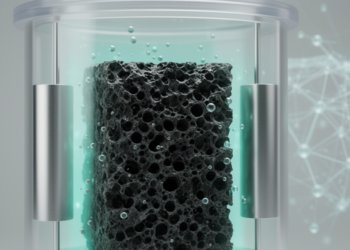
A machine learning model built on eight material descriptors predicted the specific capacity of nitrogen-doped porous carbon cathodes for zinc-ion ...

A hydrothermally synthesized α-MnO2 nanoneedle–biochar nanocomposite showed substantially improved supercapacitor charge storage over either component alone.
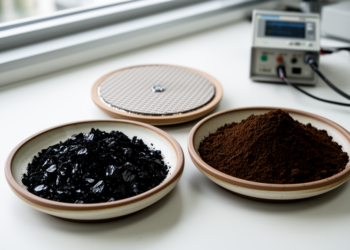
A new study finds coconut shell-derived carbon electrodes achieve far higher capacitance and conductivity than kluwak shell-derived counterparts for electrical ...
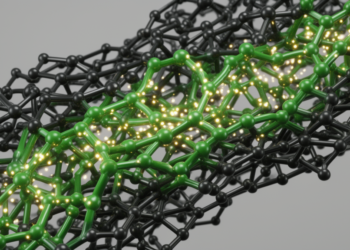
A new review shows that fusing polyaniline with carbon nanomaterials from graphene to carbon dots dramatically boosts capacitance, cycling stability, ...
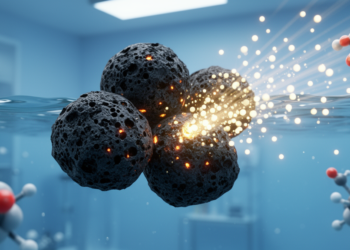
Researchers have engineered vacancy-pentagon defects in waste-derived biochar that redirect peracetic acid activation toward highly selective, long-lived acetylperoxyl radicals, enabling ...


Embark on a thrilling journey of discovery with Scienmag.com—your ultimate source for cutting-edge breakthroughs. Immerse yourself in a world where curiosity knows no limits and tomorrow’s possibilities become today’s reality!