


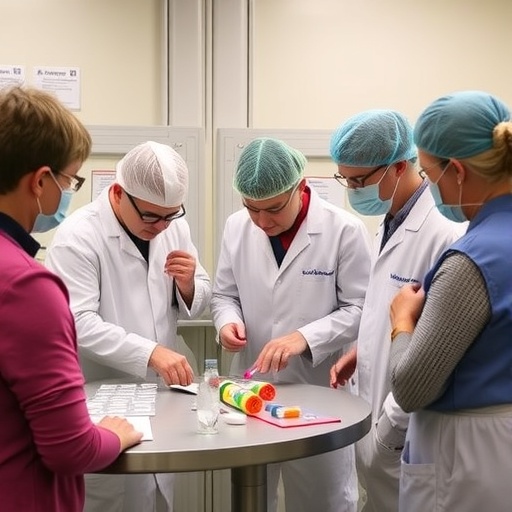
In a groundbreaking inquiry investigating the stability of pharmaceuticals destined for space missions, Southwest Research Institute (SwRI) has unveiled critical insights into the effects of medication repackaging on drug potency. This research comes at a pivotal moment as NASA progresses with its Artemis program, which aims to establish sustainable human presence on the Moon through phased lunar base construction. The study meticulously challenges existing protocols that prioritize storage efficiency by transferring medications from their original packaging into resealable plastic bags, a common practice in spaceflight logistics.
The premise for this investigative study was grounded in the necessity to ensure astronaut health and safety during extended missions beyond Earth. Recognizing that drug degradation could jeopardize mission outcomes, SwRI researchers adopted a methodical approach to measure how repackaging impacts the chemical integrity of pharmaceuticals. Without deploying the medications into orbit, the team simulated high-stress environmental conditions akin to those potentially encountered during space transit—exposing samples to sustained high temperature (40 degrees Celsius) and elevated humidity (75 percent relative humidity).
Initial quantitative analyses revealed alarming results. Within a mere two months, the active pharmaceutical ingredient (API) in a widely used antibiotic sample deteriorated to undetectable levels when stored in zip-style plastic bags, while other drugs exhibited significant reductions in their active components. These findings underscore the vulnerability of repackaged medications that may be subjected to harsh environmental factors, a scenario highly likely in the constrained and variable microclimates within spacecraft or lunar habitats.
Employing advanced analytical techniques, including high-performance liquid chromatography (HPLC), scientists continually monitored the concentration of drug molecules over a six-month period. This technique provided precise quantification of the APIs, affording robust data on the kinetics of degradation. While the experiment was Earth-based and did not incorporate the complex variables present in actual spaceflight—such as exposure to cosmic radiation or microgravity—the observed degradation trends signal serious concerns about the long-term viability of medications stored outside their controlled packaging.
The implications for space medicine are profound. Presently, NASA’s strategy of repackaging arises from strict spatial constraints aboard spacecraft, necessitating compact storage solutions to maximize payload efficiency. However, the research suggests a reevaluation of this strategy might be imperative, where preserving pharmaceutical efficacy could demand advancements in packaging technology or the development of more resilient drug formulations tailored for extraterrestrial environments.
This investigation also resonates with terrestrial pharmaceutical handling practices. Many patients and healthcare providers routinely transfer medications into alternative containers for convenience or organization, unaware of the potential for accelerated degradation. The SwRI findings illuminate the broader necessity for strict adherence to recommended storage guidelines, especially for medications intended for extended use or storage under non-ideal conditions.
Dr. Judy Herrera, a senior research scientist at SwRI, who led the study, emphasized the criticality of this issue: “Our data demonstrate that medication stability can be compromised significantly by common repackaging practices. While our focus was on spaceflight, these findings have ramifications for anyone managing medications over prolonged durations under non-ideal storage environments.”
Beyond the immediate findings, SwRI’s pharmaceutical and bioengineering divisions bring a comprehensive capacity to address multifaceted challenges in drug development and stability assessments. Under Darrel Johnston’s direction, the facility integrates drug discovery, analytical chemistry, and formulation expertise, enabling rapid and innovative responses to unconventional problems, such as those posed by space medicine.
NASA’s ambitious Artemis missions set unprecedented timelines and conditions for human space exploration. Long-duration habitation on the Moon will confront astronauts with environmental stressors ranging from radiation to variable thermal cycles, all of which could influence drug longevity and performance. Future research inspired by the SwRI findings will likely employ simulated space conditions, including vacuum environments and radiation exposure, to better predict pharmaceutical behavior during actual missions.
SwRI’s inquiry serves as a call to action for developing robust, space-adapted pharmaceutical storage protocols. Potential strategies may include advanced blister packs with superior barrier properties, lyophilized (freeze-dried) formulations with enhanced shelf-life, or even in-situ pharmaceutical manufacturing aboard spacecraft to bypass degradation concerns entirely.
Moreover, this research highlights the intricate relationship between environmental chemistry and pharmaceutical shelf-life. Factors like humidity and temperature not only catalyze degradation pathways but can also affect molecular conformations and the physical state of drug compounds, leading to reduced bioavailability and efficacy. Understanding these degradation mechanisms at a molecular level will be essential in crafting medicines fit for the cosmos.
As Artemis marches forward toward establishing humanity’s foothold on the Moon, ensuring the reliability and safety of medication will be a cornerstone concern. The pioneering work by SwRI sets a scientific foundation for ongoing efforts to safeguard astronaut health and supports the broader vision of sustainable human presence in deep space exploration.
For more detailed information on pharmaceutical research and development in space flight, Southwest Research Institute offers extensive resources and ongoing updates at their biomedical and pharmaceutical development programs.
News Publication Date: June 2, 2026
Keywords
Pharmaceutical stability, medication degradation, spaceflight medicine, drug repackaging, high-performance liquid chromatography, Artemis program, lunar habitation, biomedical research, Southwest Research Institute, drug formulation, space environmental simulation, astronaut health.
Cite Scienmag News
Grant Pearson. (June 2, 2026). SwRI Reviews NASA’s Medication Storage Protocols. Scienmag. https://scienmag.com/swri-reviews-nasas-medication-storage-protocols/
Grant Pearson. "SwRI Reviews NASA’s Medication Storage Protocols." Scienmag, 2 June 2026, https://scienmag.com/swri-reviews-nasas-medication-storage-protocols/. Accessed 3 September 2026.
Grant Pearson. "SwRI Reviews NASA’s Medication Storage Protocols." Scienmag. June 2, 2026. https://scienmag.com/swri-reviews-nasas-medication-storage-protocols/


