Wednesday, October 28, 2026
Science
No Result
View All Result
  • Login
  • HOME
  • SCIENCE NEWS
  • CONTACT US
  • HOME
  • SCIENCE NEWS
  • CONTACT US
No Result
View All Result
Scienmag
No Result
View All Result
Home Science News Medicine

Survey of nearly 10,000 women maps contraceptive use in Lagos

October 28, 2026
in Medicine
Ophelia Keating
By Ophelia Keating Scienmag Editorial Profile - Health Services Research
Reading Time: 2 mins read
0
Survey of nearly 10,000 women maps contraceptive use in Lagos

Survey of nearly 10,000 women maps contraceptive use in Lagos

65
SHARES
587
VIEWS
Share on FacebookShare on Twitter
ADVERTISEMENT

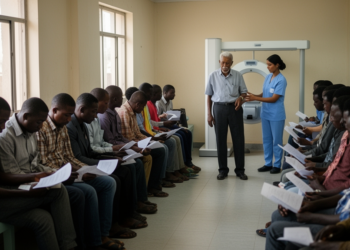
A large survey of women of reproductive age in Lagos, Nigeria, has found that 63% were using a contraceptive method at the time of the study, while about 27% reported having intentionally delayed a pregnancy. The findings come from a descriptive cross-sectional study of 9,988 women aged 15 to 49 years, published in the journal Contraception and Reproductive Medicine.

The study was designed to document population-level contraceptive trends and pregnancy postponement in Lagos, a megacity where rapid urbanization and socioeconomic diversity shape reproductive behavior. The researchers note that despite Nigeria’s progress in family planning policy, subnational variations remain poorly documented, particularly in large urban centers such as Lagos.

Data were drawn through a multistage cluster sampling method across Lagos State’s five administrative divisions. Participants answered a semi-structured, interviewer-administered questionnaire adapted from national demographic surveys. The analysis combined descriptive, bivariate and multivariate approaches, carried out using IBM SPSS version 26.0, to identify predictors of contraceptive use and of pregnancy postponement.

The most commonly used contraceptives were male condoms, reported by 29% of respondents, followed by implants at 20% and injectables at 18%. Over 90% of the women surveyed reported being married or in a union.

Pregnancy delay was associated with several factors, including age, marital status, education level and ethnicity. In the multivariate analysis, women with primary education had higher odds of currently delaying pregnancy than women with no formal education, with an adjusted odds ratio of 2.10 and a 95% confidence interval of 1.18 to 3.74. Women with secondary education were more likely to report having ever delayed a pregnancy.

The authors conclude that in Lagos, continued reliance on traditional contraceptive methods despite widespread awareness, particularly among less-educated women, suggests gaps in access to effective modern contraception and accurate reproductive health information. They argue this underscores the need for targeted family planning interventions.

As a descriptive cross-sectional survey, the study captures a snapshot of self-reported behavior at a single point in time and identifies associations rather than demonstrating causal effects. The authors describe the article as an early-release, peer-reviewed accepted version that remains subject to further edits before the final version of record.

Subject of Research: Contraceptive use and pregnancy postponement among women of reproductive age in Lagos, Nigeria

Article Title: Patterns of contraceptive use and pregnancy postponement by women of reproductive age in Lagos, Nigeria

Article References: Aderibigbe, A. A., Fagbemi, T., Tettehfio, P., & Wright, K. O. (2026). Patterns of contraceptive use and pregnancy postponement by women of reproductive age in Lagos, Nigeria. Contraception and Reproductive Medicine. https://doi.org/10.1186/s40834-026-00485-5

Image Credits: AI Generated

DOI: 10.1186/s40834-026-00485-5

Keywords: contraception, Lagos, Nigeria, family planning, reproductive health, pregnancy postponement, cross-sectional study, implants, male condoms, education, women's health, Patterns

Cite Scienmag News

Ophelia Keating. (October 28, 2026). Survey of nearly 10,000 women maps contraceptive use in Lagos. Scienmag. https://scienmag.com/survey-of-nearly-10000-women-maps-contraceptive-use-in-lagos/

Ophelia Keating. "Survey of nearly 10,000 women maps contraceptive use in Lagos." Scienmag, 28 October 2026, https://scienmag.com/survey-of-nearly-10000-women-maps-contraceptive-use-in-lagos/. Accessed 28 October 2026.

Ophelia Keating. "Survey of nearly 10,000 women maps contraceptive use in Lagos." Scienmag. October 28, 2026. https://scienmag.com/survey-of-nearly-10000-women-maps-contraceptive-use-in-lagos/
Tags: contraceptioncontraceptive methods Nigeria Lagoscontraceptive policy Nigeriacontraceptive trends Lagos megacityContraceptive use in Lagos Nigeriacross-sectional studydemographic survey LagosEducationfamily planningimplantsLagosmale condomsNigeriaNigerian women reproductive agepatternspredictors of contraceptive use Nigeriapregnancy postponementpregnancy postponement factors NigeriaReproductive Healthreproductive health survey Lagosurban family planning Nigeriaurban reproductive behavior Nigeriaurbanization impact on contraceptionWomen’s health
Share26Tweet16
Previous Post

Big Science Procurement Could Be a Powerful Innovation Lever, If Redesigned

Next Post

Sea star larvae build the same organ in three different ways, study finds

Related Posts

Pre-Departure Tuberculosis Screening Offers Limited Predictive Value for Ethiopian Migrants in Israel
Medicine

Pre-Departure Tuberculosis Screening Offers Limited Predictive Value for Ethiopian Migrants in Israel

October 28, 2026
Rib fractures drive ICU admissions in older adults with sternal fractures
Medicine

Rib fractures drive ICU admissions in older adults with sternal fractures

October 28, 2026
Semaglutide shows early bone-building signal in male mice study
Medicine

Semaglutide shows early bone-building signal in male mice study

October 28, 2026
Cryo-EM reveals how Andes hantavirus grips its human cell receptor
Medicine

Cryo-EM reveals how Andes hantavirus grips its human cell receptor

October 28, 2026
Higher Altitude Linked to More Aggressive Skin Cancer Types in 17-Year Study
Cancer

Higher Altitude Linked to More Aggressive Skin Cancer Types in 17-Year Study

October 28, 2026
Sucrase-isomaltase deficiency reshapes food preferences in Greenlandic carriers
Biology

Sucrase-isomaltase deficiency reshapes food preferences in Greenlandic carriers

October 28, 2026
Next Post
Sea star larvae build the same organ in three different ways, study finds

Sea star larvae build the same organ in three different ways, study finds

  • Mothers who receive childcare support from maternal grandparents show more optimized

    Mothers who receive childcare support from maternal grandparents show more parental warmth, finds NTU Singapore study

    27656 shares
    Share 11059 Tweet 6912
  • University of Seville Breaks 120-Year-Old Mystery, Revises a Key Einstein Concept

    1061 shares
    Share 424 Tweet 265
  • Bee body mass, pathogens and local climate influence heat tolerance

    682 shares
    Share 273 Tweet 171
  • Researchers record first-ever images and data of a shark experiencing a boat strike

    546 shares
    Share 218 Tweet 137
  • Groundbreaking Clinical Trial Reveals Lubiprostone Enhances Kidney Function

    531 shares
    Share 212 Tweet 133
Science

Embark on a thrilling journey of discovery with Scienmag.com—your ultimate source for cutting-edge breakthroughs. Immerse yourself in a world where curiosity knows no limits and tomorrow’s possibilities become today’s reality!

RECENT NEWS

  • Cancer cells on the move shed giant vesicles packed with whole genomes
  • Pre-Departure Tuberculosis Screening Offers Limited Predictive Value for Ethiopian Migrants in Israel
  • Machine learning maps Thailand’s aerosol pollution decline as incomes rise
  • Ultrathin BiFeO3 films show altermagnetic signatures without a dead layer

Categories

  • Agriculture
  • Anthropology
  • Archaeology
  • Athmospheric
  • Biology
  • Biotechnology
  • Blog
  • Bussines
  • Cancer
  • Chemistry
  • Climate
  • Earth Science
  • Editorial Policy
  • Marine
  • Mathematics
  • Medicine
  • Pediatry
  • Policy
  • Psychology & Psychiatry
  • Science Education
  • Science News
  • Social Science
  • Space
  • Technology and Engineering

Subscribe to Blog via Email

Enter your email address to subscribe to this blog and receive notifications of new posts by email.

Join 5,151 other subscribers

© 2025 Scienmag - Science Magazine

Welcome Back!

Login to your account below

Forgotten Password?

Retrieve your password

Please enter your username or email address to reset your password.

Log In
No Result
View All Result
  • HOME
  • SCIENCE NEWS
  • CONTACT US

© 2025 Scienmag - Science Magazine

Discover more from Science

Subscribe now to keep reading and get access to the full archive.

Continue reading