


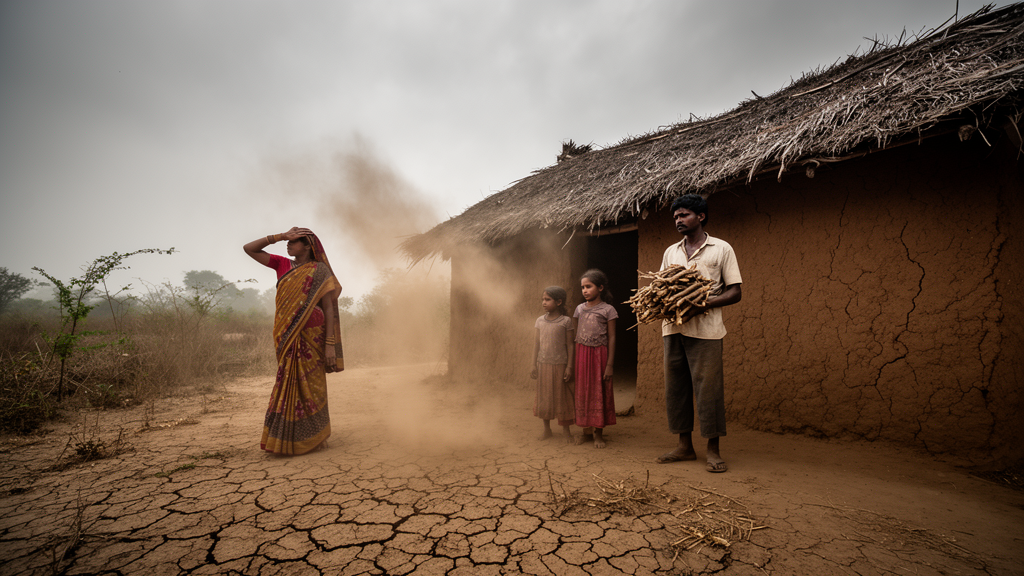
A mixed-method study of 400 tribal households in rural Jharkhand reported an overall Livelihood Vulnerability Index score of 0.460, with higher vulnerability across the dimensions of livelihood strategies, health, assets and climate variability. The abstract also reports an overall LVI-IPCC index value of −0.04, based on exposure of 0.392, sensitivity of 0.479 and adaptive capacity of 0.485.
Researchers used the Livelihood Vulnerability Index and the Intergovernmental Panel on Climate Change framework to examine livelihood vulnerability among tribal communities in the Lohardaga and Khunti districts. The evidence summarized in the article abstract comes from a primary survey of 400 tribal households, supplemented by focus group discussions. Because only the abstract and publisher preview were supplied, the full questionnaire, analytical procedures and underlying results cannot be assessed here.
The abstract identifies higher vulnerability in livelihood strategies, health, assets and climate variability. Under the LVI-IPCC analysis, the reported exposure, sensitivity and adaptive-capacity values were 0.392, 0.479 and 0.485, respectively. These findings describe measured index results rather than forecasts of future vulnerability or evidence that any particular intervention would improve outcomes.
The tribal comparison did not follow the apparent level of district development. The abstract reports that the Oraon tribe, residing in a more developed district, showed greater vulnerability, largely due to climate variability. By contrast, the Munda tribe, residing in a less developed district, had comparatively lower vulnerability, although the abstract notes constraints associated with limited asset ownership and inadequate infrastructure. This cross-sectional geographic comparison does not establish change over time or a causal relationship between district development and vulnerability.
The study’s scope was limited to 400 tribal households in two districts of rural Jharkhand, and the abstract does not provide uncertainty intervals, demographic breakdowns or evidence that the results represent every tribal community in the region. The authors’ abstract concludes that the findings point toward targeted interventions to strengthen adaptive capacity and improve livelihood security, but it does not report implementation or outcome data for such measures.
Subject of Research: Measured livelihood vulnerability among 400 tribal households in rural Jharkhand
Article Title: Livelihood vulnerability among tribal communities: empirical evidence from rural Jharkhand, India
Article References: Ankita, K., & Kumar, M. (2026). Livelihood vulnerability among tribal communities: empirical evidence from rural Jharkhand, India. SN Social Sciences, 6(9), Article 378. https://doi.org/10.1007/s43545-026-01672-6
Image Credits: AI Generated
DOI: 10.1007/s43545-026-01672-6
Keywords: tribal communities, livelihood vulnerability, Jharkhand, Lohardaga, Khunti, climate variability, adaptive capacity, household survey, mixed-methods study, Livelihood, vulnerability, tribal
Cite Scienmag News
Courtney Benton. (October 20, 2026). Survey of 400 tribal households in rural Jharkhand finds livelihood vulnerability varies across tribes and districts. Scienmag. https://scienmag.com/survey-of-400-tribal-households-in-rural-jharkhand-finds-livelihood-vulnerability-varies-across-tribes-and-districts/
Courtney Benton. "Survey of 400 tribal households in rural Jharkhand finds livelihood vulnerability varies across tribes and districts." Scienmag, 20 October 2026, https://scienmag.com/survey-of-400-tribal-households-in-rural-jharkhand-finds-livelihood-vulnerability-varies-across-tribes-and-districts/. Accessed 20 October 2026.
Courtney Benton. "Survey of 400 tribal households in rural Jharkhand finds livelihood vulnerability varies across tribes and districts." Scienmag. October 20, 2026. https://scienmag.com/survey-of-400-tribal-households-in-rural-jharkhand-finds-livelihood-vulnerability-varies-across-tribes-and-districts/


