


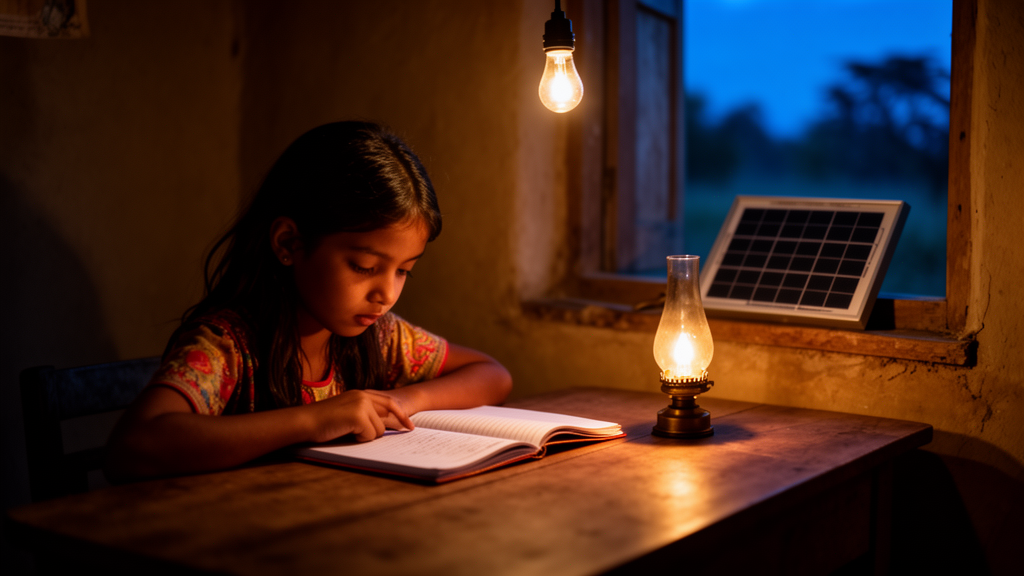
A study using Multiple Indicator Cluster Survey data found that multidimensional energy poverty was associated with poorer reading, story-comprehension and simple mathematics outcomes among children in selected West and Central African countries. The research, summarized in the abstract of an article published in SN Social Sciences on 25 August 2026, examined the relationship between energy poverty, child learning and potential mediating mechanisms.
The investigators combined Lewbel two-stage least squares estimation with structural equation modelling. They analyzed survey information covering children in the selected countries and assessed whether energy poverty was linked to the ability to read, understand comprehension stories and perform simple mathematical calculations. The abstract reports that the analysis identified adverse associations between multidimensional energy poverty and these learning outcomes.
Results from heterogeneity analyses showed that the reported associations were more pronounced among male children, older age groups, children living in rural areas and children in French-speaking countries. The study also observed anxiety, depression and functional disability as significant pathways through which multidimensional energy poverty was related to learning outcomes. These subgroup and pathway results come from the article abstract; the supplied evidence does not provide sample sizes, country names, effect estimates, uncertainty intervals or details about model diagnostics.
Because only the abstract and publisher metadata are available, the findings cannot be independently assessed against the full methods, tables or robustness checks. The reported results are therefore best understood as the study’s model-based findings rather than as direct proof that reducing energy poverty would cause the specified learning improvements. The authors proposed that energy-poverty responses should improve access and affordability and support services such as space cooling, communication and internet connectivity. They also argued for integrating mental-health support into basic school education systems.
Subject of Research: Associations between multidimensional energy poverty and child learning outcomes in West and Central Africa
Article Title: Breaking the darkness: how multidimensional energy poverty affects child learning outcomes in selected developing countries
Article References: Mefful, J., Nunoo, J., Nsenkyire, E., & Angmor, R. N. (2026). Breaking the darkness: how multidimensional energy poverty affects child learning outcomes in selected developing countries. SN Social Sciences, 6(9), Article 379. https://doi.org/10.1007/s43545-026-01657-5
Image Credits: AI Generated
DOI: 10.1007/s43545-026-01657-5
Keywords: energy poverty, child learning outcomes, West Africa, Central Africa, Multiple Indicator Cluster Surveys, structural equation modelling, two-stage least squares, reading comprehension, mathematics performance, mental health, Breaking, darkness
Cite Scienmag News
Courtney Benton. (October 20, 2026). Survey analysis links multidimensional energy poverty to poorer child learning in West and Central Africa. Scienmag. https://scienmag.com/survey-analysis-links-multidimensional-energy-poverty-to-poorer-child-learning-in-west-and-central-africa/
Courtney Benton. "Survey analysis links multidimensional energy poverty to poorer child learning in West and Central Africa." Scienmag, 20 October 2026, https://scienmag.com/survey-analysis-links-multidimensional-energy-poverty-to-poorer-child-learning-in-west-and-central-africa/. Accessed 20 October 2026.
Courtney Benton. "Survey analysis links multidimensional energy poverty to poorer child learning in West and Central Africa." Scienmag. October 20, 2026. https://scienmag.com/survey-analysis-links-multidimensional-energy-poverty-to-poorer-child-learning-in-west-and-central-africa/


