

Friday, November 13, 2026
Science
No Result
View All Result
  • Login
  • HOME
  • SCIENCE NEWS
  • CONTACT US
  • HOME
  • SCIENCE NEWS
  • CONTACT US
No Result
View All Result
Scienmag
No Result
View All Result
Home Science News Science Education

Taiwan study develops consensus dementia-care competency framework and student self-assessment tool

October 20, 2026
in Science Education
Cassandra Pierce
By Cassandra Pierce Scienmag Editorial Profile - Systems Neuroscience
Reading Time: 2 mins read
0
Nine Core Competencies Define What It Takes to Care for People with Dementia

Nine Core Competencies Define What It Takes to Care for People with Dementia

65
SHARES
587
VIEWS
Share on FacebookShare on Twitter
ADVERTISEMENT

A two-phase study at a science and technology university in northern Taiwan identified nine consensus-based competency domains for dementia care and developed a corresponding self-assessment tool for gerontological healthcare students. Researchers reported that students’ mean overall self-perceived competency score was 3.19 ± 0.58 points on a five-point scale, with palliative care for dementia receiving the lowest domain mean. The findings are summarized here from the study abstract and early peer-reviewed article.

The first phase used a modified Delphi survey involving 15 panel members. Following a targeted literature review, the panel worked toward consensus on core competency domains and associated indicators for dementia care. The second phase enrolled students from the Department of Geriatric Health Care. Of 278 eligible participants, 250 completed the structured quantitative questionnaire, a response rate of 89.9%. The analysis used descriptive statistics, independent-samples t-tests and analysis of variance to describe competency-score distributions and examine differences between groups.

The nine domains were understanding the symptoms, diagnosis and treatment of dementia; daily life care and management of behavioral problems; palliative care for dementia; interpersonal communication and teamwork; ethics and law; prevention and health promotion; friendly environment; family support and service resources; and self-care of professional caregivers. Students with prior caregiving experience or previous dementia care training had significantly higher measured competency levels than students without that experience or training. The study did not report a clinical intervention or patient outcome, and the questionnaire results represent students’ self-perceived competencies rather than independently assessed performance or the effectiveness of a training program.

The authors described the resulting framework and indicators as a practical, consensus-based resource for planning dementia care education and competency assessment. They said the tool and reported student assessments could inform work by educational institutions, internship organizations and clinicians. The authors also called for future research with larger samples, including application of the assessment to clinical caregivers, to support consistency in dementia care education and training planning. Because the available evidence is an abstract and early article version subject to further edits, the full study procedures and results cannot be evaluated here. The research was also conducted at one university and focused on one student department, limiting how broadly the findings and tool may be applied.

Subject of Research: Consensus development and student self-assessment of dementia-care competencies in northern Taiwan

Article Title: Establishing dementia care core competencies and developing a self-assessment tool in gerontological healthcare students

Article References: Liao, Y.-T., Huang, H.-L., Shyu, Y.-I. L., Hsu, W.-C., & Chou, Y.-F. (2026). Establishing dementia care core competencies and developing a self-assessment tool in gerontological healthcare students. BMC Medical Education. https://doi.org/10.1186/s12909-026-10412-6

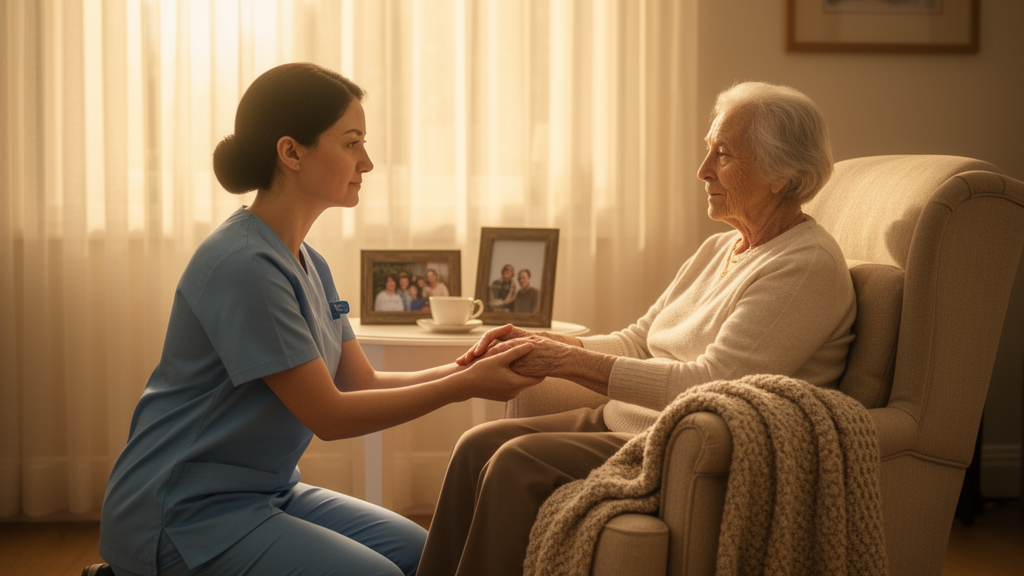
Image Credits: AI Generated

DOI: 10.1186/s12909-026-10412-6

Keywords: dementia care, core competencies, self-assessment, gerontological education, Delphi survey, Taiwan, healthcare students, palliative care, caregiver training, Establishing, dementia, care

Cite Scienmag News

Cassandra Pierce. (October 20, 2026). Taiwan study develops consensus dementia-care competency framework and student self-assessment tool. Scienmag. https://scienmag.com/taiwan-study-develops-consensus-dementia-care-competency-framework-and-student-self-assessment-tool/

Cassandra Pierce. "Taiwan study develops consensus dementia-care competency framework and student self-assessment tool." Scienmag, 20 October 2026, https://scienmag.com/taiwan-study-develops-consensus-dementia-care-competency-framework-and-student-self-assessment-tool/. Accessed 13 November 2026.

Cassandra Pierce. "Taiwan study develops consensus dementia-care competency framework and student self-assessment tool." Scienmag. October 20, 2026. https://scienmag.com/taiwan-study-develops-consensus-dementia-care-competency-framework-and-student-self-assessment-tool/

Tags: Carecaregiver self-care and ethicscaregiver trainingconsensus-based dementia care domainscore competenciesDelphi surveyDelphi survey method in healthcare researchdementiadementia caredementia care competency frameworkdementia prevention and health promotiondementia symptom recognition and managementEstablishingfamily support in dementia caregeriatric healthcare student assessmentgerontological educationhealthcare studentsinterprofessional communication in dementia carepalliative carepalliative care for dementiaself-assessmentstudent self-assessment tool for gerontological healthcareTaiwanTaiwan dementia care education
Share26Tweet16
Previous Post

Construction of a training program for clinical nurses coping with moral distress based on Corley’s theoretical model

Next Post

Retrospective surveillance study maps leptospirosis trends across Sri Lanka’s 25 districts, 2006–2022

Related Posts

South Indian Medical Residents Report Marked Differences in District Training Programs
Science Education

South Indian Medical Residents Report Marked Differences in District Training Programs

November 13, 2026
Theoretical Model Examines How University Educators Maintain Humanness Amid Artificial Intelligence Integration
Science Education

Theoretical Model Examines How University Educators Maintain Humanness Amid Artificial Intelligence Integration

November 13, 2026
High Student to Machine Ratios Hinder Mining Training in Burkina Faso
Science Education

High Student to Machine Ratios Hinder Mining Training in Burkina Faso

November 13, 2026
Welcoming School Attitudes Predict Family Satisfaction in Inclusive Classrooms for Intellectual Disability
Science Education

Welcoming School Attitudes Predict Family Satisfaction in Inclusive Classrooms for Intellectual Disability

November 13, 2026
Continuous AI Tutoring Evaluation Risks Distorting Student Learning Traces in STEM
Science Education

Continuous AI Tutoring Evaluation Risks Distorting Student Learning Traces in STEM

November 13, 2026
Medical Students Rely More on Personal AI Chatbots Than Course Tools
Science Education

Medical Students Rely More on Personal AI Chatbots Than Course Tools

November 13, 2026
Next Post
Seventeen Years of Data Reveal Where Leptospirosis Strikes Hardest in Sri Lanka

Retrospective surveillance study maps leptospirosis trends across Sri Lanka’s 25 districts, 2006–2022

  • Mothers who receive childcare support from maternal grandparents show more optimized

    Mothers who receive childcare support from maternal grandparents show more parental warmth, finds NTU Singapore study

    27656 shares
    Share 11059 Tweet 6912
  • University of Seville Breaks 120-Year-Old Mystery, Revises a Key Einstein Concept

    1061 shares
    Share 424 Tweet 265
  • Bee body mass, pathogens and local climate influence heat tolerance

    682 shares
    Share 273 Tweet 171
  • Researchers record first-ever images and data of a shark experiencing a boat strike

    546 shares
    Share 218 Tweet 137
  • Groundbreaking Clinical Trial Reveals Lubiprostone Enhances Kidney Function

    531 shares
    Share 212 Tweet 133
Science

Embark on a thrilling journey of discovery with Scienmag.com—your ultimate source for cutting-edge breakthroughs. Immerse yourself in a world where curiosity knows no limits and tomorrow’s possibilities become today’s reality!

RECENT NEWS

  • Uncalcined Snail Shell Powder Reduces Cement Clinker and Lowers Mortar Water Sorptivity
  • Blood Biomarker Panel Linked to Programmed Cell Death Predicts Major Depressive Disorder
  • Bacterial Silver Nanoparticles Suppress Drug-Resistant Pseudomonas but Exhibit High Keratinocyte Toxicity
  • Swedish Study Links Equine Field Castration to Higher Complication and Infection Rates

Categories

  • Agriculture
  • Anthropology
  • Archaeology
  • Athmospheric
  • Biology
  • Biotechnology
  • Blog
  • Bussines
  • Cancer
  • Chemistry
  • Climate
  • Earth Science
  • Editorial Policy
  • Marine
  • Mathematics
  • Medicine
  • Pediatry
  • Policy
  • Psychology & Psychiatry
  • Science Education
  • Science News
  • Social Science
  • Space
  • Technology and Engineering

Subscribe to Blog via Email

Enter your email address to subscribe to this blog and receive notifications of new posts by email.

Join 5,150 other subscribers

© 2026 Scienmag - Science Magazine

Welcome Back!

Login to your account below

Forgotten Password?

Retrieve your password

Please enter your username or email address to reset your password.

Log In
No Result
View All Result
  • HOME
  • SCIENCE NEWS
  • CONTACT US

© 2026 Scienmag - Science Magazine

Discover more from Science

Subscribe now to keep reading and get access to the full archive.

Continue reading

