


In a groundbreaking development poised to transform the way natural history museums and research institutions prepare their skeletal specimens, scientists have uncovered a remarkably efficient and safe method for skeleton cleaning using superworms (Zophobas morio). This novel approach, detailed in a study published on July 1, 2026, in the open access journal PLOS One, introduces superworms—commonly used as pet food larvae—as an alternative to conventional cleaning techniques that often pose risks to the structural integrity of bones or involve hazardous substances.
The importance of pristine skeletal specimens cannot be overstated, as they are foundational to anatomical studies, evolutionary biology, forensic analysis, and public education. Traditionally, skeleton cleaning has relied upon several distinct methodologies including burial for natural decomposition, enzymatic degradation, chemical treatments like the use of harsh solvents, and the deployment of dermestid beetle colonies. However, these methods each harbor significant drawbacks—chemical approaches can leave harmful residues or compromise bone morphology, enzymatic treatments may be costly and time-consuming, and dermestid beetles, while effective, require meticulous maintenance and risk unwanted infestations.
Fatemeh Rastekar and colleagues from Ferdowsi University of Mashhad, Iran, recognized the need for a practical and less hazardous alternative. Their experimental study meticulously examined the efficacy of superworms in skeleton cleaning by introducing varying weights of larvae to a diverse range of enclosed animal specimens. These specimens spanned a wide size range, from a diminutive nine-gram Egyptian rousette bat to a sizeable 4.2-kilogram gray wolf, providing a comprehensive overview of the larvae’s cleaning capacity across different anatomical complexities.
The results demonstrated that superworms are extraordinarily efficient at removing soft tissues from bones, working both externally and within delicate internal crevices. The larvae consume muscle, fat, and tendons, leaving behind clean skeletal remains without mechanical damage or chemical alteration. Notably, the study found an optimal ratio of 10 to 15 grams of larvae per gram of animal specimen maximized cleaning speed while safeguarding the bones. This optimized balance allowed even fragile bird skulls, such as that of the Eurasian eagle owl, to be cleaned without any harm to their delicate bony architecture.
Beyond their efficacy, superworms present several practical advantages. Unlike dermestid beetles, superworms do not undergo metamorphosis in crowded environments, eliminating the risk of unwanted adult beetle outbreaks which can plague museum collections. Their maintenance is straightforward, requiring no hazardous chemicals or complex environmental conditions. This ease of care, combined with superworms’ widespread commercial availability as animal feed, makes them an accessible and economical option for museum professionals worldwide.
From an environmental and occupational safety perspective, the use of superworms aligns with growing institutional efforts to reduce environmental impact and promote safer laboratory practices. The elimination of harsh chemical solvents trims down toxic waste and decreases exposure risks to museum staff who handle skeletal preparations. Moreover, the larvae-based approach produces no dangerous chemical residues, ensuring long-term specimen preservation without compromising future research integrity.
The study’s implications stretch far beyond museum curation: forensic laboratories, veterinary schools, and wildlife conservation programs could adopt superworm cleaning methods for their skeletal specimen needs. Their rapid decomposition capabilities could also find utility in bio-waste management and ecological research centers studying decomposition processes in controlled contexts.
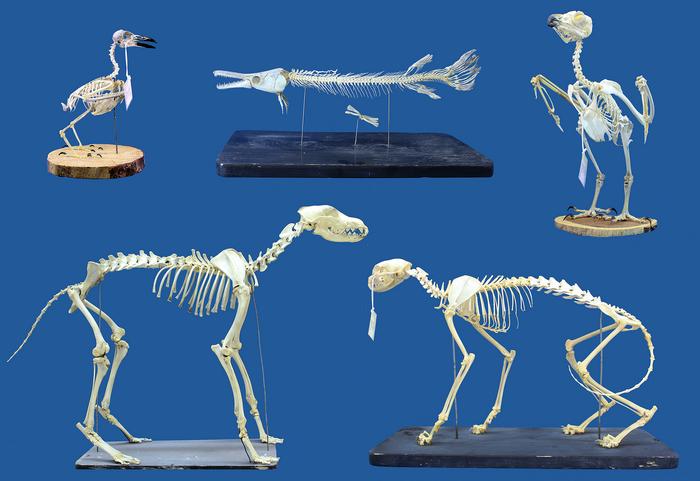
The findings presented by Rastekar et al. are supported by high-resolution photographic documentation of cleaned specimens, showcasing a range of animals including a rook, alligator gar fish, Eurasian eagle owl, gray wolf, and wild cat. The clarity and completeness of skeletal remains after treatment highlight the larvae’s gentle yet thorough cleaning action, underscoring the method’s reliability.
Despite their promise, the authors acknowledge that further research may optimize parameters such as temperature control, humidity, and larval density to further improve cleaning outcomes or expand applicability to even larger or more complex specimens. Moreover, integrating superworm cleaning with other preparatory steps like bone whitening or stabilization could form part of an improved workflow in specimen preparation protocols.
This pioneering work thus ushers in an era where a small, protein-rich beetle larva could become an indispensable partner to natural history sciences. By simultaneously enhancing cleaning quality, reducing hazards, and simplifying colony maintenance, the superworm method holds the potential to become the gold standard for skeletal specimen preparation in the coming decades.
For museums historically burdened with undesirable pest infestations or reliant on environmentally damaging chemicals, the superworm offers a green and effective alternative that aligns with modern conservation ethics. Importantly, this approach democratizes access to high-quality skeletal preparation since superworms are commercially reproducible and affordable, extending benefits to institutions with limited funding or infrastructure.
In summary, superworms represent a paradigm shift in specimen preparation technology, integrating biological ingenuity with practical museum needs. As interest grows and further trials commence globally, the humble superworm may soon be as indispensable to natural history collections as microscopes and preservation fluids, changing forever how we prepare and study the bones of our planet’s remarkable fauna.
Cite Scienmag News
Courtney Benton. (July 1, 2026). Superworms: The Future of Skeleton Cleaning. Scienmag. https://scienmag.com/superworms-the-future-of-skeleton-cleaning/
Courtney Benton. "Superworms: The Future of Skeleton Cleaning." Scienmag, 1 July 2026, https://scienmag.com/superworms-the-future-of-skeleton-cleaning/. Accessed 4 September 2026.
Courtney Benton. "Superworms: The Future of Skeleton Cleaning." Scienmag. July 1, 2026. https://scienmag.com/superworms-the-future-of-skeleton-cleaning/


