


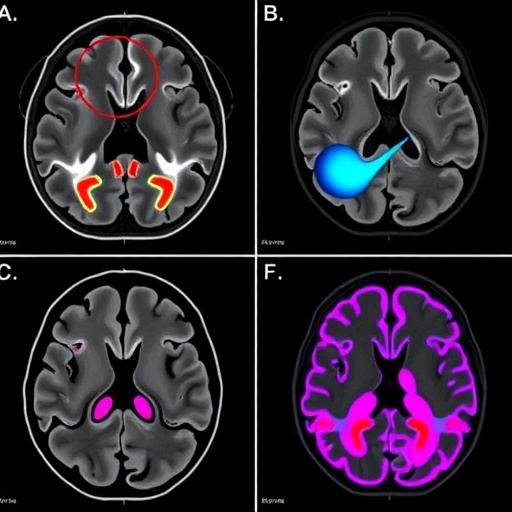
In a groundbreaking study set to redefine our understanding of Parkinson’s disease, researchers have employed cutting-edge super-resolution ultrasound imaging to uncover previously hidden details of neurovascular dysfunction in the substantia nigra — a brain region critical to motor control. The study, conducted by Hou, Wang, Wang, and colleagues, and published in npj Parkinson’s Disease, offers a transformative window into the subtle interplay between neuronal activity and blood flow in a widely used Parkinson’s disease model. This innovation not only challenges long-held assumptions about the disease’s progression but also opens new avenues for diagnosis and targeted therapies.
Parkinson’s disease, a debilitating neurodegenerative disorder characterized by the progressive loss of dopaminergic neurons within the substantia nigra, has long been studied through the lens of neuronal degeneration alone. However, emerging evidence points toward neurovascular uncoupling — a breakdown in the normal coordination between neuronal activity and cerebral blood flow — as a potentially vital contributor to disease pathology. This uncoupling disrupts the essential delivery of oxygen and nutrients to neurons, exacerbating neuronal demise and clinical symptoms. Yet, until now, capturing this phenomenon in vivo at high resolution and in relation to dynamic vascular and neuronal states remained elusive.
The team’s use of super-resolution ultrasound imaging represents a technical leap forward, delivering nanoscale insight into the microvascular architecture and perfusion without the invasiveness or optical limitations inherent to other modalities like two-photon microscopy or functional MRI. By harnessing ultrafast plane wave imaging combined with advanced signal processing algorithms, the researchers achieved unprecedented spatial resolution and temporal sensitivity to map cerebral microvasculature and blood flow patterns intimately coupled with neuronal populations in the substantia nigra.
Importantly, the imaging approach relied on indirect markers of neurovascular coupling by simultaneously measuring microvascular blood volume changes and correlating these with neuronal functional states. This nuanced methodology allowed the team to parse out discrepancies between neuronal firing and the expected hemodynamic response, effectively revealing regions where the vascular system fails to adapt adequately to neural demands. These areas of impaired neurovascular coupling were conspicuously concentrated within the substantia nigra of Parkinson’s disease model animals, thereby implicating vasculature dysfunction as a co-conspirator in dopaminergic neuron vulnerability.
The implications of this discovery are profound, situating vascular health as a central player in Parkinsonian neurodegeneration. Traditionally, interventions have focused almost exclusively on direct neuronal protection or dopamine replacement therapies. However, by pinpointing neurovascular uncoupling as an early and measurable hallmark of disease, the study paves the way for diagnostic tools that can detect Parkinson’s disease at a stage when neuronal loss is still minimal but vascular dysfunction is underway. Such early detection could transform clinical outcomes by enabling timely therapeutic intervention.
From a technical perspective, the study also demonstrates the versatility and power of super-resolution ultrasound imaging far beyond traditional anatomical visualization. The ability to quantify microvascular responses with such precision while maintaining non-invasiveness opens opportunities for longitudinal studies in live animal models and, potentially, clinical translation to human patients. This technique could become a new standard in neurovascular research, offering a safer and more accessible window into the brain’s functional microenvironment.
The researchers meticulously validated their imaging results against established histological and biochemical markers of neuronal health and vascular integrity, confirming the robustness of the technique. By establishing these correlations, they ensured that the subtle vascular abnormalities detected were truly reflective of disease-relevant pathology. Notably, the identification of neurovascular uncoupling in the substantia nigra aligns with recent hypotheses that microvascular dysregulation may contribute to the selective vulnerability of dopaminergic neurons observed in Parkinson’s disease.
In addition to mapping neurovascular dynamics, the study also explored the temporal progression of uncoupling in correlation with disease severity. Longitudinal imaging across various disease stages revealed a graded deterioration of vascular responsiveness preceding massive neuronal loss. This temporal insight underscores a causative or exacerbating role of vascular dysfunction, implying that therapeutic strategies aimed at preserving or restoring vascular coupling might slow or prevent neurodegeneration.
The integration of this imaging modality with emerging molecular and genetic tools offers a multifaceted approach to unraveling the complex pathophysiology of Parkinson’s disease. For example, coupling super-resolution ultrasound data with genetically encoded calcium indicators or optogenetic manipulation could further elucidate how neural network activity and vascular supply interact during disruption. Such interdisciplinary methodologies are primed to revolutionize our mechanistic understanding and therapeutic targeting.
Moreover, this study has significant potential implications beyond Parkinson’s disease alone. Neurovascular uncoupling is increasingly recognized across diverse neurodegenerative and psychiatric conditions. Therefore, the demonstrated methodology provides a valuable platform for studying vascular contributions to diseases like Alzheimer’s, Huntington’s, and even stroke-related pathologies. The capacity to non-invasively monitor microvascular function opens new frontiers in brain health assessment and personalized medicine.
Importantly, the technical advancements showcased here redefine the capabilities of ultrasound imaging in neuroscience. Historically valued for its accessibility and cost-effectiveness, ultrasound is now poised to rival more sophisticated imaging modalities, bridging the gap between laboratory research and clinical application. The study details how refinements in hardware, signal processing, and contrast agent design synergize to achieve super-resolution, highlighting a roadmap for future innovation.
As Parkinson’s disease continues to impose a significant global health burden with limited therapeutic options, this work exemplifies how technological innovation grounded in biological insight can drive the next generation of diagnostic and treatment strategies. By illuminating neurovascular uncoupling, the researchers have uncovered a promising biomarker and therapeutic target previously obscured by technical limitations. This promises not only earlier and more accurate diagnosis but also interventions designed to restore vascular-neuronal harmony and ultimately preserve brain function.
In conclusion, the application of super-resolution ultrasound imaging as demonstrated by Hou and colleagues heralds a new era in Parkinson’s research. It challenges researchers, clinicians, and industry alike to reorient towards holistic models of brain pathology incorporating vascular and neuronal interplay. This paradigm shift may catalyze breakthroughs that fundamentally alter the course of Parkinson’s disease and related neurodegenerative disorders, improving lives and healthcare systems worldwide.
Cite Scienmag News
Cassandra Pierce. (January 14, 2026). Super-Resolution Ultrasound Reveals Brain Issues in Parkinson’s. Scienmag. https://scienmag.com/super-resolution-ultrasound-reveals-brain-issues-in-parkinsons/
Cassandra Pierce. "Super-Resolution Ultrasound Reveals Brain Issues in Parkinson’s." Scienmag, 14 January 2026, https://scienmag.com/super-resolution-ultrasound-reveals-brain-issues-in-parkinsons/. Accessed 4 September 2026.
Cassandra Pierce. "Super-Resolution Ultrasound Reveals Brain Issues in Parkinson’s." Scienmag. January 14, 2026. https://scienmag.com/super-resolution-ultrasound-reveals-brain-issues-in-parkinsons/


