


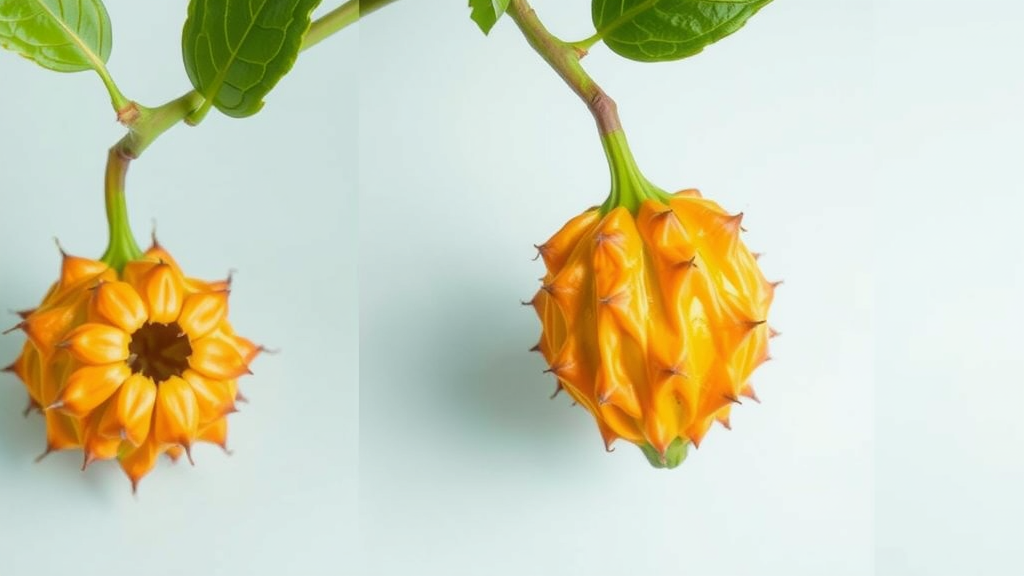
Traditional food processing is often celebrated for its flavors, but a growing body of research shows it can quietly rewrite the chemistry of what we eat. A new study published in npj Food Investigations examines how two of the oldest preservation and preparation methods in human history—sun-drying and steaming—alter the polysaccharides found in the fruit of Ehretia macrophylla Wall., a plant long used in regional food and medicinal traditions across Asia. The findings suggest that the choice of processing method is not a neutral step but an active determinant of the structural features, physicochemical behavior, and gut-related biological functions of fruit-derived carbohydrates.
Polysaccharides are long chains of sugar units that plants deploy for energy storage, structural support, and defense. When consumed, they act largely as dietary fiber: resistant to digestion in the upper gastrointestinal tract but accessible to the trillions of microbes that colonize the colon. There, gut bacteria ferment these chains into short-chain fatty acids such as acetate, propionate, and butyrate, compounds with well-documented roles in maintaining the intestinal barrier, modulating inflammation, and influencing metabolism. Because of this, the molecular architecture of a fruit polysaccharide—its monosaccharide composition, molecular weight, glycosidic linkages, and degree of branching—directly shapes its nutritional and functional value.
The research team set out to determine whether processing changes this architecture. Sun-drying, the most widespread low-cost preservation method in rural agricultural communities, exposes fruit to ultraviolet radiation, heat, oxygen, and enzymatic activity over days or weeks. Steaming, by contrast, is a rapid, moist-heat treatment typically used to soften tissue before consumption. These treatments impose very different chemical stresses, and the study investigated how each one propagates through to the final polysaccharide extract.
Using a suite of analytical techniques standard in carbohydrate chemistry, the researchers profiled polysaccharides extracted from fresh, sun-dried, and steamed fruit. Molecular weight distribution analyses revealed that processing measurably shifted the size of the polysaccharide populations, with thermal exposure capable of depolymerizing large chains into smaller fragments or, conversely, promoting associations among chains. Monosaccharide composition analysis and linkage determination indicated that the proportions of constituent sugars—typically including galacturonic acid, arabinose, galactose, rhamnose, and glucose in pectic and hemicellulosic fractions—were sensitive to the treatment applied. Spectroscopic characterization supported these observations, showing changes in functional group signatures consistent with altered branching or side-chain content.
These structural differences were not merely academic. The physicochemical properties of the polysaccharides—solubility, water-holding behavior, viscosity, and thermal characteristics—varied according to processing method. Such properties matter in practice: they govern mouthfeel and texture in foods, determine how fiber behaves during digestion and transit, and influence the accessibility of the polysaccharide backbone to bacterial enzymes in the gut. A highly branched, high-molecular-weight pectin does not interact with the intestinal environment in the same way as a degraded, low-molecular-weight fraction, and the study documented these divergences in detail.
The most consequential findings concerned gut-related function. In experiments simulating gastrointestinal conditions and gut microbial fermentation, polysaccharides from differently processed fruits displayed distinct fermentation profiles, with differences in the production of short-chain fatty acids and in the support of bacterial growth. This indicates that the health-relevant behavior of a fruit’s fiber fraction can be tuned—perhaps unintentionally—by the way the fruit is handled after harvest. For a crop like Ehretia macrophylla, whose fruit is consumed or used in folk preparations in processed form, the implication is that processing choices carry nutritional weight, not just sensory weight.
The work sits within a broader movement in food science to treat processing as a form of ingredient design. Previous studies have shown that drying, fermentation, extrusion, and heat treatments can each reshape the prebiotic potential of plant polysaccharides from sources as varied as apples, Goji berries, seaweeds, and medicinal mushrooms. What distinguishes the present study is its systematic side-by-side comparison of two traditional methods applied to the same raw material, allowing the authors to attribute differences specifically to the processing route rather than to raw material variability. This design strengthens the case that traditional knowledge and modern analytical chemistry can be productively combined.
For consumers and producers, the study offers practical perspective. Sun-drying remains indispensable in regions lacking cold chains, and steaming is deeply embedded in culinary practice; neither result suggests these methods should be abandoned. Instead, the research points toward optimizing conditions—drying duration, temperature, steam exposure time—to preserve or even enhance the structural features associated with beneficial fermentation. For food formulators, it suggests that process history should be considered when polysaccharide extracts are used as functional ingredients, since the same botanical source can yield extracts with different performance depending on pretreatment.
For scientists, the study raises productive questions. How do processing-induced structural changes translate to outcomes in vivo, in animal models or human trials? Can controlled thermal treatment be used deliberately to tailor prebiotic fibers? And how generalizable are these findings across other fruit polysaccharides, whose architectures differ substantially? Answering these questions will require coupling the kind of careful structural characterization demonstrated here with microbiome sequencing and metabolomic readouts. In the meantime, the message is clear: the road from orchard to gut microbiome is chemically long, and every step—including how the fruit is dried or cooked—leaves a trace on the fibers that feed our microbial partners.
Subject of Research: Effects of sun-drying and steaming on the structure, physicochemical properties, and gut-related functions of Ehretia macrophylla fruit polysaccharides
Article Title: Effects of sun-drying and steaming on Ehretia macrophylla Wall. (EMW) fruit polysaccharides: structure, physicochemical properties and gut-related functions
Article References: Mo, L., Li, H., Yu, Y., Li, J., Zhang, T., Zheng, S., Huang, D., & Zhao, C. (2026). Effects of sun-drying and steaming on Ehretia macrophylla Wall. (EMW) fruit polysaccharides: structure, physicochemical properties and gut-related functions. npj Science of Food. https://doi.org/10.1038/s41538-026-01144-4
Image Credits: AI Generated
DOI: 10.1038/s41538-026-01144-4
Keywords: Ehretia macrophylla, polysaccharides, sun-drying, steaming, food processing, dietary fiber, gut microbiota, short-chain fatty acids, prebiotics, food science, physicochemical properties, carbohydrate structure
Cite Scienmag News
Daisy Hatcher. (September 12, 2026). Sun-Drying and Steaming Reshape Polysaccharides in Ehretia macrophylla Fruit. Scienmag. https://scienmag.com/sun-drying-and-steaming-reshape-polysaccharides-in-ehretia-macrophylla-fruit/
Daisy Hatcher. "Sun-Drying and Steaming Reshape Polysaccharides in Ehretia macrophylla Fruit." Scienmag, 12 September 2026, https://scienmag.com/sun-drying-and-steaming-reshape-polysaccharides-in-ehretia-macrophylla-fruit/. Accessed 4 October 2026.
Daisy Hatcher. "Sun-Drying and Steaming Reshape Polysaccharides in Ehretia macrophylla Fruit." Scienmag. September 12, 2026. https://scienmag.com/sun-drying-and-steaming-reshape-polysaccharides-in-ehretia-macrophylla-fruit/


