


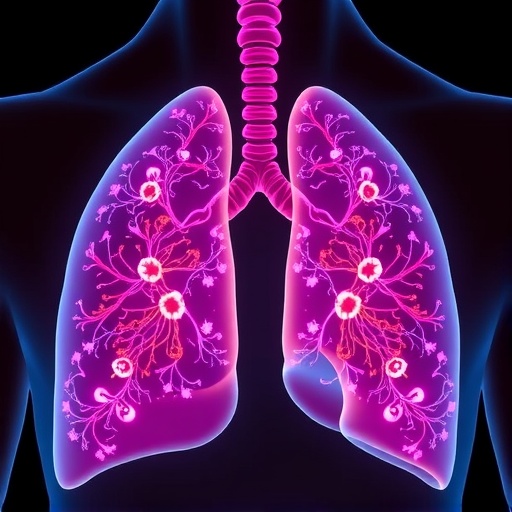
Researchers at the Institute of Oceanology of the Chinese Academy of Sciences have uncovered a metabolic stress-response system that appears to connect the remarkable heat and hypoxia tolerance of intertidal oysters with the aggressive growth of human lung adenocarcinoma. The findings, published in the Proceedings of the National Academy of Sciences, describe an evolutionarily conserved molecular pathway that enables cells to preserve glycolysis when energy supplies are threatened. In oysters, the mechanism may help sustain life during repeated exposure to heat, air, and oxygen limitation. In cancer cells, however, the same system can be exploited to maintain high energy production, support proliferation, and promote metastatic behavior.
The pathway, identified by the research team as the KAT2/HDACIIa–PGK–ALDO axis, links chromatin-associated enzyme regulation with the stability and activity of two central glycolytic proteins: phosphoglycerate kinase, or PGK, and aldolase, or ALDO. Glycolysis converts glucose into pyruvate while generating ATP, allowing cells to produce energy rapidly even when mitochondrial respiration is restricted. This flexibility is especially important in intertidal organisms, which can experience abrupt shifts in temperature, oxygen availability, and immersion. It is also a defining feature of many tumors, whose poorly organized blood vessels create regions of hypoxia and metabolic stress.
According to the study, energy stress changes the balance between the acetyltransferase KAT2 and the deacetylase HDACIIa. This shift promotes acetylation of PGK, a chemical modification that affects the protein’s behavior and fate inside the cell. The researchers found that acetylated PGK becomes less vulnerable to ubiquitin–proteasomal degradation, the principal cellular pathway for dismantling damaged or unwanted proteins. By escaping this disposal system, PGK accumulates and forms a stronger functional association with ALDO. The result is not merely an increase in the amount of glycolytic machinery available to the cell, but a coordinated reorganization that gives the pathway greater catalytic capacity under adverse conditions.
The investigators further showed that PGK performs an unexpected function beyond its established role in glycolysis. In its stabilized state, PGK acts as a non-canonical protein kinase, transferring a phosphate group directly to ALDO. This phosphorylation event enhances ALDO’s catalytic efficiency, allowing it to process glycolytic intermediates more effectively. At the same time, phosphorylation protects ALDO from chaperone-mediated autophagy, or CMA, a selective lysosomal degradation pathway that normally recognizes and removes specific proteins. PGK therefore helps preserve ALDO through a second, mechanistically distinct route. The axis simultaneously suppresses proteasomal degradation of PGK and CMA-mediated degradation of ALDO, producing what the researchers describe as a dual degradation-inhibition cascade.
This two-layered stabilization system gives cells a powerful way to amplify glycolytic flux during energy crises. Rather than simply increasing glucose uptake or transcriptionally producing more metabolic enzymes, the pathway extends the lifespan of existing proteins and activates them through post-translational modification. Such regulation can act rapidly, which may be critical when environmental conditions deteriorate faster than a cell can alter gene expression. The mechanism also illustrates how protein degradation systems, often viewed primarily as quality-control networks, can become central regulators of metabolism. By selectively slowing the removal of PGK and ALDO, the cell preserves a functional energy-producing module precisely when ATP demand is high and alternative sources are limited.
The evolutionary comparison began with the biology of sessile oysters living in the intertidal zone. Unlike mobile animals, these shellfish cannot flee when exposed to intense sunlight, rising temperatures, air, or oxygen-poor conditions. Their tissues must repeatedly switch between aerobic respiration and glycolysis while maintaining cellular integrity during cycles of environmental stress. The researchers’ multi-omics analyses, gene-editing experiments, and biochemical assays indicated that the KAT2/HDACIIa–PGK–ALDO pathway contributes to this metabolic adaptability. The pattern resembles the Warburg effect, in which cancer cells favor aerobic glycolysis even when oxygen is available. In both settings, glycolysis provides a flexible and rapidly accessible source of energy while supporting the production of biosynthetic intermediates needed for growth and repair.
The team then examined whether human lung cancer cells use the same molecular circuitry. Their results indicated that lung adenocarcinoma cells increase expression of KAT2A, the human counterpart of the acetyltransferase component, while reducing HDAC5, a related deacetylase. This imbalance favors persistent hyperacetylation of PGK1 at lysine 75, or PGK1-K75. The modified enzyme is protected from proteasomal destruction and is more capable of engaging the downstream pathway. It also promotes phosphorylation of ALDOA at serine 272, or ALDOA-S272. Together, these modifications strengthen glycolytic activity and help cancer cells continue proliferating in an environment characterized by oxygen limitation, nutrient competition, and fluctuating energy availability.
The findings suggest that this metabolic axis may contribute not only to tumor growth but also to invasion and metastasis. A cancer cell that can maintain glycolytic output while its proteins are shielded from degradation may be better equipped to survive detachment, migration, and colonization of new tissues. The study therefore identifies several possible therapeutic intervention points, including KAT2A-dependent acetylation, HDAC5 regulation, PGK1-K75 modification, ALDOA-S272 phosphorylation, and the interactions linking proteasomal and lysosomal quality-control pathways. Blocking the axis could theoretically weaken the metabolic resilience of tumor cells without directly targeting glycolysis at its most fundamental steps. However, because normal cells may also rely on this stress-response system, future treatments would need to distinguish malignant metabolic reprogramming from essential physiological adaptation.
The researchers emphasize that oysters should not be regarded as simple models of human cancer, but as evolutionary systems that can reveal conserved solutions to cellular stress. “The hypoxia and energy crises endured daily by intertidal oysters remarkably mirror the human tumor microenvironment,” said Dr. Wang Chaogang, the study’s first author. Professor Li Li, the corresponding author, described the work as a bridge between marine evolutionary adaptation and cancer metabolism. By tracing how a metabolic defense system emerged and operates in an organism exposed to repeated environmental extremes, the study offers a new perspective on why tumors are so effective at surviving hostile conditions. It also raises broader questions about how ancient stress-response pathways can be repurposed in disease and whether marine organisms may provide previously overlooked clues for precision oncology.
News Publication Date: 21-Aug-2026
Web References: https://doi.org/10.1073/pnas.2533429123
References: Proceedings of the National Academy of Sciences, DOI: 10.1073/pnas.2533429123
Cite Scienmag News
Nathaniel Bowman. (August 19, 2026). Study shows lung tumors exploit ancient marine metabolic pathway to fuel malignancy. Scienmag. https://scienmag.com/study-shows-lung-tumors-exploit-ancient-marine-metabolic-pathway-to-fuel-malignancy/
Nathaniel Bowman. "Study shows lung tumors exploit ancient marine metabolic pathway to fuel malignancy." Scienmag, 19 August 2026, https://scienmag.com/study-shows-lung-tumors-exploit-ancient-marine-metabolic-pathway-to-fuel-malignancy/. Accessed 4 September 2026.
Nathaniel Bowman. "Study shows lung tumors exploit ancient marine metabolic pathway to fuel malignancy." Scienmag. August 19, 2026. https://scienmag.com/study-shows-lung-tumors-exploit-ancient-marine-metabolic-pathway-to-fuel-malignancy/


