

Wednesday, October 21, 2026
Science
No Result
View All Result
  • Login
  • HOME
  • SCIENCE NEWS
  • CONTACT US
  • HOME
  • SCIENCE NEWS
  • CONTACT US
No Result
View All Result
Scienmag
No Result
View All Result
Home Science News Biology

Study identifies histidine ‘pendulum’ mechanism underlying high activity of Group A [FeFe]-hydrogenases

October 21, 2026
in Biology
Drew Townsend
By Drew Townsend Scienmag Editorial Profile - Cell Biology
Reading Time: 2 mins read
0
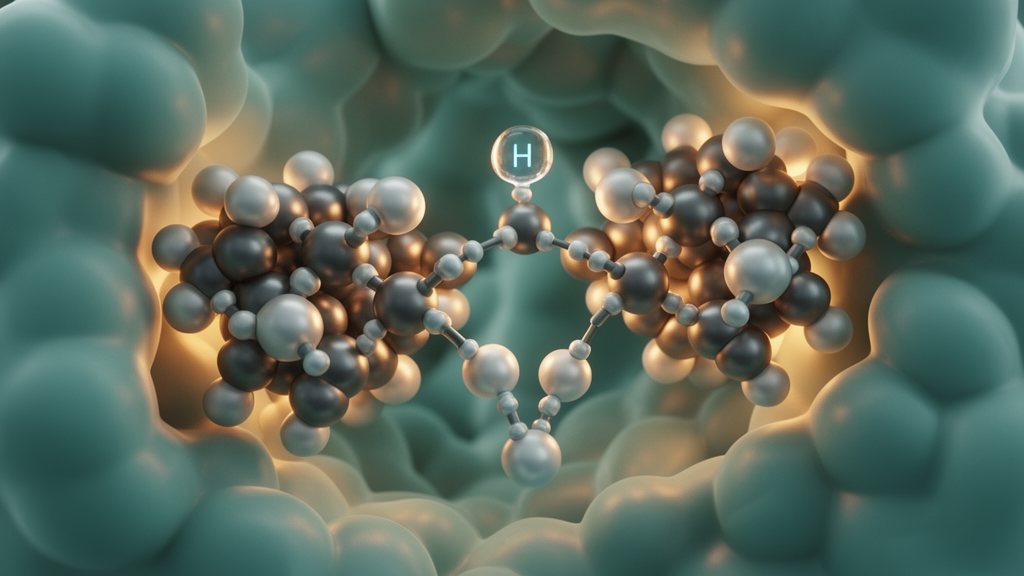
Molecular Pendulum in Hydrogenase Enzymes Reveals Secret of Efficient Hydrogen Production

Molecular Pendulum in Hydrogenase Enzymes Reveals Secret of Efficient Hydrogen Production

65
SHARES
587
VIEWS
Share on FacebookShare on Twitter
ADVERTISEMENT

Researchers at Ruhr University Bochum reported that a histidine-mediated, pendulum-like proton-transport mechanism is associated with the high catalytic activity of Group A [FeFe]-hydrogenases. The experimental study, published in the Journal of the American Chemical Society, examined hydrogen production, zinc inhibition and the movement of protons within the enzyme using protein crystallography, hydrogen-production tests, electrochemistry and molecular simulations.

The team found that zinc and other metal ions bound to several sites on [FeFe]-hydrogenases, but only one specific binding location produced inhibition. That site is near the enzyme’s previously known proton-transport pathway. Zinc can also bind non-specifically to sites required for proton binding, but the study’s results point to a particular interaction with two surface histidines as the inhibitory mechanism.

Replacing one of the two histidines with another amino acid left the [FeFe]-hydrogenase highly active but made it insensitive to zinc. Replacing the other histidine reduced hydrogen production to a very slow rate. Together, the experimental results and molecular simulations support a model in which one histidine acts as a movable proton relay: it can receive a proton from the other histidine at the enzyme’s surface and transfer it toward the established proton-transport pathway when oriented inward. Close analysis of crystal structures also identified another amino acid that appears to provide a fixed fulcrum for this movement. The study therefore supports the proposed mechanism, rather than directly observing every step of proton movement in real time.

The researchers also looked for the arrangement in other groups of [FeFe]-hydrogenases and reported that it appeared to be present only in Group A, the group associated with particularly high hydrogen-production rates. They proposed that the two histidines may enable the rapid proton capture linked to this high activity and that the arrangement could have contributed to the evolutionary specialization of Group A hydrogenases. The reported experiments do not establish that evolutionary history or show that this mechanism alone explains the activity difference. The work focuses on molecular function, metal-ion inhibition and proton transport in the enzyme; it does not demonstrate improved hydrogen production in human cells or an industrial process.

Subject of Research: Molecular mechanisms of proton transport and metal-ion inhibition in [FeFe]-hydrogenases

Article Title: A molecular pendulum for efficient hydrogen production

Article References: A molecular pendulum for efficient hydrogen production. Original publication (Bibliographic details unavailable.)

Image Credits: AI Generated

DOI: Not provided

Keywords: [FeFe]-hydrogenases, histidine, proton transport, zinc inhibition, protein crystallography, electrochemistry, molecular simulations, hydrogen production, Group A hydrogenases, Ruhr University Bochum, molecular, pendulum

Cite Scienmag News

Drew Townsend. (October 21, 2026). Study identifies histidine ‘pendulum’ mechanism underlying high activity of Group A [FeFe]-hydrogenases. Scienmag. https://scienmag.com/study-identifies-histidine-pendulum-mechanism-underlying-high-activity-of-group-a-fefe-hydrogenases/


Drew Townsend. "Study identifies histidine ‘pendulum’ mechanism underlying high activity of Group A [FeFe]-hydrogenases." Scienmag, 21 October 2026, https://scienmag.com/study-identifies-histidine-pendulum-mechanism-underlying-high-activity-of-group-a-fefe-hydrogenases/. Accessed 21 October 2026.

Drew Townsend. "Study identifies histidine ‘pendulum’ mechanism underlying high activity of Group A [FeFe]-hydrogenases." Scienmag. October 21, 2026. https://scienmag.com/study-identifies-histidine-pendulum-mechanism-underlying-high-activity-of-group-a-fefe-hydrogenases/

Tags: [FeFe]-hydrogenase catalytic mechanism[FeFe]-hydrogenaseselectrochemistryenzyme inhibition by zinc bindingenzyme structure-function relationship.Group A [FeFe]-hydrogenase activityGroup A hydrogenaseshigh catalytic activity of hydrogenaseshistidinehistidine-mediated proton transportHydrogen Productionmetal ion effects on enzyme activitymolecularmolecular simulationsmolecular simulations of hydrogenase functionpendulumpendulum-like proton transfer in enzymesprotein crystallographyprotein crystallography in hydrogenase studiesproton relay amino acids in enzymesproton transportproton transport pathways in enzymesRuhr University Bochumzinc inhibition
Share26Tweet16
Previous Post

First DS1025 dose administered in international Phase 1 solid-tumor trial

Next Post

Qingdao travelogue study finds tourist emotions near coast are nonlinear

Related Posts

SwiVirScan peptide platform maps broad viral exposure histories across pig herds
Biology

SwiVirScan profiles viral antibody histories in 127 adult breeding pigs

October 21, 2026
DNA barcodes alone cannot save biodiversity: why parasitoid wasps demand integrative taxonomy
Biology

Perspective and review finds DNA and morphology both needed for parasitoid wasp taxonomy

October 21, 2026
Nearctic fly Cooka incisa recorded in Europe for the first time
Biology

Nearctic fly Cooka incisa recorded in Europe for the first time

October 21, 2026
Systematic review finds limited direct evidence of macrophage environmental memory
Biology

Systematic review finds limited direct evidence of macrophage environmental memory

October 21, 2026
JuxtaBAM flags mismatched samples in joint multi-omic datasets
Biology

JuxtaBAM flags mismatched samples in joint multi-omic datasets

October 21, 2026
Phage screening identifies candidate tuberculosis peptides for HLA-E
Biology

Phage screening identifies candidate tuberculosis peptides for HLA-E

October 21, 2026
Next Post
Closer to the Sea Is Not Always Happier: Tourist Emotions Along the Coast Follow a Nonlinear Path

Qingdao travelogue study finds tourist emotions near coast are nonlinear

  • Mothers who receive childcare support from maternal grandparents show more optimized

    Mothers who receive childcare support from maternal grandparents show more parental warmth, finds NTU Singapore study

    27656 shares
    Share 11059 Tweet 6912
  • University of Seville Breaks 120-Year-Old Mystery, Revises a Key Einstein Concept

    1061 shares
    Share 424 Tweet 265
  • Bee body mass, pathogens and local climate influence heat tolerance

    682 shares
    Share 273 Tweet 171
  • Researchers record first-ever images and data of a shark experiencing a boat strike

    546 shares
    Share 218 Tweet 137
  • Groundbreaking Clinical Trial Reveals Lubiprostone Enhances Kidney Function

    531 shares
    Share 212 Tweet 133
Science

Embark on a thrilling journey of discovery with Scienmag.com—your ultimate source for cutting-edge breakthroughs. Immerse yourself in a world where curiosity knows no limits and tomorrow’s possibilities become today’s reality!

RECENT NEWS

  • Central Apennines protocol maps livestock density below municipal level
  • Perspective links political polarization to governance risks in Germany’s public health service
  • Home-based brain stimulation passes major feasibility test, while depression results raise new questions
  • Girls Now Outpace Boys in Youth Vaping, National Study Finds

Categories

  • Agriculture
  • Anthropology
  • Archaeology
  • Athmospheric
  • Biology
  • Biotechnology
  • Blog
  • Bussines
  • Cancer
  • Chemistry
  • Climate
  • Earth Science
  • Editorial Policy
  • Marine
  • Mathematics
  • Medicine
  • Pediatry
  • Policy
  • Psychology & Psychiatry
  • Science Education
  • Science News
  • Social Science
  • Space
  • Technology and Engineering

Subscribe to Blog via Email

Enter your email address to subscribe to this blog and receive notifications of new posts by email.

Join 5,150 other subscribers

© 2025 Scienmag - Science Magazine

Welcome Back!

Login to your account below

Forgotten Password?

Retrieve your password

Please enter your username or email address to reset your password.

Log In
No Result
View All Result
  • HOME
  • SCIENCE NEWS
  • CONTACT US

© 2025 Scienmag - Science Magazine

Discover more from Science

Subscribe now to keep reading and get access to the full archive.

Continue reading