


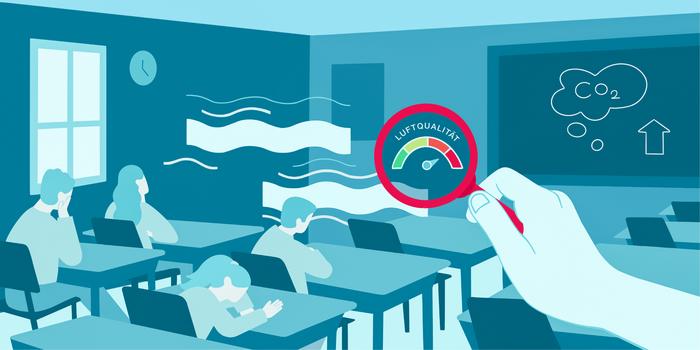
Good indoor air quality is vital for human health, especially for children in school environments where concentration and learning are paramount. Recent findings from a comprehensive study conducted by Graz University of Technology (TU Graz) have raised serious concerns about the air quality in schools across Austria. The investigation, which assessed CO2 concentrations, ventilation rates, and other environmental data in over 1,200 classrooms, reveals that many educational institutions fall short of both national and European ventilation standards.
The study’s alarming results indicate that a staggering 75% of the classrooms examined exceeded the recommended daily average CO2 concentration of 1,000 parts per million (ppm). This percentage escalates to an alarming 88% during the winter months. In some extreme cases, classrooms exhibited average hourly CO2 levels soaring to over 6,900 ppm, nearly seven times higher than the recommended threshold. Compounding this issue, about a quarter of all classrooms did not meet the minimum ventilation requirement of 4 liters of air per second per person, suggesting that many students receive less than 40% of the recommended air flow necessary for optimal learning and health.
While carbon dioxide itself is not regarded as a pollutant, its concentration is a telling proxy for indoor air quality. Elevated CO2 levels can indicate inadequate ventilation, which not only affects cognitive performance but also correlates with increased risks of respiratory infections and airborne diseases. The implications are particularly concerning, considering that regular ventilation could not only lower CO2 levels but also mitigate the transmission of potentially harmful pathogens among students.
The scope of the research, spearheaded by Robert McLeod and Christina Hopfe, was commissioned by the Federal Ministry of Education, Science and Research. The study highlights significant discrepancies in air quality between different types of schools, as well as influences stemming from regional characteristics. Notably, special education institutions fared better due to their lower room occupancy rates. Surprisingly, urban schools often reported superior CO2 levels when contrasted with their rural counterparts, challenging preconceived notions regarding air quality in various educational settings.
Additionally, the methodology of classroom ventilation emerged as a crucial factor impacting air quality outcomes. Findings suggest that classrooms equipped with automatic mechanical ventilation systems generally exhibited better average air quality when compared to those relying on manual window opening. This trend is particularly pronounced during colder months when outdoor temperatures dip below 16°C. On these chilly days, CO2 concentrations in mechanically ventilated schools were typically lower by 450 to 600 ppm than in those that utilized natural ventilation, highlighting the effectiveness of mechanical systems in maintaining air quality during adverse weather.
Despite the benefits presented by mechanical ventilation systems, it’s important to recognize that not all schools have the luxury of affording such solutions. Nevertheless, the study identified CO2 sensors as a cost-effective alternative that can significantly enhance manual ventilation practices. In numerous classrooms, these sensors were installed to provide visual alerts when CO2 levels exceeded acceptable limits, thereby influencing occupants’ ventilation behavior. The presence of these sensors reportedly led to substantial improvements in indoor air quality, particularly during the winter months when ventilation is often neglected.
The research underscores the urgent need for actionable strategies to improve the air quality within schools to bolster students’ learning environments and overall health. Essential measures include the implementation of affordable CO2 sensors and adequate training for both faculty and students in effective ventilation practices. A well-informed approach to ventilation not only optimizes air quality but also cultivates a culture of health consciousness among the younger generations.
The final findings from the ImpAQS (Improving Air Quality in Schools) project, which encapsulates comprehensive methodologies and results, can be obtained from the Institute of Building Physics, Services, and Construction. By disseminating this information, the research aims to instigate a nationwide response toward enhancing air quality in classrooms, ultimately improving the educational experience for children.
In light of these findings, it becomes clear that addressing indoor air quality within schools should be a public health priority, driven by collaboration among educational institutions, government bodies, and the community at large. While ventilation might seem like a straightforward concern, its implications reach far beyond mere comfort – they directly impact cognitive performance, health outcomes, and the wellbeing of future generations.
Investments in air quality improvements would yield dividends not only for students but also for teachers and educational staff, reinforcing the notion that a healthy indoor environment facilitates a thriving educational ecosystem. The call to action is clear: stakeholders in education must prioritize air quality improvements to nurture the minds of tomorrow while safeguarding their health today.
As these revelations resonate through communities, it is essential to galvanize efforts toward implementing innovative solutions, raising awareness, and fostering a proactive approach to enhance air quality in schools across Austria and beyond. The path toward better classroom environments rests on informed decisions, policies reinforced by research, and a collective commitment to nurturing the future.
By recognizing the relationship between school ventilation practices and indoor air quality, and by taking proactive steps, we can ensure that we provide our children with not only a conducive learning environment but also a healthy one. Combining research insights with practical interventions can ultimately lead to an environment where students can learn, thrive, and reach their fullest potential.
Keywords
Air Quality, Schools, CO2 Concentration, Ventilation, Austria, Health, Learning Environment, Mechanical Ventilation, CO2 Sensors.
Cite Scienmag News
Russell Cooper. (May 28, 2025). Study from TU Graz Reveals Austria’s Schools Struggle to Meet National and European Air Quality Standards. Scienmag. https://scienmag.com/study-from-tu-graz-reveals-austrias-schools-struggle-to-meet-national-and-european-air-quality-standards/
Russell Cooper. "Study from TU Graz Reveals Austria’s Schools Struggle to Meet National and European Air Quality Standards." Scienmag, 28 May 2025, https://scienmag.com/study-from-tu-graz-reveals-austrias-schools-struggle-to-meet-national-and-european-air-quality-standards/. Accessed 6 September 2026.
Russell Cooper. "Study from TU Graz Reveals Austria’s Schools Struggle to Meet National and European Air Quality Standards." Scienmag. May 28, 2025. https://scienmag.com/study-from-tu-graz-reveals-austrias-schools-struggle-to-meet-national-and-european-air-quality-standards/


