


A quarter of the sustainability records collected from cocoa farms were manipulated, according to a new study that exposes a hidden vulnerability in the systems used to certify environmentally responsible products. The research, published in Science, found that false reporting increased sharply when auditors and farmers knew the precise figures required for a farm to pass an environmental assessment. The findings challenge the reliability of sustainability labels found on chocolate, coffee, bananas and other consumer goods, while raising urgent questions about how companies will verify supply chains under Europe’s forthcoming deforestation rules.
Sustainability certification schemes are designed to convert complex environmental and social promises into information that consumers can trust. A label may indicate that cocoa was grown without clearing rainforest, that farmers planted shade trees, that children were not employed, or that hazardous pesticides were avoided. To verify these claims, auditors visit farms, collect measurements and upload observations to digital monitoring systems. The process assumes that the information recorded in the field accurately reflects conditions on the ground. But the new study suggests that the data itself can become a target for manipulation when the people collecting it face incentives to help farms qualify for certification or financial rewards.
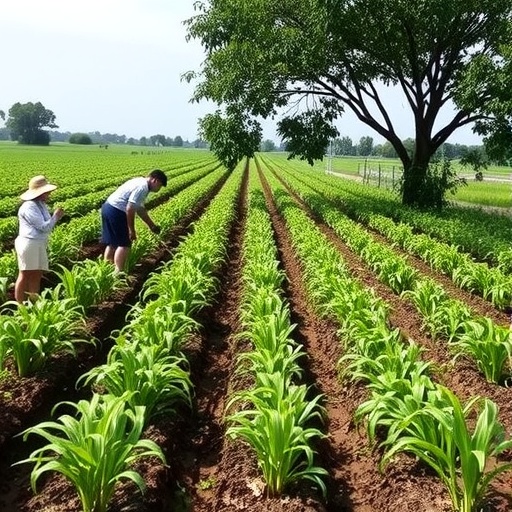
The researchers examined monitoring records from 407 cocoa farms in Côte d’Ivoire, the world’s largest cocoa-producing country. Each farm participated in a tree-planting programme operated by an international cocoa buyer and exporter. Farmers were encouraged to plant shade trees among their cocoa trees, a practice intended to improve the long-term health of plantations, protect soil, moderate temperatures and support biodiversity. Shade trees can also provide habitat for birds and insects and reduce some of the ecological pressures associated with intensive cocoa production. As part of the programme, farmers initially reported how many trees they had planted, after which auditors visited the farms to count them.
The researchers created an experimental monitoring system in which farmers could receive a reward for providing accurate information. Auditors entered their tree counts into smartphones, and the system immediately indicated whether the number matched the farmer’s original declaration and therefore whether the farmer would qualify for the reward. Auditors could also alter their records after the visit. This design allowed the researchers to distinguish ordinary measurement errors from changes that appeared to be strategically directed at helping farms pass the assessment. The data provided an unusual opportunity to observe how incentives influenced environmental reporting in real time rather than relying only on interviews or retrospective surveys.
The pattern was striking. When the farmer’s initial tree count met the required criterion on the first attempt, auditors subsequently changed the record in only about 6 to 7 percent of cases. When the farm failed to meet the criterion, however, auditors later altered the data in roughly 33 percent of cases. The changes were not distributed randomly across the monitoring system. Records relating to other criteria that had no bearing on the reward were not similarly modified. According to the researchers, this selective pattern indicates that the alterations were not simply caused by confusion, technical problems or general data-cleaning practices. Instead, auditors appeared to adjust the specific information needed to make a farm pass.
The auditors themselves did not receive a direct payment for entering accurate information, creating a mismatch between their formal responsibilities and their practical incentives. Helping farmers pass could preserve working relationships, reduce conflict during field visits or create opportunities to share the resulting benefits. Farmers, meanwhile, had a clear reason to report numbers that would qualify them for the programme. These overlapping interests can undermine the independence of verification, particularly in supply chains where auditors are hired, managed or repeatedly engaged by organisations that also depend on high participation rates and positive certification results. The problem is therefore structural rather than the result of a few dishonest individuals.
The study also tested whether a relatively simple change could reduce manipulation. The farms were divided into two groups. In one group, auditors knew the threshold used to determine whether the farmer’s original tree count qualified for the reward. In the other, the relevant criterion was concealed from them. When auditors did not know the target value, the proportion of manipulated records fell from approximately 25 percent to 11 percent—more than a 50 percent reduction. Concealing the pass threshold did not eliminate the possibility of inaccurate reporting, but it made it substantially more difficult to tailor a revised record to the desired outcome. The finding suggests that audit systems may become more reliable when field inspectors cannot predict exactly which figures will trigger approval or payment.
The implications extend beyond cocoa certification. The European Union’s Deforestation Regulation is scheduled to apply to large and medium-sized companies from the end of December 2026 and to small companies from the end of June 2027. The regulation requires products such as cocoa, coffee, soy, palm oil, beef, rubber and timber sold in the European market to be linked to land that was not deforested after 2020. Importers and sellers will need to demonstrate that products meet the rules, often by mapping the boundaries of farms and combining those records with satellite observations of forest cover. If initial field measurements are inaccurate, later satellite analysis may be attached to the wrong location or incomplete boundaries, allowing recently cleared land to appear compliant.
The researchers argue that technology alone will not solve the problem. Smartphones, geolocation tools and satellite imagery can improve traceability, but they cannot guarantee that the original information entered into a system is truthful or complete. Effective oversight may require concealed assessment criteria, independent audits, random rechecks, separation between commercial buyers and verification agencies, and penalties for deliberate misreporting. More fundamentally, the authors say that certification cannot compensate for the economic pressures embedded in the cocoa trade. Cocoa producers in West Africa receive only a limited share of the value generated by processing and selling chocolate, leaving many with little financial capacity to invest in shade trees, soil restoration or other sustainable practices.
The study’s authors say lasting progress will require transforming how revenue is distributed across the supply chain. Processing more cocoa in producing countries could allow producers to retain a larger share of the profits, while better prices and long-term purchasing agreements could create genuine incentives for environmental stewardship. Without such changes, sustainability programmes may continue to ask farmers and auditors to meet ambitious standards within a system that rewards short-term compliance more reliably than long-term conservation. The new findings turn a familiar promise on a chocolate wrapper into a much larger question: can sustainability claims be trusted when the people responsible for verifying them benefit from making farms appear greener than they are?
Web References:
https://doi.org/10.1126/science.aea9565
References:
Cammelli F, Six J, Garrett RD. “False reporting undermines the integrity of supply chain sustainability initiatives.” Science. 13 August 2026. DOI: 10.1126/science.aea9565
Cite Scienmag News
Alan Morgan. (August 13, 2026). Study exposes gaps in agricultural sustainability monitoring. Scienmag. https://scienmag.com/study-exposes-gaps-in-agricultural-sustainability-monitoring/
Alan Morgan. "Study exposes gaps in agricultural sustainability monitoring." Scienmag, 13 August 2026, https://scienmag.com/study-exposes-gaps-in-agricultural-sustainability-monitoring/. Accessed 3 September 2026.
Alan Morgan. "Study exposes gaps in agricultural sustainability monitoring." Scienmag. August 13, 2026. https://scienmag.com/study-exposes-gaps-in-agricultural-sustainability-monitoring/


