


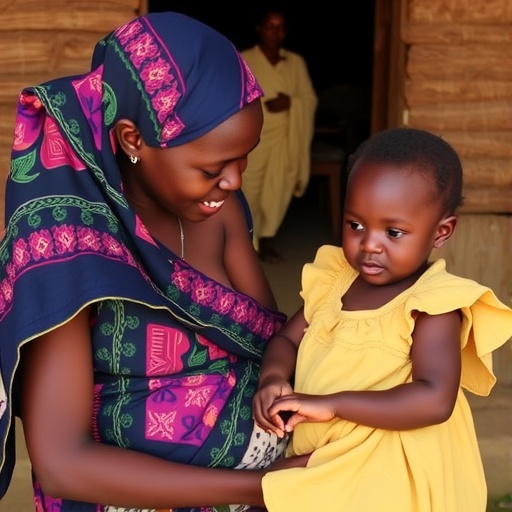
A new economic analysis suggests that performance-based financing could be a cost-effective way to improve maternal and newborn health in the Democratic Republic of the Congo, where some of the world’s most severe health challenges persist. The study, published in Global Health Research and Policy, examined a large financing program that rewarded health facilities for delivering more maternal and child health services and meeting specified performance standards. Compared with direct facility financing, in which facilities received unconditional payments, the performance-based approach cost more but was associated with modest increases in antenatal care, institutional delivery, and postnatal care. When those changes were translated into lives saved and quality-adjusted life years, the researchers concluded that the program could represent good value for money under a commonly used economic threshold.
The need for such interventions is particularly urgent in the DRC. The country recorded an under-five mortality rate of approximately 79 deaths per 1,000 live births in 2021, while its maternal mortality ratio was estimated at 547 deaths per 100,000 live births in 2020. These outcomes are linked to several overlapping problems, including limited access to essential services, shortages of medicines and supplies, weak referral systems, high household fees, and inconsistent financing for health facilities. In many areas, health workers operate in difficult conditions with inadequate resources and low morale. The performance-based financing program was designed to address some of these bottlenecks by connecting a portion of facility funding to measurable service indicators, while also supporting supervision, verification, and quality improvement.
The analysis drew on a cluster-randomized controlled trial conducted from 2017 through 2021 across 100 health zones in 11 provinces. Health zones, rather than individual patients, were assigned to receive either performance-based financing, known as PBF, or direct facility financing, known as DFF. Facilities in the PBF group received quarterly incentive payments based on services such as childhood vaccination, antenatal care, institutional delivery, postnatal care, family planning, growth monitoring, referrals, and outpatient treatment. Up to half of the incentives could be distributed as bonuses to health workers, while at least one-fifth had to be spent on medicines and other consumables. Facilities in the DFF group received payments of a similar general magnitude, but without performance conditions. This design allowed researchers to compare conditional financing with a less regulated funding model rather than with a complete absence of financial support.
For the economic evaluation, the researchers built a decision-tree model focused on three services with well-established links to maternal and newborn survival: at least four antenatal care visits, delivery in a health facility, and postnatal care. The model followed hypothetical mothers and newborns through combinations of these services and estimated how each pathway affected the risk of death. Vaccination was excluded because the trial found no meaningful difference in coverage between the two financing groups. Family planning was omitted because the available data did not identify the specific contraceptive methods used, while growth monitoring was excluded because its pathway to maternal or neonatal mortality was not sufficiently clear for the model. The researchers combined trial results with epidemiological evidence from published studies, including estimates of how receiving one service influenced the probability of receiving another and how care affected mortality.
The cost calculations were performed from the health-system perspective, meaning that the analysis included costs borne by providers and the program but not the expenses incurred by households. Transport, accommodation, user payments, lost income, and other indirect costs were therefore left out. Over five years, the PBF arm spent an estimated US$205.9 million in 2021 dollars. About 70.6 percent of that amount went directly to health facilities as incentive payments, while 19.41 percent was transferred to provincial purchasing agencies responsible for contracting facilities and managing the program. The average annual cost was approximately US$2.05 per person in the PBF group. The DFF arm spent US$52.2 million, equivalent to about US$1.71 per person per year. After standardizing the comparison for population size, the researchers estimated that PBF generated an additional program cost of US$34.53 million. Including the additional expense of delivering more maternal health services increased the overall incremental cost to US$45.34 million, with an uncertainty range of US$26.14 million to US$74.81 million.
The health gains were driven by relatively small but persistent improvements in service coverage. Compared with DFF, PBF increased coverage by an average of about 1.7 percentage points annually for four or more antenatal visits, 0.6 percentage points for institutional delivery, and 1.5 percentage points for postnatal care. Those increases may appear modest, but the program covered a very large population. In the decision-tree model, the higher coverage was associated with an estimated 1,372 additional lives saved over the five-year period. The researchers estimated that 157 of these were pregnant women and 1,215 were newborns, meaning that neonatal lives saved were approximately seven times more numerous than maternal lives saved. The difference reflects both the number of births affected and the substantial influence of timely care on newborn survival.
To compare the value of the program across different health outcomes, the investigators converted survival gains into quality-adjusted life years, or QALYs. A QALY combines length of life with health-related quality of life and is widely used in health economics to compare interventions. The model estimated that the lives saved through improved service coverage represented 33,213 QALYs gained, although the uncertainty interval was broad and crossed zero. The researchers calculated QALYs lost per death using discounted life expectancy: 21.88 QALYs for the death of a pregnant woman and 24.34 QALYs for the death of a newborn. Because DRC-specific quality-of-life data were unavailable, they approximated health-related quality using the ratio of healthy life expectancy to total life expectancy, estimated at 0.86. Costs and future health benefits were both discounted at 3 percent annually.
The central measure of value was the incremental cost-effectiveness ratio, or ICER, which expresses the additional cost required to gain one additional QALY compared with the alternative. Without including the program’s estimated effect on quality of care, the ICER was US$1,374 per QALY. The authors compared this figure with a threshold of US$1,732, equivalent to three times DRC’s 2021 gross domestic product per capita. By that standard, PBF was considered cost-effective, although it did not meet the more demanding threshold of US$577, or one times GDP per capita. Probabilistic sensitivity analysis, based on 10,000 Monte Carlo simulations, showed that the program had a 57 percent probability of being cost-effective at the three-times-GDP threshold and a 12.7 percent probability of being highly cost-effective at the one-times-GDP threshold. The 95 percent uncertainty interval around the ICER was extremely wide, ranging from negative US$11,881 to US$12,566 per QALY, reflecting uncertainty in both program impact and cost estimates.
The economic picture changed substantially when quality-of-care improvements were included. The underlying trial suggested that PBF improved not only whether services were used but also aspects of the care provided, particularly postnatal care. The researchers represented this effect by multiplying service coverage in the PBF group by the estimated percentage improvement in quality, while treating DFF quality as the baseline. Under that assumption, the ICER fell to US$237.70 per QALY, well below the one-times-GDP threshold. However, the authors cautioned that this adjustment should be interpreted carefully. A percentage increase in quality cannot necessarily be treated as equivalent to the same percentage increase in coverage, and the quality of care may already influence whether a person completes multiple antenatal visits or chooses a facility delivery. The analysis therefore regarded the unadjusted estimate as the more cautious primary result.
Sensitivity tests showed that the program’s cost-effectiveness depended heavily on how much it improved postnatal care coverage. The model was also sensitive to the costs of institutional delivery and antenatal visits, while the treatment cost of delivery complications had relatively little influence. When the assumed improvement in all three services was reduced to 1 percentage point, the ICER rose to US$3,357 per QALY, above the selected cost-effectiveness threshold. With a moderate 3-percentage-point improvement, the ICER was US$1,374, while a 5-percentage-point improvement reduced it to US$959. The authors also found that reducing verification costs by half, without damaging program effectiveness, could lower the ICER to about US$776 per QALY. Verification and counter-verification activities accounted for roughly one-fifth of PBF implementation costs, making administrative efficiency a potentially important route to greater value.
The researchers emphasize that the findings do not mean performance-based financing is automatically effective in every setting. The study relied on several assumptions because country-specific data were unavailable, including international estimates of service costs, relationships between healthcare use and mortality, and the conditional probabilities linking antenatal, delivery, and postnatal care. Some DFF expenditure records were missing or unusually high and had to be replaced with estimates based on neighboring years and consultations with program implementers. The analysis also excluded possible benefits from family planning, growth monitoring, and other services, which means that the program’s full health impact may have been underestimated. Conversely, because the study considered only the health-system perspective, it did not capture household costs; including those expenses could make the intervention appear less favorable if PBF increased utilization without reducing the financial burden on families.
The study’s broader message is that financing design can matter even when the difference in funding is relatively small. In the DRC, PBF facilities received about US$2.05 per person annually, compared with US$1.71 under DFF. The modest funding gap produced modest but measurable improvements in several services, and the scale of the program transformed those small changes into a potentially meaningful population health benefit. Still, the wide uncertainty around the results makes implementation quality crucial. Timely payments, credible monitoring, effective supervision, and careful control of verification expenses could determine whether the program delivers durable gains or becomes an expensive administrative system with limited additional impact. The authors conclude that PBF is likely to be cost-effective compared with DFF when judged against the three-times-GDP threshold, but maintaining the improvements in maternal and newborn service coverage will be essential if those gains are to continue after the financing program ends.
Cite Scienmag News
Harold Sullivan. (August 26, 2026). Study assesses financial incentives for maternal and child health in DR Congo. Scienmag. https://scienmag.com/study-assesses-financial-incentives-for-maternal-and-child-health-in-dr-congo/
Harold Sullivan. "Study assesses financial incentives for maternal and child health in DR Congo." Scienmag, 26 August 2026, https://scienmag.com/study-assesses-financial-incentives-for-maternal-and-child-health-in-dr-congo/. Accessed 4 September 2026.
Harold Sullivan. "Study assesses financial incentives for maternal and child health in DR Congo." Scienmag. August 26, 2026. https://scienmag.com/study-assesses-financial-incentives-for-maternal-and-child-health-in-dr-congo/


