

Monday, October 26, 2026
Science
No Result
View All Result
  • Login
  • HOME
  • SCIENCE NEWS
  • CONTACT US
  • HOME
  • SCIENCE NEWS
  • CONTACT US
No Result
View All Result
Scienmag
No Result
View All Result
Home Science News Medicine

Stem cell hub at ureter-bladder junction rebuilds the injured bladder lining

October 26, 2026
in Medicine
Drew Townsend
By Drew Townsend Scienmag Editorial Profile - Cell Biology
Reading Time: 3 mins read
0
Stem cell hub at ureter-bladder junction rebuilds the injured bladder lining

Stem cell hub at ureter-bladder junction rebuilds the injured bladder lining

65
SHARES
587
VIEWS
Share on FacebookShare on Twitter
ADVERTISEMENT

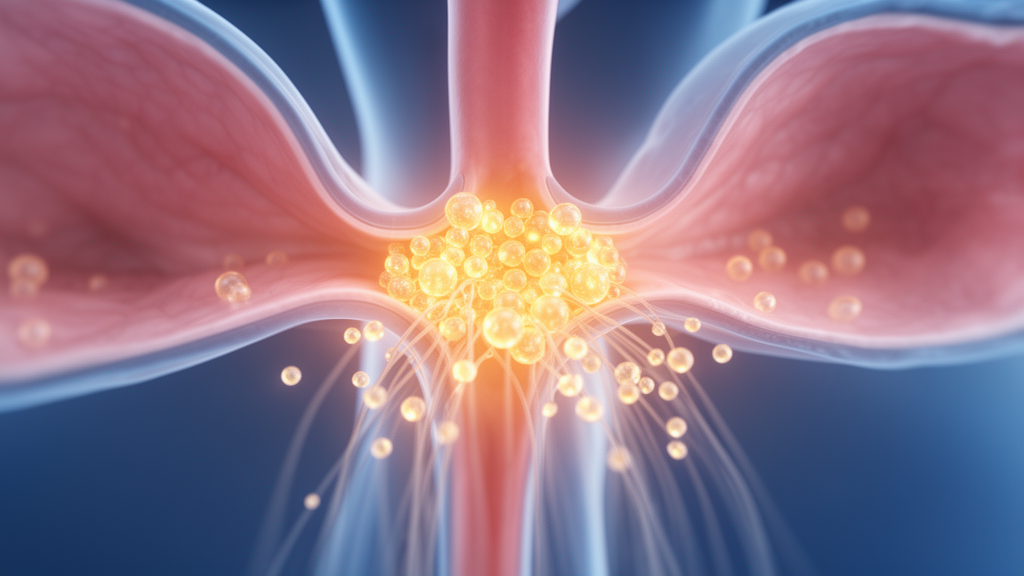
A discrete cluster of label-retaining urothelial cells at the junction where the ureter meets the bladder acts as a stem cell niche for the urinary tract. Researchers report in Nature Communications that the ureterovesical junction, or UVJ, harbors a major cluster of these label-retaining cells, a hallmark of stem cell populations that cycle slowly and hold on to molecular tags over long periods. The cells also show organoid-forming activity in culture, a functional test of stem-like capacity, placing the UVJ among epithelial stem cell niches elsewhere in the body.

Lineage tracing revealed a striking division of labor. The Foxa2-expressing urothelial cells of the UVJ renew the urothelium of the ureter, the tube that carries urine from kidney to bladder. Yet during normal tissue maintenance, and even after mild bladder injury, they do not migrate into the bladder at all. The two compartments are maintained separately under ordinary conditions, with the UVJ population confined to its own territory.

That restraint disappears when the bladder lining is severely damaged. After mechanical or chemical denudation that strips away the bladder urothelium, UVJ-derived cells migrate rapidly into the bladder and repopulate the wounded surface. The same reepithelialization was observed after combination chemotherapy, which is toxic to the bladder lining, and during severe bladder infection. In each case, the UVJ niche supplied replacement cells needed to restore the barrier.

The study also identified a common molecular feature of these repair episodes. Early in each injury model examined, the researchers detected selective phosphorylation of TRKA and AKT, signaling events that drove both proliferation and differentiation of the responding urothelial cells. This shared phosphorylation pattern suggests that a defined signaling program accompanies the UVJ-mediated repair processes described in the study, though the experiments did not localize the phosphorylation to the UVJ itself.

Notably, the newly generated bladder urothelial cells did not simply adopt a bladder identity. Instead, they expressed a mixture of UVJ and bladder urothelial markers, indicating active remodeling in which both intrinsic programs carried by the incoming cells and extrinsic cues from the injured bladder environment shape the final tissue. The repair process, in other words, is a negotiation between donor cell identity and local conditions rather than a one-way replacement.

The findings reframe the anatomy of the urinary tract, assigning the UVJ a role as a stem cell niche with responsibilities on both sides of the ureter-bladder boundary. Because the same population maintains the ureter during homeostasis and rebuilds the bladder after severe injury, modulating its activity could offer a route to enhancing urothelial regeneration. The authors suggest that targeting these cells may eventually help combat challenging bladder diseases in which the protective lining is difficult to restore, though translating lineage-tracing observations into therapies will require further work on how TRKA and AKT signaling can be safely harnessed.

Subject of Research: Ureterovesical junction: a stem cell niche for ureteral urothelial renewal and bladder urothelial injury repair

Article Title: Ureterovesical junction: a stem cell niche for ureteral urothelial renewal and bladder urothelial injury repair

Article References: Liao, Y., Zhang, F., Liu, Y., Li, X., Kuo, F. I., Hou, T., Wei, Y., Wong, T.-W., Lepor, H., Shapiro, E., Deng, F.-M., Mendelsohn, C. L., & Wu, X.-R. (2026). Ureterovesical junction: a stem cell niche for ureteral urothelial renewal and bladder urothelial injury repair. Nature Communications. https://doi.org/10.1038/s41467-026-78820-2

Image Credits: AI Generated

DOI: 10.1038/s41467-026-78820-2

Keywords: Ureterovesical, junction, stem, cell, niche, ureteral, urothelial, renewal, bladder, injury, repair, scientific research

Cite Scienmag News

Drew Townsend. (October 26, 2026). Stem cell hub at ureter-bladder junction rebuilds the injured bladder lining. Scienmag. https://scienmag.com/stem-cell-hub-at-ureter-bladder-junction-rebuilds-the-injured-bladder-lining/


Drew Townsend. "Stem cell hub at ureter-bladder junction rebuilds the injured bladder lining." Scienmag, 26 October 2026, https://scienmag.com/stem-cell-hub-at-ureter-bladder-junction-rebuilds-the-injured-bladder-lining/. Accessed 26 October 2026.

Drew Townsend. "Stem cell hub at ureter-bladder junction rebuilds the injured bladder lining." Scienmag. October 26, 2026. https://scienmag.com/stem-cell-hub-at-ureter-bladder-junction-rebuilds-the-injured-bladder-lining/

Tags: bladderbladder injury repairbladder lining regeneration mechanismscellchemical and mechanical bladder injuryFoxa2-expressing urothelial cellsinjuryjunctionlineage tracing of urothelial cellsnicheorganoid formation in bladder tissuerenewalrepairScientific Researchstemstem cell-based bladder tissue engineeringureter-bladder junction regenerationureteralUreterovesicalurinary tract stem cellsUrothelialurothelial cell migrationurothelial stem cell nicheUVJ stem cell activity
Share26Tweet16
Previous Post

Blue LED Light Boosts Chamomile Cell Metabolites While Red-Blue Mix Drives Growth

Next Post

Browning, not warming, pushes shallow boreal lakes toward bacterial dominance

Related Posts

Algorithm Tracks Shifting Electrodes to Make Muscle Sensor Readings Reliable Across Sessions
Medicine

Algorithm Tracks Shifting Electrodes to Make Muscle Sensor Readings Reliable Across Sessions

October 26, 2026
Single-barrier fixes yield under 0.02% gain in algorithmic recourse model
Medicine

Single-barrier fixes yield under 0.02% gain in algorithmic recourse model

October 26, 2026
Lebanon’s private insurers weigh pooled fund to cover oral cancer medicines
Medicine

Lebanon’s private insurers weigh pooled fund to cover oral cancer medicines

October 26, 2026
Nine Genes Tied to Cognitive Performance Across Cortical and Subcortical Brain Tissues
Medicine

Nine Genes Tied to Cognitive Performance Across Cortical and Subcortical Brain Tissues

October 26, 2026
Microglial iron transport failure drives dopaminergic neuron loss in Parkinson’s models
Medicine

Microglial iron transport failure drives dopaminergic neuron loss in Parkinson’s models

October 26, 2026
Nurse-Led Swallowing Screening at Admission Linked to Lower Aspiration Pneumonia Risk
Medicine

Nurse-Led Swallowing Screening at Admission Linked to Lower Aspiration Pneumonia Risk

October 26, 2026
Next Post
Browning, not warming, pushes shallow boreal lakes toward bacterial dominance

Browning, not warming, pushes shallow boreal lakes toward bacterial dominance

  • Mothers who receive childcare support from maternal grandparents show more optimized

    Mothers who receive childcare support from maternal grandparents show more parental warmth, finds NTU Singapore study

    27656 shares
    Share 11059 Tweet 6912
  • University of Seville Breaks 120-Year-Old Mystery, Revises a Key Einstein Concept

    1061 shares
    Share 424 Tweet 265
  • Bee body mass, pathogens and local climate influence heat tolerance

    682 shares
    Share 273 Tweet 171
  • Researchers record first-ever images and data of a shark experiencing a boat strike

    546 shares
    Share 218 Tweet 137
  • Groundbreaking Clinical Trial Reveals Lubiprostone Enhances Kidney Function

    531 shares
    Share 212 Tweet 133
Science

Embark on a thrilling journey of discovery with Scienmag.com—your ultimate source for cutting-edge breakthroughs. Immerse yourself in a world where curiosity knows no limits and tomorrow’s possibilities become today’s reality!

RECENT NEWS

  • Theory-driven virtual reality framework shows added executive-control gains in children with ADHD
  • Browning, not warming, pushes shallow boreal lakes toward bacterial dominance
  • Stem cell hub at ureter-bladder junction rebuilds the injured bladder lining
  • Blue LED Light Boosts Chamomile Cell Metabolites While Red-Blue Mix Drives Growth

Categories

  • Agriculture
  • Anthropology
  • Archaeology
  • Athmospheric
  • Biology
  • Biotechnology
  • Blog
  • Bussines
  • Cancer
  • Chemistry
  • Climate
  • Earth Science
  • Editorial Policy
  • Marine
  • Mathematics
  • Medicine
  • Pediatry
  • Policy
  • Psychology & Psychiatry
  • Science Education
  • Science News
  • Social Science
  • Space
  • Technology and Engineering

Subscribe to Blog via Email

Enter your email address to subscribe to this blog and receive notifications of new posts by email.

Join 5,151 other subscribers

© 2025 Scienmag - Science Magazine

Welcome Back!

Login to your account below

Forgotten Password?

Retrieve your password

Please enter your username or email address to reset your password.

Log In
No Result
View All Result
  • HOME
  • SCIENCE NEWS
  • CONTACT US

© 2025 Scienmag - Science Magazine

Discover more from Science

Subscribe now to keep reading and get access to the full archive.

Continue reading