


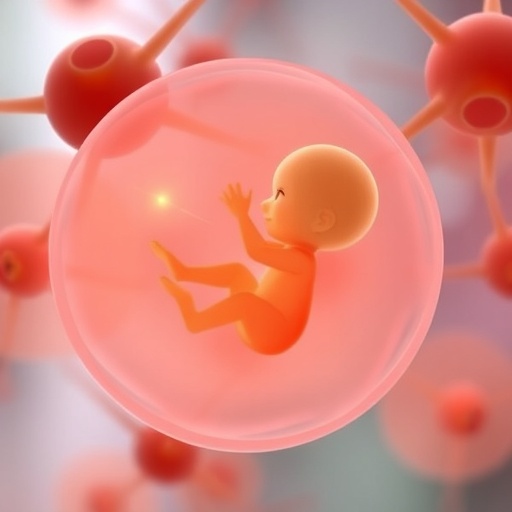
A groundbreaking white paper, orchestrated by an international collective of embryology and bioethics specialists, has shed new light on the emergent field of stem cell-based embryonic models. Spearheaded by Alfonso Martínez-Arias, a distinguished researcher at Pompeu Fabra University, the paper delves into the innovative intersection of developmental biology, legal frameworks, and ethical guidelines. It aims to create a cohesive pathway for employing embryonic models derived from pluripotent stem cells, bridging crucial gaps in our understanding of human reproduction while navigating the complex ethical terrain of embryo research.
Infertility continues to pose a global health challenge, with nearly one in six individuals of reproductive age experiencing difficulties conceiving. Worldwide, an estimated 48 million couples face the emotional and physical consequences of infertility. Despite significant advancements in assisted reproductive technologies (ART) that have resulted in the birth of over 10 million babies in the past three decades, our comprehension of early human embryonic development remains fragmented. Particularly enigmatic is the window beyond the initial seven days post-fertilization, a crucial period where the embryo implants into the uterine lining and begins orchestrating organ formation.
Current ethical and legal strictures, most notably the widely acknowledged 14-day rule, strictly prohibit the in vitro cultivation of human embryos beyond this threshold. This regulation constrains direct experimental approaches, especially concerning the third week of development—a critical juncture characterized by gastrulation. Gastrulation is a transformative phase where the embryo’s cells undergo complex reorganization to form the three primary germ layers: ectoderm, mesoderm, and endoderm. This process sets the stage for subsequent organogenesis, and abnormalities during this time are implicated in congenital cardiovascular anomalies, metabolic dysfunctions, and limb malformations observed postnatally.
Traditional embryo research relies heavily on surplus embryos donated by fertility clinics, a resource at once ethically sensitive and statistically limited. The scarcity of such material imposes a significant roadblock to investigations aimed at extending the developmental timeline in vitro. However, stem cell-based embryonic models are emerging as a revolutionary alternative. These synthetic constructs, engineered from human pluripotent stem cells capable of differentiating into virtually any cell type, offer a promising platform to simulate early embryogenesis under controlled laboratory conditions.
Although human stem cell-derived models have yet to recapitulate the entirety of gastrulation, considerable progress has been achieved in non-human primates such as macaques. These models faithfully mimic complex morphological and lineage specification events characteristic of the third week of development, providing an invaluable experimental proxy. The white paper emphasizes the potential of such systems to unravel the molecular and cellular underpinnings of early human embryonic development, circumventing ethical limits that currently restrict embryo research beyond day 14.
Crucially, the paper articulates the pressing necessity of establishing rigorous standards for the generation and use of these embryonic models. Currently, diverse methodologies and heterogeneous stem cell lines undermine reproducibility and comparability across laboratories. Without consensus on protocol optimization or benchmarking, translating findings into clinical applications remains precarious. The authors advocate strongly for unified regulatory frameworks that permit careful and ethical utilization of these models, ensuring their reliability as tools for research and therapeutic innovation in reproductive medicine.
Ethical deliberations form a cornerstone of the discussion. The contributors unanimously agree that stem cell-based embryo models should be regulated distinctly from natural embryos. This differentiation underscores the models’ unique status as research artifacts rather than potential lifeforms. Nonetheless, the white paper delineates red lines, including outright prohibition of transferring these models into a uterus—whether human or animal—to prevent the creation of synthetic pregnancies. Moreover, it prescribes that in vitro culture of such models must be temporally constrained strictly to the requirements of each experimental protocol, always subject to oversight by institutional ethics committees.
Importantly, the white paper calls for transparent communication with the public and the scientific community regarding the developmental capacities and ethical boundaries of these synthetic models. Responsible disclosure is pivotal to fostering societal trust and dispelling misconceptions, which can hinder scientific progress. Highlighting these models’ ability to surmount the 14-day barrier offers hope for unraveling developmental disorders’ origins and enhancing ART outcomes, potentially alleviating the burden of infertility worldwide.
From a translational perspective, advancing the standardization and scalability of embryonic models holds immense promise for drug screening, toxicology evaluation, and personalized medicine approaches in reproductive health. By precisely recapitulating the earliest stages of human development, researchers can probe the impact of genetic mutations and environmental factors on embryogenesis with unparalleled resolution. These insights could pave the way for novel interventions addressing implantation failures, miscarriage, and developmental anomalies.
The consortium behind the white paper, including influential figures from leading academic and policy institutions, stresses collaborative interdisciplinary efforts moving forward. Integrating bioengineering, genomics, and ethical scholarship will be vital in refining stem cell-based embryo models’ fidelity and utility. The publication coincides with a growing momentum to reconsider and potentially refine existing embryo research regulations, balancing scientific innovation with societal values.
Ultimately, this landmark paper charts a visionary course for the future of reproductive biology research. It positions stem cell-based embryo models not as mere substitutes but as transformative instruments capable of unlocking the mysteries of early human life processes. While the journey ahead requires navigating complex ethical terrain and technological hurdles, the benefits—insights into infertility, developmental diseases, and enhancement of assisted reproduction—promise to reshape medicine and human biology for generations to come.
Cite Scienmag News
Drew Townsend. (June 12, 2026). Stem Cell-Based Embryonic Models: Unlocking New Insights into Infertility. Scienmag. https://scienmag.com/stem-cell-based-embryonic-models-unlocking-new-insights-into-infertility/
Drew Townsend. "Stem Cell-Based Embryonic Models: Unlocking New Insights into Infertility." Scienmag, 12 June 2026, https://scienmag.com/stem-cell-based-embryonic-models-unlocking-new-insights-into-infertility/. Accessed 4 September 2026.
Drew Townsend. "Stem Cell-Based Embryonic Models: Unlocking New Insights into Infertility." Scienmag. June 12, 2026. https://scienmag.com/stem-cell-based-embryonic-models-unlocking-new-insights-into-infertility/


