


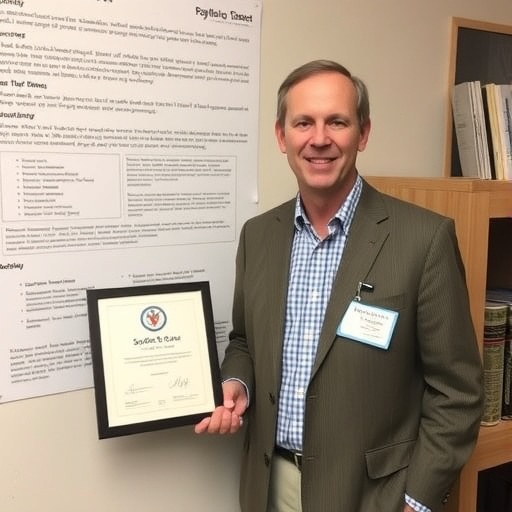
Larry Steckel, an eminent Extension weed specialist and researcher at the University of Tennessee Institute of Agriculture’s Department of Plant Sciences, has recently earned a prestigious distinction by being named a Fellow of the Weed Science Society of America (WSSA). This honor represents one of the highest accolades within the society, highlighting Steckel’s significant contributions to the advancement of weed science. His esteemed status reflects decades of dedicated research, extension work, and education, focusing on combatting some of the most formidable herbicide-resistant weeds challenging modern agriculture.
Steckel’s nationally recognized program concentrates on the intricate biology and innovative management of multiple herbicide-resistant weed species prevalent in Tennessee’s row crop agriculture. Particularly, his research targets Palmer amaranth, Italian ryegrass, and horseweed — all notorious for their resilience against traditional chemical control methods. These species exhibit sophisticated resistance mechanisms, including target-site mutations and enhanced metabolic degradation pathways, complicating effective control and posing substantial threats to yield stability and crop health.
The role of no-till farming, utilized by over 90% of Tennessee row crop producers, has added complexity to weed management. While no-till practices preserve soil structure and reduce erosion, they also encourage the persistence of weed seedbanks and provide a conducive environment for resistant weed populations to thrive. Steckel’s research gathers empirical data that informs adaptive weed control strategies aligned with no-till systems, integrating chemical, cultural, and mechanical tools to mitigate resistance proliferation while preserving ecosystem health.
Throughout his career, Steckel has been deeply involved with the WSSA, beginning as a graduate student member in 1988. His leadership roles within the organization, including serving as secretary, president-elect, vice president, and president, illustrate his commitment to fostering collaboration and knowledge dissemination among weed science professionals. His involvement underscores the importance of scientific societies in driving innovation and addressing evolving challenges in applied plant sciences.
Steckel’s research excellence has been recognized not only by the WSSA Fellowship but also by his selection as a Fellow of the Southern Weed Science Society in 2023. His scholarly output includes over 100 peer-reviewed journal articles, most notably published in Weed Technology, where he has also contributed significantly as an associate editor by reviewing more than 100 manuscripts. His work advances understanding of herbicide resistance mechanisms, integrated weed management, and extension methodologies vital to sustainable agriculture.
His extension efforts prioritize translational science, delivering timely, actionable recommendations to farmers, consultants, and county agents. Steckel’s over 700 extension presentations exemplify his dedication to education and the practical application of research findings. By bridging the gap between laboratory research and field implementation, he enhances producer capacity to adapt to dynamic weed pressures and maintain crop productivity.
The impact of Steckel’s mentorship cannot be understated. Through guiding three master’s and six doctoral students to successful degree attainment, he cultivates the next generation of plant science leaders equipped to continue pioneering research and extension initiatives. His mentorship fosters interdisciplinary approaches and cultivates critical thinking skills essential for addressing complex challenges in plant and weed sciences.
Current research led by Steckel addresses the molecular and ecological dynamics underpinning herbicide resistance evolution. This involves studying gene flow among weed populations, fitness trade-offs of resistance traits, and the development of novel resistance management protocols incorporating diversified herbicide modes of action and integrated pest management principles. His work provides foundational knowledge crucial for developing sustainable weed control paradigms.
Furthermore, Steckel actively collaborates with interdisciplinary teams, integrating agronomy, molecular biology, plant physiology, and computational modeling to devise comprehensive strategies combating herbicide resistance. His work exemplifies the shift toward systems-based agricultural research that transcends traditional disciplinary boundaries, promoting resilient cropping systems against biotic stresses.
As the agricultural landscape faces heightened challenges from evolving weed populations, climate change, and regulatory shifts, Steckel’s research program is pivotal in fortifying grower resilience. By developing affordable and effective weed management systems, his efforts ensure economic and environmental sustainability for row crop producers, aligning with the broader land-grant mission of real-world impact through integrated teaching, research, and outreach.
Acknowledging the rapid pace of herbicide resistance development and its potential to undermine global food security, Steckel’s contributions enhance the scientific community’s capacity to anticipate resistance trends and implement proactive control measures. His integrative approach, combining molecular insights with field-scale adaptation, serves as a model for contemporary weed science research worldwide.
Larry Steckel’s induction as a WSSA Fellow symbolizes a career devoted to advancing plant science through innovation, leadership, and service. His work empowers producers to overcome persistent weed challenges, safeguarding crop yields and contributing to sustainable agricultural ecosystems. His legacy continues through his research, extension endeavors, and mentorship, inspiring future scientists to address one of modern agriculture’s most pressing issues.
Cite Scienmag News
Alan Morgan. (February 18, 2026). Steckel Honored as Fellow by Weed Science Society of America. Scienmag. https://scienmag.com/steckel-honored-as-fellow-by-weed-science-society-of-america/
Alan Morgan. "Steckel Honored as Fellow by Weed Science Society of America." Scienmag, 18 February 2026, https://scienmag.com/steckel-honored-as-fellow-by-weed-science-society-of-america/. Accessed 4 September 2026.
Alan Morgan. "Steckel Honored as Fellow by Weed Science Society of America." Scienmag. February 18, 2026. https://scienmag.com/steckel-honored-as-fellow-by-weed-science-society-of-america/


