


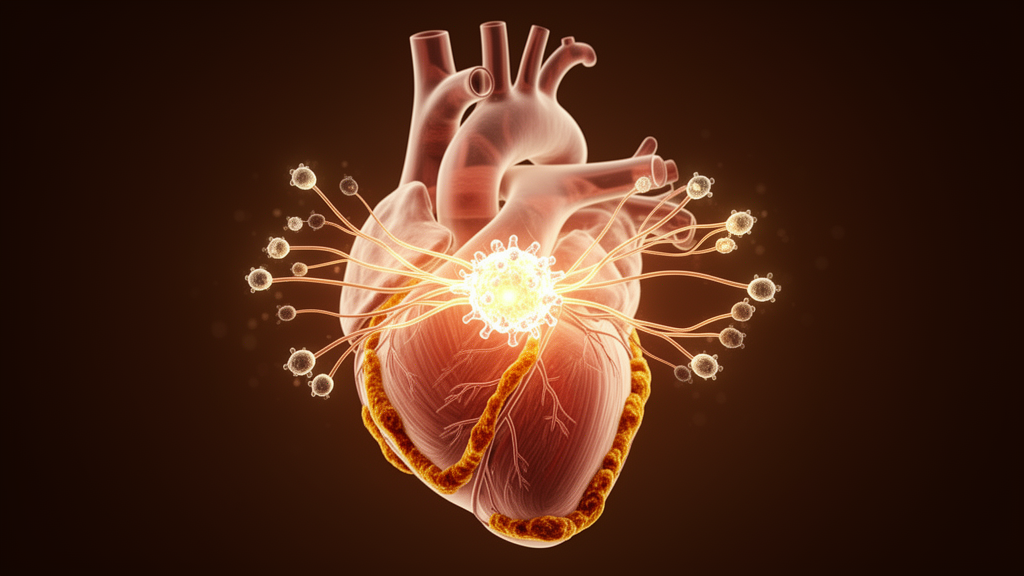
Diabetes appears to strip the heart of one of its most powerful built-in defenses against reperfusion injury, and a comprehensive review now argues that a single signaling molecule—STAT3—sits at the center of that failure. According to the review, ischemic conditioning strategies such as pre-, peri- and postconditioning, which reliably shrink infarcts in non-diabetic hearts, lose much of their effectiveness in the diabetic myocardium because diabetes-induced dysfunction of STAT3 disrupts the survivor activating factor enhancement (SAFE) pathway, one of the two major pro-survival cascades activated by conditioning stimuli. The analysis, which synthesized evidence from rodent models, large-animal studies and human myocardial experiments, positions STAT3 as a potential therapeutic entry point for a patient population that currently fares dramatically worse after heart attacks.
The clinical stakes are considerable. Diabetes affects more than 500 million adults worldwide, and patients with diabetes who suffer acute myocardial infarction sustain larger infarcts, worse ventricular function and higher mortality than their non-diabetic counterparts, with particularly adverse outcomes reported in women. A nationwide analysis of more than 2.5 million acute myocardial infarction patients found that individuals with either type 1 or type 2 diabetes experienced significantly higher in-hospital mortality and major adverse cardiovascular and cerebrovascular events. In the DIAMOND registry, diabetic patients showed higher two-year rates of major adverse cardiac events (8.0% versus 3.7%), all-cause death (3.9% versus 1.4%) and recurrent myocardial infarction (2.8% versus 1.2%) compared with non-diabetic patients. In ST-elevation myocardial infarction, mortality among diabetic patients was reported to be twice that of non-diabetic patients.
Perhaps the most striking evidence that diabetes blocks endogenous cardioprotection comes from a clinical study of 611 patients with a first acute anterior wall myocardial infarction. Prodromal angina within 24 hours before infarction—an endogenous ischemic preconditioning stimulus—significantly limited infarct size, improved recovery of left ventricular ejection fraction and reduced in-hospital mortality in non-diabetic patients. Diabetic patients derived no benefit from prodromal angina on any of these endpoints. Ex vivo experiments reinforced the conclusion: trabeculae harvested from diabetic patients failed to respond to preconditioning stimuli, while tissue from non-diabetic patients was robustly protected. Remote ischemic preconditioning has also been compromised in diabetic patients undergoing coronary artery bypass grafting, where sulfonylureas abolished its cardioprotective effects, and the humoral factor released by remote conditioning failed to protect the hearts of diabetic patients with upper-limb neuropathy, indicating that intact neural pathways are required.
Why does the diabetic heart resist these interventions? The review traces the answer to a constellation of molecular aberrations that converge on STAT3, a cytoplasmic transcription factor belonging to a seven-member family that relays signals from cell surface receptors to the nucleus. In healthy myocardium, STAT3 functions as what the authors call a bifunctional guardian. In the nucleus, it drives transcription of anti-apoptotic proteins such as Bcl-2 and Bcl-xL and the antioxidant manganese superoxide dismutase. In the mitochondria, a distinct pool called mitochondrial STAT3 preserves electron transport chain efficiency, maintains membrane potential and restrains opening of the mitochondrial permeability transition pore, the catastrophic event that commits cardiomyocytes to death during reperfusion.
Diabetes dismantles this protective architecture at multiple levels. Chronic hyperglycemia and insulin resistance create what the review describes as a hostile baseline environment of low-grade inflammation, oxidative stress and mitochondrial dysfunction. Excessive activation of the transcription factor FOXO1 in diabetic hearts physically associates with STAT3 and suppresses its activation, impairing mitophagy and mitochondrial dynamics; selective pharmacological inhibition of FOXO1 with AS1842856 restored STAT3 activation and alleviated cardiac dysfunction in preclinical work. Elevated PHLPP1, a negative regulator of AKT and STAT3 signaling, has been found in adipose and muscle tissue of obese patients, and its suppression protected diabetic mice against ischemia-reperfusion injury by restoring STAT3 activation. Protein tyrosine phosphatases such as TCPTP and PTP1B further dephosphorylate and inactivate STAT3, while advanced glycation end products acting through their receptor promote inflammatory and fibrotic responses that may desensitize STAT3-mediated protective signaling.
Oxidative stress compounds the problem through the membrane microenvironment. Reactive oxygen species downregulate caveolin-3, an essential scaffold for organizing JAK2/STAT3 signaling complexes, thereby blunting STAT3 phosphorylation in response to conditioning stimuli. Simultaneously, reactive oxygen species damage mitochondria directly, impairing electron transport chain efficiency, dissipating membrane potential, reducing ATP synthesis and sensitizing the permeability transition pore to calcium-induced opening. Damaged mitochondria then amplify reactive oxygen production through a feedforward mechanism of ROS-induced ROS release, perpetuating the oxidative burden and further suppressing STAT3 phosphorylation at both Tyr705 and Ser727.
The mechanistic case for STAT3 as a non-redundant mediator of cardioprotection rests on several converging lines of evidence. Genetic studies show that ischemic postconditioning fails to protect STAT3-deficient mice, and pharmacological data demonstrate that TNF-α preconditioning is abrogated by JAK/STAT3 inhibition with AG490 even when AKT signaling remains intact; conversely, protection is preserved when STAT3 is active regardless of the degree of AKT suppression. In a porcine model of regional ischemia-reperfusion, ischemic postconditioning activated mitochondrial STAT3, preserving complex I respiration and calcium retention capacity—effects abolished by AG490 in vivo or Stattic in vitro. Work in pigs has also revealed that remote ischemic preconditioning operates through a vago-splenic axis: vagal efferent signaling to the spleen is obligatory, since splenic denervation or splenectomy completely abolished the infarct size reduction and the associated increase in myocardial STAT3 phosphorylation.
Species differences add an important nuance. In pigs and humans, cardioprotection from remote conditioning appears to be achieved predominantly through STAT3 alone, without concurrent activation of the RISK pathway, whereas in rodents both the SAFE and RISK pathways are required for infarct size reduction. Plasma dialysates from healthy volunteers after remote ischemic preconditioning were sufficient to confer protection and activate STAT3 in recipient mouse hearts, confirming the humoral nature of the signal. Extracellular vesicles have recently been recognized as additional carriers of cardioprotective cargo, including microRNAs that promote cell survival and attenuate oxidative stress. Diabetes profoundly alters the quantity, cargo profile and functional potency of these vesicles, enriching them with pro-inflammatory microRNAs, glycated proteins and ceramides while reducing protective microRNAs such as miR-126 and miR-30, potentially rendering target cardiomyocytes less responsive to STAT3-dependent survival pathways.
The review also cautions that STAT3 regulation in diabetes is context-dependent rather than uniformly suppressed. Type 1 diabetes models, typically induced by streptozotocin, are generally associated with reduced total STAT3 expression and decreased phosphorylation, whereas type 2 diabetes models with insulin resistance and hyperinsulinemia show more variable results, with some studies reporting preserved or even enhanced STAT3 activation in early stages, possibly reflecting compensatory responses. Disease stage matters as well: early hyperglycemic phases may show transient STAT3 hyperphosphorylation that gives way to chronic desensitization as oxidative stress and inflammation persist. Nuclear and mitochondrial pools of STAT3 may be differentially affected, and rodent findings may not translate directly to humans, given that rodent mitochondria exhibit higher basal respiratory rates, greater reliance on carbohydrate oxidation and different calcium handling compared with human mitochondria. Clinical evidence from diabetic patients undergoing cardiopulmonary bypass did show significantly decreased JAK2 expression and reduced p-STAT3/STAT3 ratios accompanied by increased pro-apoptotic proteins, though the authors note that this surgical stress model differs pathophysiologically from acute ischemia-reperfusion injury.
Any therapeutic push to harness STAT3 must also reckon with its dual nature. Acute STAT3 activation is protective in conditioning paradigms, but chronic sustained activation promotes pathological cardiac hypertrophy, fibrosis and inflammation, so activation would need to be precisely calibrated. The related protein STAT5, which shares some protective functions including induction of Bcl-xL, may also participate: in one clinical study of coronary bypass patients, remote ischemic preconditioning reduced troponin I levels and increased STAT5 protein expression while no change in STAT3 expression was detected. Looking ahead, the review identifies priorities including development of STAT3 agonists or agents modulating upstream regulators such as IL-6 and gp130, exploration of combinations with glucagon-like peptide-1 receptor agonists or sodium-glucose cotransporter 2 inhibitors, systematic mapping of the largely unexplored post-translational modification landscape of STAT3 under diabetic conditions, and attention to cardiac autonomic neuropathy, since impaired vagal tone compromises mitochondrial STAT3 signaling and may confound conditioning efficacy. Restoring STAT3-dependent cardioprotection, the authors conclude, will require trial designs that stratify patients by diabetic subtype, sex, disease duration and STAT3 functional status.
Subject of Research: Role of STAT3 signaling in impaired cardioprotective ischemic conditioning in diabetic cardiomyopathy
Article Title: Targeting STAT3 to Modulate the Effectiveness of Cardioprotective Conditioning Strategies Against Myocardial Ischemia–Reperfusion Injury in Subjects With Diabetic Cardiomyopathy
Article References: Wang, C., Tian, W., Saedi, S., Cui, H., Liu, D., Chu, Q., Yang, D., & Xia, Z. (2026). Targeting STAT3 to Modulate the Effectiveness of Cardioprotective Conditioning Strategies Against Myocardial Ischemia–Reperfusion Injury in Subjects With Diabetic Cardiomyopathy. Journal of Cellular and Molecular Medicine, 30(20), Article e71418. https://doi.org/10.1111/jcmm.71418
Image Credits: AI Generated
DOI: 10.1111/jcmm.71418
Keywords: STAT3, diabetic cardiomyopathy, myocardial ischemia-reperfusion injury, ischemic conditioning, SAFE pathway, mitochondria, remote ischemic preconditioning, cardioprotection, oxidative stress, JAK-STAT signaling, diabetes, reperfusion injury
Cite Scienmag News
Drew Townsend. (October 26, 2026). STAT3 Emerges as Central Switch Behind Failed Cardioprotection in Diabetic Hearts. Scienmag. https://scienmag.com/stat3-emerges-as-central-switch-behind-failed-cardioprotection-in-diabetic-hearts/
Drew Townsend. "STAT3 Emerges as Central Switch Behind Failed Cardioprotection in Diabetic Hearts." Scienmag, 26 October 2026, https://scienmag.com/stat3-emerges-as-central-switch-behind-failed-cardioprotection-in-diabetic-hearts/. Accessed 26 October 2026.
Drew Townsend. "STAT3 Emerges as Central Switch Behind Failed Cardioprotection in Diabetic Hearts." Scienmag. October 26, 2026. https://scienmag.com/stat3-emerges-as-central-switch-behind-failed-cardioprotection-in-diabetic-hearts/


