


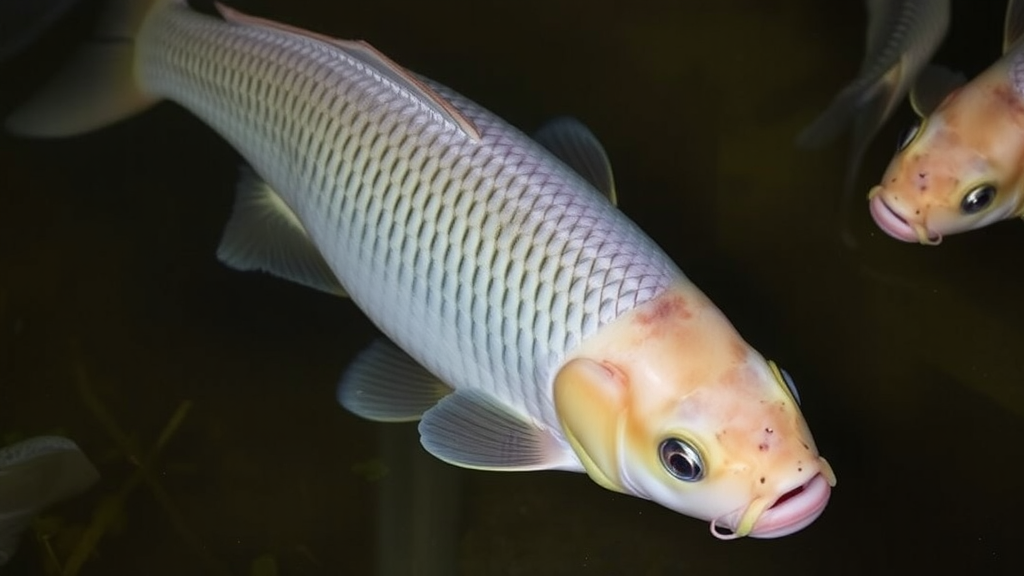
Feed is the single largest expense in aquaculture, often consuming more than half of every dollar a fish farmer spends, and a new decade-long study of India’s most prized carp suggests that the cheapest feed may be the feed a farmer never gives. Researchers working at ICAR-Central Institute of Fisheries Education in Mumbai and ICAR-Central Institute of Freshwater Aquaculture in Bhubaneswar have shown that carefully timed cycles of feed restriction and re-feeding can trigger a remarkable biological phenomenon known as compensatory growth in rohu (Labeo rohita), one of the Indian major carps that anchors freshwater aquaculture across South Asia. In fertilized earthen ponds, fish subjected to a moderate two-month restriction schedule not only caught up with their continuously fed counterparts but slightly overcompensated, reaching a growth compensation rate of 104.24 percent while consuming roughly nine percent less supplemental feed than control fish.
Compensatory growth is the accelerated phase of growth that follows a period of food deprivation when adequate nutrition is restored. During re-feeding, fish commonly exhibit hyperphagia, an elevated appetite, along with improved feed conversion efficiency and enhanced nutrient utilization, allowing them to partially or fully recover the growth lost during starvation. The magnitude of this recovery depends on the species, the severity and duration of restriction, environmental conditions, and the structure of the feeding regime itself. While the phenomenon has been documented extensively in laboratory settings across carp, tilapia, seabream, sturgeon, and crustaceans, field data from real pond ecosystems, where plankton and other natural food organisms contribute meaningfully to fish nutrition, have remained scarce. The new study, published in Blue Biotechnology, addresses that gap directly by testing cyclic restriction protocols across an entire ten-month production cycle under commercial-style pond conditions.
The experimental design was deliberately rigorous. Twelve earthen ponds of 0.04 hectares each were prepared according to the standard pre-stocking protocols of ICAR-CIFA, including drying, liming, and fertilization, and stocked with rohu fingerlings at 7,500 fish per hectare with three replicate ponds per treatment. Fertilization followed a uniform fifteen-day schedule using urea, single superphosphate, and composted cow dung to sustain natural food production identically across all ponds, ensuring that any differences among treatments could be attributed to the feeding regime rather than variations in pond productivity. Fish received a sinking pelleted diet formulated from groundnut oil cake, sesame oil cake, and rice bran, delivering 25.63 percent crude protein, 7.26 percent ether extract, and a digestible energy of 17.08 megajoules per kilogram, and were fed at 1.5 to 3.0 percent of body weight depending on size, with monthly sampling to adjust rations.
Three cyclic restriction schedules were tested against a continuously fed control over the ten-month trial. The T-1 protocol combined two months of feeding, one month of starvation, one month of re-feeding, a further month of starvation, and five months of re-feeding. T-2 extended the first starvation to two months and shortened the final re-feeding to four months, while T-3 stretched the initial deprivation to three months with only three months of re-feeding at the end. The outcomes diverged sharply. T-1 fish reached a final weight of 662.61 grams and a production of 5,494 kilograms per hectare, statistically indistinguishable from the control and actually representing approximately 4.6 percent greater weight gain and about nine percent higher fish production relative to the control, despite the lower feed input. In contrast, T-2 and T-3 achieved only partial compensation of 81.88 percent and 76.28 percent respectively, with significantly reduced final weights and yields.
Survival ranged from 83.55 to 92.11 percent and did not differ significantly among treatments, indicating that even the harshest restriction schedule remained within the physiological tolerance of the species. Apparent feed conversion ratio and protein efficiency ratio likewise showed no significant differences, though the highest specific growth rate was recorded in the moderate restriction group. Perhaps most striking were the nutrient retention results: protein productive value and lipid productive value were both significantly higher in all restricted feeding groups than in the control, signaling that restricted fish converted dietary protein and lipid into body tissue with markedly greater efficiency during re-feeding. Effect sizes for the key growth variables were enormous, with partial eta-squared values between 0.94 and 0.99, meaning the feeding regime accounted for nearly all of the variance in growth outcomes, a statistical signal the authors describe as biologically as well as statistically meaningful.
The digestive physiology data illuminate the mechanism behind the recovery surge. Protease and lipase activities in the intestinal tissue were significantly higher in the control and T-1 groups than in the longer-restriction treatments, with effect sizes exceeding 0.90. Elevated protease activity in T-1 suggests that moderate deprivation primes the digestive system for accelerated protein digestion once food returns, a well-documented adaptive response in fish recovering from fasting. Conversely, the suppression of both enzymes in T-2 and T-3 reflects the down-regulation of gastrointestinal function during prolonged starvation, when limited substrate availability forces the gut into a metabolically conservative state that cannot be instantly reversed when feeding resumes, ultimately constraining the speed and completeness of growth recovery.
Blood chemistry added a stress dimension to the picture. Haemoglobin concentrations did not differ significantly among groups, indicating that none of the feeding regimes compromised the fish’s oxygen-carrying capacity or hematological health. Blood glucose, however, told a sharper story. Levels were significantly lower in the control and T-1 fish than in T-2 and T-3, and elevated glucose is widely recognized as a physiological stress marker in fish, reflecting enhanced gluconeogenesis and the mobilization of endogenous energy reserves during extended fasting. The authors argue that blood glucose therefore serves as a sensitive indicator of nutritional stress severity under cyclic feeding regimes, and the lower glucose values in the moderate restriction group point to better metabolic adaptation and homeostatic stability.
Carcass composition shifted in revealing ways. Dry matter and crude protein were highest in the T-2 group, and crude lipid rose in all restricted treatments, with the greatest accumulation in the longest-restricted fish. This pattern is consistent with the physiology of recovery: during starvation, fish burn stored glycogen, lipid, and eventually protein to maintain essential metabolism, and during re-feeding, anabolic pathways sweep nutrients into tissue storage with unusual efficiency. Yet the increased protein and lipid deposition in T-2 and T-3 did not translate into superior production, a finding the researchers emphasize as a caution against reading improved nutrient retention alone as evidence of successful feeding management. Tissue deposition, however efficient, cannot compensate for the somatic growth lost to prolonged deprivation.
The practical implications extend well beyond the experimental ponds. Because rohu is cultured extensively in composite carp farming systems across India and beyond, a feeding schedule that maintains full productivity while trimming supplemental feed by roughly nine percent carries substantial economic weight in an industry where feed costs dominate budgets. The savings compound further when reduced feeding labor and lower nutrient loading into pond water are considered. The authors note that their apparent feed conversion ratios excluded the nutrient contribution of plankton, which was assumed equivalent across uniformly fertilized ponds, and they recommend validation in composite culture, integrated multi-trophic aquaculture, recirculating systems, and biofloc-based setups. Broader digestive enzyme profiling and gut morphology studies would also strengthen the mechanistic picture. Still, the core message is clear: in fertilized pond aquaculture, the strategy that wins is not maximum feeding but precisely timed feeding, letting a fish’s own compensatory biology do a measurable share of the work.
Subject of Research: The effects of cyclic feed restriction and re-feeding on compensatory growth, nutrient utilization, digestive enzyme activity, and physiology of Labeo rohita cultured in fertilized ponds.
Article Title: Effects of feed restriction and refeeding on compensatory growth of Labeo rohita in fertilized ponds
Article References: Mohanta, K. N., Khalasi, Y., Prakash, P., Kumari, R., & Chandan, N. K. (2026). Effects of feed restriction and refeeding on compensatory growth of Labeo rohita in fertilized ponds. Blue Biotechnology, 3(1), Article 12. https://doi.org/10.1186/s44315-026-00063-z
Image Credits: AI Generated
DOI: 10.1186/s44315-026-00063-z
Keywords: compensatory growth, Labeo rohita, feed restriction, aquaculture, pond culture, carp, nutrient utilization, digestive enzymes, refeeding, fish nutrition, feed conversion ratio, Blue Biotechnology
Cite Scienmag News
Drew Townsend. (September 20, 2026). Starve, Then Feast: Restricted Feeding Unlocks Hidden Growth in Farmed Rohu Carp. Scienmag. https://scienmag.com/starve-then-feast-restricted-feeding-unlocks-hidden-growth-in-farmed-rohu-carp/
Drew Townsend. "Starve, Then Feast: Restricted Feeding Unlocks Hidden Growth in Farmed Rohu Carp." Scienmag, 20 September 2026, https://scienmag.com/starve-then-feast-restricted-feeding-unlocks-hidden-growth-in-farmed-rohu-carp/. Accessed 5 October 2026.
Drew Townsend. "Starve, Then Feast: Restricted Feeding Unlocks Hidden Growth in Farmed Rohu Carp." Scienmag. September 20, 2026. https://scienmag.com/starve-then-feast-restricted-feeding-unlocks-hidden-growth-in-farmed-rohu-carp/


