


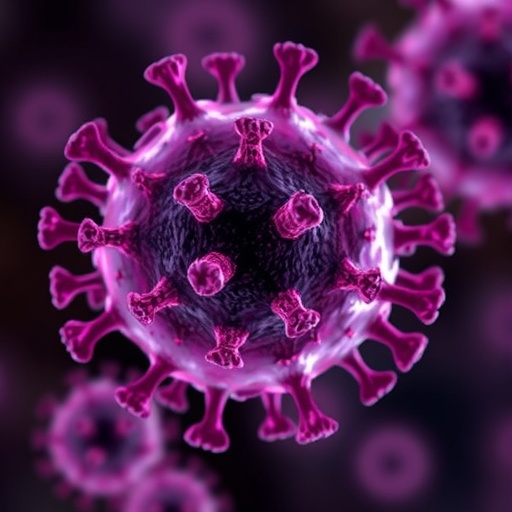
A transformative discovery at Stanford Medicine has illuminated a direct causal link between the ubiquitous Epstein-Barr virus (EBV) and systemic lupus erythematosus (SLE), a debilitating autoimmune disease better known as lupus. This breakthrough redefines our understanding of lupus pathogenesis, revealing how a latent viral infection commandeers the immune system’s own cells to attack healthy tissue.
EBV infects approximately 95% of adults worldwide, establishing a lifelong, latent presence mainly within B cells, a subset of immune cells instrumental in antibody production and antigen presentation. While most hosts harbor the virus symptom-free, this study demonstrates how EBV-infected B cells can be reprogrammed to become rogue agents that inflame and direct an autoimmune onslaught against the body’s own nuclear components—an attack hallmark of lupus.
Published in the November issue of Science Translational Medicine, the research spearheaded by immunologist William Robinson, MD, PhD, and his team employed cutting-edge sequencing technologies to unravel how tiny fractions of EBV-infected B cells—less than one in ten thousand in healthy carriers—are vastly amplified to roughly one in 400 in lupus patients. This 25-fold increase remarkably correlates with the intensification of autoimmunity.
A central molecular discovery is the role of EBNA2, an EBV-encoded transcription factor expressed intermittently by these infected B cells. EBNA2 orchestrates a sweeping genetic reprogramming within its host cell, activating multiple human genes, including other transcription factors that drive pro-inflammatory states. This gene network rewires the immune profile of the infected B cell, converting it into a potent antigen-presenting cell that preferentially stimulates helper T cells reactive to nuclear antigens.
This escalated immune stimulation recruits a wide array of autoreactive B and T cells, igniting a self-sustaining immune cascade. Crucially, the majority of these recruited immune cells are not themselves infected with EBV, underscoring the virus’s role as a molecular switch that triggers widespread autoimmune recruitment rather than a direct infectious assault.
Lupus pathology is notorious for its heterogeneity, manifesting in multi-organ damage affecting the skin, joints, kidneys, heart, and nervous system. The newly elucidated EBV-driven mechanism provides a unifying explanation for how lupus patients’ immune systems lose tolerance to nuclear antigens, leading to the production of antinuclear antibodies that cause systemic inflammation and tissue injury.
Despite its widespread prevalence, EBV’s presence alone does not precipitate lupus, suggesting additional viral strain variations or host genetic factors modulate disease risk. The question remains why only a fraction of EBV carriers develop autoimmune disease, a puzzle that drives ongoing research into viral-host interactions and immune regulation.
The implications of this discovery are profound. Current lupus treatments mitigate symptoms but fail to cure the disease or address its root cause. The identification of EBNA2’s pivotal function opens new therapeutic avenues, including targeted disruption of this viral protein’s activity and innovative approaches like ultradeep B cell depletion, which purges circulating B cells to reset the immune system and eliminate EBV reservoirs.
Clinical trials exploring vaccines to prevent EBV infection are underway, but given that EBV establishes latency early in life, prophylactic vaccination would need to be administered in infancy to prevent subsequent autoimmune sequelae. These efforts highlight a crucial window of intervention to arrest lupus development before viral latency is established.
Moreover, the research team postulates that the EBV-driven autoreactive B cell reprogramming might extend to other autoimmune diseases such as multiple sclerosis, rheumatoid arthritis, and Crohn’s disease, where EBNA2 involvement has been hinted at, potentially revolutionizing the therapeutic landscape of autoimmunity.
The multidisciplinary collaboration spans esteemed institutions including the U.S. Department of Veterans Affairs Medical Center, University of Massachusetts School of Medicine, University of Oklahoma Health Sciences Center, and Rockefeller University, reflecting the broad significance and impact of these findings.
This landmark study was supported by prestigious grant funding from the National Institutes of Health, the VA Palo Alto Health Care System, Lupus Research Alliance, and private family donations, underscoring the scientific and societal value attributed to unraveling viral contributions to chronic autoimmune diseases.
Stanford’s Office of Technology Licensing has already filed for patents on the innovative methodologies and discoveries arising from this work. Robinson and his colleagues are pioneering translational efforts through EBVio Inc., a biopharmaceutical company embarking on pioneering EBV-targeted lupus therapies, with the aim to transform patient outcomes radically.
As science peels back layers of complexity in autoimmune conditions, this research marks a watershed moment, unmasking a viral puppet master manipulating immune cells from within to unleash autoimmune destruction. The promise of targeting EBV in lupus heralds a new era of precise, effective interventions, offering hope to millions worldwide.
Cite Scienmag News
Kristina Jarvis. (November 12, 2025). Stanford Medicine Researchers Link Lupus to Common Virus Found in Most People. Scienmag. https://scienmag.com/stanford-medicine-researchers-link-lupus-to-common-virus-found-in-most-people/
Kristina Jarvis. "Stanford Medicine Researchers Link Lupus to Common Virus Found in Most People." Scienmag, 12 November 2025, https://scienmag.com/stanford-medicine-researchers-link-lupus-to-common-virus-found-in-most-people/. Accessed 3 September 2026.
Kristina Jarvis. "Stanford Medicine Researchers Link Lupus to Common Virus Found in Most People." Scienmag. November 12, 2025. https://scienmag.com/stanford-medicine-researchers-link-lupus-to-common-virus-found-in-most-people/


