


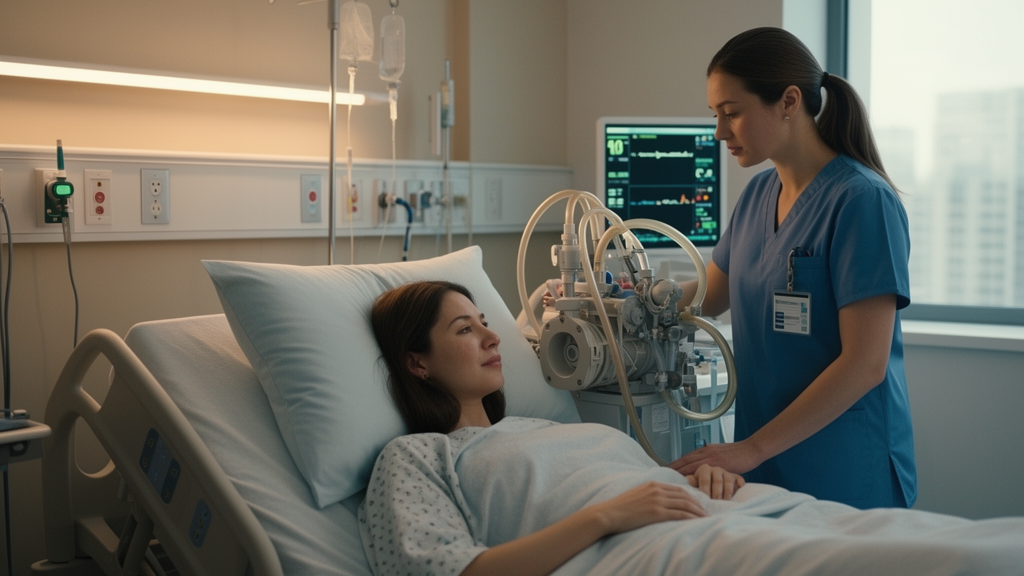
A single detailed case report published in Frontiers in Cardiovascular Medicine describes how a 39-year-old woman with end-stage dilated cardiomyopathy survived a cascade of life-threatening events, including cardiogenic shock, cardiac arrest, and multiple organ dysfunction, and ultimately left the hospital with a durable left ventricular assist device. The report, authored by a team at Shanxi Cardiovascular Hospital in Taiyuan, China, and published on 27 October 2026, places less emphasis on the surgical and pharmacological interventions themselves and more on the nursing strategy that coordinated each transition between support technologies. The authors argue that this stage-specific, integrated nursing management was a central coordinating mechanism across a treatment course that involved an intra-aortic balloon pump, venoarterial extracorporeal membrane oxygenation, continuous renal replacement therapy, and finally implantation of a long-term mechanical circulatory support device.
The patient arrived at the intensive care unit with progressive fatigue, worsening circulatory insufficiency, and signs of low cardiac output despite ongoing medical therapy for chronic heart failure. On presentation she was in cardiogenic shock with a blood pressure of 88/66 mmHg and a serum lactate level of 14 mmol/L, a value the authors describe as indicating profound tissue hypoperfusion. Serial laboratory testing after admission showed progressive renal dysfunction, oliguria, hepatic impairment, and systemic inflammatory responses, pointing to evolving multiple organ dysfunction. Chest radiography revealed severe pulmonary congestion before extracorporeal support began, and echocardiography demonstrated severe left ventricular systolic dysfunction consistent with advanced dilated cardiomyopathy. During hospitalization she developed a malignant arrhythmia that progressed to cardiac arrest, requiring immediate cardiopulmonary resuscitation.
Initial management focused on stabilizing the shock with vasoactive agents and intra-aortic balloon pump support, but her hemodynamic status continued to deteriorate despite aggressive treatment. After the cardiac arrest, the team established extracorporeal cardiopulmonary resuscitation using venoarterial ECMO to provide both circulatory and respiratory support. Once ECMO was running, systemic perfusion and oxygenation improved, yet acute kidney injury, fluid overload, and persistent multiorgan dysfunction developed during the course of treatment. Continuous renal replacement therapy was therefore initiated to optimize fluid balance, maintain electrolyte and acid-base homeostasis, and support organ recovery. With ongoing multidisciplinary management, serum lactate levels gradually decreased, renal function improved, and inflammatory markers declined. After tissue perfusion recovered and organ function stabilized, the patient was deemed suitable for durable mechanical circulatory support and successfully underwent left ventricular assist device implantation, marking the transition from temporary rescue therapy to long-term support.
The nursing management described in the report was organized around four distinct clinical stages. The first centered on hemodynamic management during ECMO support, where the primary objective was restoration of adequate tissue perfusion. Tissue perfusion was assessed continuously using a combination of serum lactate levels, mean arterial pressure, mixed venous oxygen saturation, urine output, and arterial blood gas analysis, with particular attention paid to lactate clearance as an indicator of circulatory recovery. When signs of inadequate perfusion appeared, such as persistent hyperlactatemia, reduced urine output, or declining arterial pressure, the nursing team promptly communicated these findings to the multidisciplinary team and assisted with adjustment of ECMO flow settings and vasoactive medications. Fluid status was tracked through continuous monitoring of central venous pressure, urine output, bedside ultrasonography, and pulmonary imaging, with the goal of maintaining adequate preload while avoiding the fluid overload that could worsen pulmonary edema and increase cardiac workload.
The second stage addressed the coordinated management required when ECMO and continuous renal replacement therapy ran in parallel. Nursing care focused on maintaining fluid balance, correcting electrolyte disturbances, supporting renal recovery, and minimizing treatment-related complications. Strict intake and output monitoring was performed, and ultrafiltration targets were adjusted according to hemodynamic parameters, urine output, and central venous pressure measurements. Continuous fluid removal through the renal replacement circuit allowed precise volume control while avoiding excessive preload reduction that could compromise systemic perfusion. Electrolyte concentrations, acid-base status, and metabolic parameters were followed through serial laboratory testing and arterial blood gas analysis, with abnormalities, particularly hyperkalemia and metabolic acidosis, identified promptly and corrected through adjustments to the circuit settings and replacement fluids. Anticoagulation management formed another critical component: coagulation parameters were monitored regularly to balance the competing risks of thrombosis and bleeding, and the nursing team assessed filter pressures and circuit performance to detect early signs of clotting or circuit dysfunction and ensure uninterrupted delivery of therapy.
Infection prevention ran through this entire period. Catheter insertion sites were inspected regularly, strict aseptic techniques were maintained, and body temperature, white blood cell count, and inflammatory markers were monitored closely to facilitate early detection of infectious complications. This surveillance intensified as the patient approached the third stage, the transition from temporary extracorporeal support to durable device implantation. Because the patient had endured a prolonged duration of invasive support, daily assessment of body temperature, laboratory inflammatory markers, and catheter sites was performed while strict infection-control measures were maintained to minimize perioperative infectious complications. The multidisciplinary team also carried out comprehensive assessment of coagulation status, infection control, and end-organ recovery before surgery, with the nursing team continuously monitoring renal and hepatic function, serum lactate levels, inflammatory markers, and hemodynamic parameters to evaluate readiness for the operation.
Coagulation monitoring was intensified during the transition period because anticoagulation requirements differ between ECMO and long-term ventricular assist device support. Activated clotting time, activated partial thromboplastin time, international normalized ratio, and platelet counts were assessed regularly, and anticoagulation regimens were adjusted collaboratively to reduce the risks of thrombosis and perioperative bleeding. Neurological status, respiratory function, and overall treatment tolerance were assessed continuously, and fluid management strategies were optimized to improve perioperative stability and reduce surgical risk.
The fourth stage shifted the focus from life-sustaining support to functional recovery and long-term rehabilitation after the implantation. A staged rehabilitation pathway began with passive range-of-motion exercises, bed mobility training, and position management to prevent pressure injuries, venous thromboembolism, and muscle deconditioning. As the patient’s condition stabilized, rehabilitation progressed gradually from sitting at the bedside to standing and ambulation training. Respiratory rehabilitation was integrated throughout recovery, with deep-breathing exercises, effective coughing techniques, and incentive spirometry used to improve pulmonary ventilation and reduce the risk of atelectasis and pulmonary infection. Nutritional management was individualized according to the patient’s metabolic requirements, with status monitored through serial assessment of body weight, serum albumin levels, and overall dietary intake to support wound healing and functional recovery. Psychological support was also woven into routine care: following cardiac arrest, prolonged mechanical circulatory support, and major cardiac surgery, the patient experienced substantial emotional stress, and ongoing communication, education, and counseling were incorporated to enhance treatment adherence, participation in rehabilitation, and confidence in long-term self-management.
The reported outcome was favorable. Following the implantation, hemodynamic status progressively stabilized, ECMO and intra-aortic balloon pump support were successfully withdrawn, and no major procedure-related complications occurred during the transition period. Serial laboratory assessments demonstrated gradual normalization of serum lactate levels, improvement in renal function, recovery of hepatic function, and reduction of inflammatory markers. Chest radiography showed marked resolution of pulmonary congestion compared with pre-ECMO findings, and postoperative echocardiography demonstrated improved cardiac performance and reduced ventricular dilation under device support. The patient experienced no severe catheter-related infections, major bleeding events, or other unexpected adverse events during hospitalization, and she was discharged in stable condition with satisfactory clinical improvement and favorable functional independence.
The authors are careful to frame the limits of what a single case can show. They acknowledge that the report describes one patient, limiting generalizability; that some physiological and nursing-related indicators were not collected prospectively or analyzed quantitatively across all treatment stages; that the optimal timing for initiating multimodal support, transitioning between modalities, and implementing standardized nursing pathways remains uncertain and requires validation in larger multicenter studies; and that, because of the observational nature of a case report, the independent contribution of individual nursing interventions cannot be determined. They also note explicitly that causality cannot be established from a single case. What the report does offer, they argue, is a comprehensive description of nursing management across the entire trajectory of multimodal mechanical circulatory support, from ECMO initiation and renal replacement integration to device implantation and postoperative rehabilitation, providing practical guidance for clinicians and nurses caring for similarly complex patients with refractory circulatory failure.
Subject of Research: Integrated nursing management during sequential mechanical circulatory support in a patient with end-stage dilated cardiomyopathy
Article Title: Stage-specific integrated nursing management enables successful transition to left ventricular assist device support in end-stage dilated cardiomyopathy: a case report
Article References: Wu, J., Chang, X., Lang, T., Yu, Z., Zhang, C., Xi, J., & Han, B. (2026). Stage-specific integrated nursing management enables successful transition to left ventricular assist device support in end-stage dilated cardiomyopathy: a case report. Frontiers in Cardiovascular Medicine, 13, Article 1935797. https://doi.org/10.3389/fcvm.2026.1935797
Image Credits: AI Generated
DOI: 10.3389/fcvm.2026.1935797
Keywords: dilated cardiomyopathy, cardiogenic shock, ECMO, continuous renal replacement therapy, left ventricular assist device, intra-aortic balloon pump, nursing management, mechanical circulatory support, cardiac arrest, rehabilitation, critical care, case report
Cite Scienmag News
Ophelia Keating. (October 27, 2026). Staged Nursing Care Guided a Woman’s Journey from Cardiac Arrest to Heart Pump Support. Scienmag. https://scienmag.com/staged-nursing-care-guided-a-womans-journey-from-cardiac-arrest-to-heart-pump-support/
Ophelia Keating. "Staged Nursing Care Guided a Woman’s Journey from Cardiac Arrest to Heart Pump Support." Scienmag, 27 October 2026, https://scienmag.com/staged-nursing-care-guided-a-womans-journey-from-cardiac-arrest-to-heart-pump-support/. Accessed 27 October 2026.
Ophelia Keating. "Staged Nursing Care Guided a Woman’s Journey from Cardiac Arrest to Heart Pump Support." Scienmag. October 27, 2026. https://scienmag.com/staged-nursing-care-guided-a-womans-journey-from-cardiac-arrest-to-heart-pump-support/


