


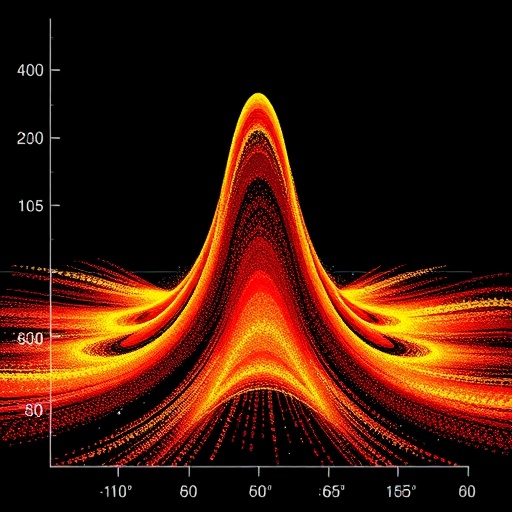
In the rapidly advancing domain of manufacturing science, the intricate behavior of residual stresses within materials has long posed challenges for researchers aiming to optimize mechanical performance and longevity. The latest groundbreaking study by Feltner and Mort, recently published in npj Advanced Manufacturing, brings an unprecedented clarity to this complex phenomenon by elucidating the spectral fabric of stochastic residual stress fields. This pioneering work offers a transformative framework that not only deepens the theoretical understanding but also paves the way for revolutionary applications in material design and process control across diverse industrial sectors.
Residual stresses, often a byproduct of manufacturing processes such as welding, forging, and additive manufacturing, can significantly influence the structural integrity and functional lifespan of components. Traditionally regarded as deterministic or uniform fields, these residual stresses are increasingly recognized as inherently stochastic, characterized by spatial variability and randomness at multiple scales. Feltner and Mort employ sophisticated spectral analysis techniques to probe these stochastic fields, unraveling the underlying frequency components that dictate their spatial distribution. Their research reveals that these stress fluctuations exhibit distinct spectral characteristics, akin to a “fabric” woven with contributions from various spatial frequencies, dramatically reshaping our conceptual model of residual stress landscapes.
Delving deeply into the spectral domain, the authors utilize advanced mathematical frameworks to decompose complex residual stress fields into constituent spectral elements. The novelty of this approach lies in its ability to capture not only the average residual stress but also the elusive spatial fluctuations that give rise to localized failure mechanisms. Their analysis demonstrates that these stochastic fluctuations follow specific probabilistic patterns and correlate strongly with process parameters and microstructural variability. Such a spectral perspective permits predictive diagnostics whereby variations in manufacturing settings can be linked directly to changes in the stress field’s spectral signature, affording unprecedented control over material properties during fabrication.
The implications of this spectral fabric model are particularly profound in additive manufacturing, a technology notorious for introducing highly variable residual stresses due to rapid thermal cycles and layer-by-layer construction. Feltner and Mort’s methodology enables the identification of dominant spectral frequencies associated with different defect types and geometric features. This granular insight transforms residual stress characterization from a static, post-process evaluation to a dynamic, in situ monitoring capability that can adaptively steer manufacturing conditions in real time. Consequently, manufacturers can mitigate deleterious stress concentrations before they manifest as cracks or distortions, enhancing reliability and reducing costly post-processing.
Fundamentally, the study situates the residual stress field within a stochastic framework, acknowledging the multiscale heterogeneity intrinsic to modern engineering materials. This approach transcends traditional deterministic models that typically ignore spatial randomness, instead embracing the complexity of real-world manufacturing outcomes. The spectral characterization serves as a bridge connecting the microstructural evolution—governed by phase transformations, grain orientations, and defects—with the macroscopic mechanical response. By overlaying spectral data with microstructural information, Feltner and Mort craft an integrative model that advances both fundamental science and practical engineering deployment.
Critically, the researchers also address the computational challenges inherent in analyzing high-dimensional stochastic fields. Leveraging cutting-edge algorithms and high-performance computing infrastructure, they efficiently process large datasets capturing the residual stress distribution across representative volume elements. The scalability of their computational approach signals its viability for industrial adoption, where processing speed and accuracy are paramount. Moreover, the mathematical rigor underpinning their spectral tensor formulations ensures robust applicability across a broad spectrum of materials, from metals and alloys to composites and polymers, further expanding the technique’s reach.
Beyond manufacturing, the spectral fabric concept of stochastic residual stresses holds potential reverberations in other fields such as structural health monitoring and failure prediction in civil engineering applications. Structures subjected to variable loads, environmental conditions, and aging processes develop residual stress patterns that may be amenable to spectral analysis. The transferability of Feltner and Mort’s methods could thus unlock new diagnostic tools, allowing engineers to assess structural integrity more sensitively and preemptively. This cross-disciplinary impact testifies to the foundational nature of their scientific contribution.
To underpin their theoretical developments, the authors employ rigorous experimental validation using state-of-the-art measurement techniques such as X-ray diffraction and neutron scattering. These experiments not only corroborate the predicted spectral distributions but also highlight the nuanced interplay between material microstructure and manufacturing-induced stresses. This synergy between theory and experiment enriches the study’s credibility and offers a roadmap for future investigations seeking to refine the spectral models with more nuanced material-specific parameters.
The study’s comprehensive analysis also extends to quantifying the influence of process variables on the spectral features of residual stress. Parameters such as cooling rate, deposition speed, and thermal gradients are systematically varied within the modeling framework, revealing their distinct fingerprints in the spectral domain. This knowledge empowers practitioners to fine-tune manufacturing processes with laser precision, optimizing product performance while minimizing defects. The clear linkage between controllable parameters and stochastic stress features underscores the practical utility of the spectral fabric paradigm.
In advancing the field, Feltner and Mort also discuss potential extensions of their spectral framework to incorporate time-dependent evolution of residual stresses. Manufacturing processes do not merely impose static stress profiles but also induce dynamic fluctuations influenced by transient conditions and material aging. Modeling such temporal dynamics within a spectral stochastic framework could open avenues for real-time predictive maintenance and adaptive process controls, augmenting the resilience and efficiency of manufacturing systems in dynamically changing environments.
The work further contemplates the integration of machine learning techniques with spectral analysis to facilitate automated identification of patterns and anomalies in residual stress fields. The vast datasets generated by high-resolution measurement and computation make human interpretation challenging but are well-suited for advanced data-driven algorithms. By embedding spectral features into learning models, future systems can achieve self-optimizing manufacturing protocols that respond autonomously to evolving stress landscapes, heralding a new era of intelligent manufacturing.
Importantly, the spectral fabric concept impels a paradigm shift in regulatory and standards frameworks governing manufacturing quality assurance. Current certification practices often rely on simplified stress assessments that overlook stochasticity and spectral heterogeneity. Incorporating these spectral insights may catalyze the development of more rigorous and predictive standards, driving industry-wide improvements in product safety, reliability, and sustainability. Such regulatory adoption would mark a milestone in translating advanced research into societal and economic benefit.
Feltner and Mort’s seminal contribution also raises compelling scientific questions concerning the fundamental origins of stochastic behavior in residual stresses. While the study establishes spectral mappings, the microphysical mechanisms generating these spectral patterns warrant further exploration. Investigating how dislocation dynamics, phase transformations, and atomic-scale interactions culminate in specific spectral signatures promises rich scientific discovery, potentially unifying disparate phenomena under a cohesive stochastic-spectral framework.
In sum, the elucidation of the spectral fabric of stochastic residual stress fields represents a quantum leap in our understanding and management of material stresses induced during manufacturing. By combining mathematical sophistication, experimental validation, and practical foresight, this research unlocks new vistas for high-performance, defect-minimized manufacturing. It embodies the confluence of theoretical depth and applied innovation, poised to reshape manufacturing science and technology profoundly, with ripple effects anticipated across engineering disciplines globally.
As industries demand ever-greater precision, efficiency, and reliability, the tools and insights born from Feltner and Mort’s spectral fabric model will be instrumental. The journey from stochastic uncertainty to spectral clarity exemplifies a compelling triumph of modern scientific inquiry, promising a new generation of materials and components engineered with unparalleled mastery over their internal stress landscapes. Their work stands as a beacon of innovation, exemplifying how rigorous analysis can translate into actionable engineering breakthroughs and herald a future where manufacturing processes are not only controlled but truly understood at every scale.
Cite Scienmag News
Denise Maddox. (May 4, 2026). Spectral Analysis of Stochastic Residual Stress Fields. Scienmag. https://scienmag.com/spectral-analysis-of-stochastic-residual-stress-fields/
Denise Maddox. "Spectral Analysis of Stochastic Residual Stress Fields." Scienmag, 4 May 2026, https://scienmag.com/spectral-analysis-of-stochastic-residual-stress-fields/. Accessed 4 September 2026.
Denise Maddox. "Spectral Analysis of Stochastic Residual Stress Fields." Scienmag. May 4, 2026. https://scienmag.com/spectral-analysis-of-stochastic-residual-stress-fields/


