


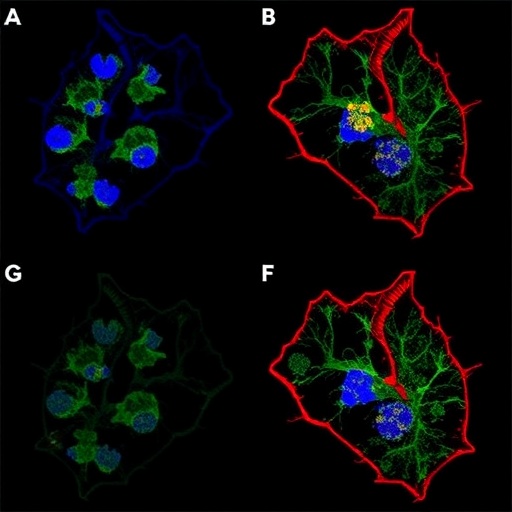
In a groundbreaking study published recently in Nature Communications, researchers have revealed the pivotal role of transforming growth factor-beta-activated kinase 1 (TAK1) in promoting inflammatory fibroblast acquisition following myocardial infarction (MI) in male mice. This discovery not only deepens our understanding of cardiac repair mechanisms but also offers promising avenues for therapeutic intervention aimed at mitigating adverse remodeling and inflammation after heart attacks.
Myocardial infarction, commonly known as a heart attack, triggers a complex cascade of cellular responses aimed at repairing the damaged heart tissue. Fibroblasts, a diverse population of connective tissue cells, are central to this process. Upon injury, fibroblasts can transform into activated phenotypes that orchestrate extracellular matrix remodeling and influence immune responses. However, excessive or prolonged inflammation driven by maladaptive fibroblast activity often exacerbates cardiac dysfunction and fibrosis, highlighting the importance of finely tuned regulatory mechanisms.
The team led by Nguyen, Stephan, Luque, and colleagues set out to unravel how TAK1, a mitogen-activated protein kinase kinase kinase (MAP3K7) involved in multiple signaling pathways, contributes to fibroblast behavior and the post-infarction cardiac milieu. Utilizing sophisticated genetic models in male mice, they were able to dissect the cell-type-specific effects and downstream signaling pathways influenced by TAK1 activity within cardiac fibroblasts.
Their findings demonstrate that TAK1 serves as a master regulator that drives the acquisition of a pro-inflammatory phenotype in fibroblasts following myocardial injury. By activating NF-κB and MAP kinase pathways, TAK1 enhances the production of inflammatory mediators, chemokines, and matrix-degrading enzymes, all of which collectively shape the post-infarction environment. The research showed that fibroblast-specific TAK1 deletion markedly attenuated inflammatory gene expression, reduced immune cell infiltration, and curtailed maladaptive remodeling.
Mechanistically, TAK1 integrates signals from multiple upstream stress and cytokine receptors, positioning it as a critical hub where inflammatory, profibrotic, and stress-related pathways converge. This integration allows fibroblasts to dynamically respond to the evolving injury landscape in the heart, adapting their phenotype to fulfill roles ranging from extracellular matrix deposition to immune modulation. By modulating TAK1 activity, researchers could selectively influence these fibroblast responses and tip the balance away from damaging inflammation toward more regenerative outcomes.
The study also highlights sex-specific nuances by focusing on male mice, acknowledging the growing recognition that cardiac repair mechanisms can differ significantly between males and females due to hormonal and genetic factors. This dimension adds complexity but also precision to potential translational strategies targeting fibroblast behavior in cardiovascular disease.
Applying cutting-edge transcriptomic and proteomic profiling, the authors mapped out the key inflammatory pathways and molecular signatures downstream of TAK1 activation in cardiac fibroblasts. These include heightened NF-κB activity, increased expression of pro-inflammatory cytokines such as IL-6 and TNF-α, and upregulation of matrix metalloproteinases that drive extracellular matrix degradation and remodeling. Targeting these effectors may represent viable therapeutic strategies to limit post-MI inflammation and fibrosis.
Notably, TAK1’s role extends beyond fibroblast activation alone: it orchestrates crosstalk between fibroblasts, immune cells, and cardiomyocytes, effectively acting as a central coordinator of the infarct healing process. This crosstalk influences scar composition, angiogenesis, and ventricular remodeling, all of which impact long-term cardiac function and heart failure risk.
The authors employed both in vivo myocardial infarction models and in vitro fibroblast cultures to validate their findings, bolstering the robustness and translational relevance of their data. Conditional knockout models allowed them to selectively ablate TAK1 in fibroblasts and dissect the consequences on inflammation and tissue repair without confounding systemic effects.
Importantly, this work raises intriguing questions about the potential for pharmacological TAK1 inhibitors to be used clinically. While TAK1 inhibitors have been explored in inflammatory and autoimmune diseases, their application in cardiac injury is emerging. Modulating TAK1 signaling selectively within the heart, and even more specifically in fibroblasts, could offer innovative therapeutic angles that minimize off-target effects.
The findings also underscore the plasticity of fibroblasts in the injured heart. Rather than a static population, fibroblasts exhibit remarkable heterogeneity and context-dependent functions. TAK1 emerges as a molecular switch that governs this plasticity, driving fibroblasts toward either reparative or pathological phenotypes depending on the cues received.
Looking ahead, further studies are needed to explore the timing and dosage considerations for targeting TAK1 in MI and to assess whether similar mechanisms operate in female hearts and human patients. Longitudinal studies will also be critical to understanding how transient versus chronic TAK1 activation shapes cardiac outcomes post-infarction.
This research opens a promising new chapter in cardiovascular biology and myocardial repair, shining a spotlight on TAK1 as a potential molecular target to fine-tune the inflammatory responses that determine heart disease progression. The breadth and depth of experimental approaches used underscore the complexity of inflammation in the infarcted heart and emphasize the need for nuanced therapeutic strategies that can modulate fibroblast function without impairing essential healing processes.
In summary, Nguyen, Stephan, Luque, and colleagues deliver crucial insights into the molecular choreography of cardiac repair by identifying TAK1 as a key driver of inflammatory fibroblast acquisition and modulatory responses following myocardial infarction in male mice. Their work is poised to inspire innovative research directions and translational approaches aimed at improving outcomes for the millions of patients affected by heart attacks worldwide.
Cite Scienmag News
Ophelia Keating. (May 26, 2026). TAK1 Controls Inflammatory Fibroblasts in Heart Attack. Scienmag. https://scienmag.com/tak1-controls-inflammatory-fibroblasts-in-heart-attack/
Ophelia Keating. "TAK1 Controls Inflammatory Fibroblasts in Heart Attack." Scienmag, 26 May 2026, https://scienmag.com/tak1-controls-inflammatory-fibroblasts-in-heart-attack/. Accessed 4 September 2026.
Ophelia Keating. "TAK1 Controls Inflammatory Fibroblasts in Heart Attack." Scienmag. May 26, 2026. https://scienmag.com/tak1-controls-inflammatory-fibroblasts-in-heart-attack/


