Nightmares are among the most stubborn and disabling symptoms of post-traumatic stress disorder, and for the police officers and firefighters who run toward emergencies…
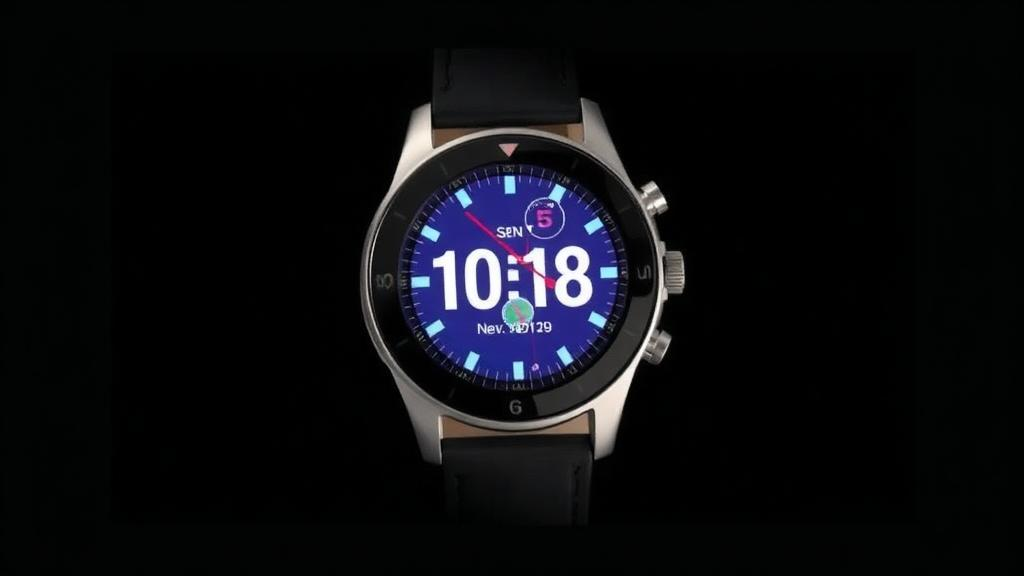
The physiological logic behind the NightWare system rests on a well-documented phenomenon: nightmares, particularly those associated with post-traumatic stress disorder, are accompanied by measurable surges in autonomic arousal. Heart rate accelerates, movement increases, and the body behaves as though the threat depicted in the dream is real. By continuously sampling heart rate, accelerometer, and gyroscope data from a wrist-worn device, the algorithm builds an individualized profile of each sleeper’s normal nocturnal physiology and then detects departures from that baseline. The intervention threshold is not fixed but adaptively recalculated from the previous 1,000 minutes of recorded sleep, which means the system gradually refines its understanding of what constitutes an abnormal arousal episode for that specific person. When the computed stress index crosses the threshold, the watch delivers escalating vibrotactile stimulation in three graded levels, beginning with brief, gentle tap patterns and intensifying only if the arousal persists. The stated goal is to interrupt the nightmare without fully waking the patient, allowing a return to less disturbed sleep rather than replacing a nightmare with a prolonged awakening.
The design of this pilot reflects its real-world origins. Rather than recruiting volunteers through advertisements and enrolling them under experimental conditions, the investigators followed patients who had already been prescribed the device in routine clinical care, then asked them to complete structured self-report assessments at baseline, day 30, and day 60. The co-primary endpoints were deliberately simple and clinically interpretable: the number of nights with nightmares per week, recorded on a zero-to-seven scale, and nightmare-related distress, rated on a five-point ordinal scale from zero to four. Both endpoints showed statistically robust improvement. Nightmare frequency fell from a mean of 5.2 nights per week to 3.6, a reduction of 1.6 nights with a 95 percent confidence interval spanning 2.7 down to 0.5, and a standardized effect size of 1.0, which in behavioral research is considered a large effect. Distress fell from 2.9 to 1.3, also a 1.6-point change but with a tighter confidence interval of 2.2 to 1.0 and an effect size of 1.9, an exceptionally large value that reflects how consistently participants moved in the same direction on this measure.
The repeated-measures analysis of variance confirmed that the decline was progressive across all three time points rather than a single before-and-after shift, with p values of 0.009 for frequency and 0.003 for distress. Perhaps more informative than the averages are the individual response patterns. Seven of the ten completers reduced how often they experienced nightmares, and nine of ten reported less distress. Critically, not a single participant worsened on either measure over the 60-day observation window. In a condition where patients often cycle through multiple failed treatments, the absence of any deterioration, even in a sample this small, is a noteworthy signal about tolerability and acceptability, though it cannot by itself establish efficacy.
Adherence data offer another window into how the device functioned outside a controlled trial. Participants wore the system a mean of 76 percent of nights, equivalent to 45.6 of the 60 survey nights, with individual usage ranging from 55 percent to a full 100 percent. For a prescription digital therapeutic that requires putting on a dedicated watch every night, this level of sustained engagement is meaningful, particularly given that the population studied works unpredictable shifts, experiences fragmented sleep, and may be skeptical of novel interventions. Self-reported sleep quality and treatment satisfaction also improved over the study period, suggesting that the benefits participants perceived extended beyond the nightmare endpoints themselves.
The choice of first responders as the study population deserves emphasis. These are individuals whose occupational exposure to potentially traumatic events is not incidental but structural, woven into the routine of their work. A systematic review and meta-regression has estimated the worldwide current prevalence of PTSD among rescue workers at approximately 10 percent, several-fold higher than in the general population. Cross-sectional data from 242 active-duty first responders across the United States found that more than half reported trauma-related nightmare distress within the past week, 23.2 percent reported clinically significant distress, more than a third screened positive for provisional insomnia, and 23.1 percent for provisional PTSD. Those same participants reported a mean of roughly 12 lifetime traumatic event types, dominated by death-threat traumas such as sudden violent death, a profile that mirrors the realities of public safety work.
One finding from that broader literature is particularly relevant to why nightmares matter as a treatment target rather than merely a symptom to monitor. Trauma-related nightmares and hyperarousal symptoms were independently associated with fear of sleep, a fear of being vulnerable while sleeping, even after adjusting for remaining PTSD symptoms, insomnia, sex, and years of service. This suggests nightmares are not simply a passive marker of overall distress but may actively drive maladaptive sleep-avoidance behaviors that perpetuate insomnia and compound occupational impairment. In other words, reducing nightmare frequency and intensity could interrupt a self-reinforcing cycle in which the anticipation of nightmares makes sleep itself threatening, which in turn worsens the sleep deprivation that exacerbates PTSD symptoms.
The stakes extend beyond sleep quality. Frequent nightmares have been identified as an independent predictor of suicide: in a large prospective general-population cohort, frequent nightmares were associated with roughly twice the risk of death by suicide, an association that persisted after adjustment for other factors. Among 1,027 current and retired firefighters, career prevalence of suicidal ideation reached 46.8 percent and suicide attempts 15.5 percent, far exceeding general-population lifetime rates. Screening studies suggest 17 to 22 percent of urban firefighters meet criteria for clinically significant posttraumatic stress symptoms, a figure that likely exceeds diagnosed prevalence because of a culture of stigma that delays help-seeking. It must be stated plainly that the present pilot did not assess suicidality and makes no claim that the intervention reduces suicide risk; this literature is cited only to explain why nightmare reduction is a clinically meaningful objective in this population.
Existing treatments for nightmare disorder leave substantial gaps that a wearable approach is positioned to address. Imagery rehearsal therapy, the first-line behavioral treatment recommended by the American Academy of Sleep Medicine, involves rehearsing rewritten versions of recurring nightmares while awake, but qualified providers are scarce and a substantial proportion of patients cannot or will not engage in the therapy. Prazosin, an alpha-adrenergic antagonist long used off-label for PTSD-related nightmares, failed to separate from placebo on sleep quality or distressing dreams in the largest and most rigorous multicenter trial conducted to date, tempering enthusiasm for its routine use. For first responders specifically, occupational and fitness-for-duty considerations can further limit the use of centrally acting medications, since sedating or cognitively impairing drugs may conflict with carrying a firearm, driving an emergency vehicle, or making split-second decisions on duty. A non-pharmacologic, peripherally acting intervention that works during sleep without producing morning grogginess therefore occupies a genuinely unmet niche.
The regulatory pathway matters as well. NightWare was authorized by the U.S. Food and Drug Administration through the De Novo pathway in 2020 for the reduction of sleep disturbance related to nightmares in adults with nightmare disorder or PTSD-associated nightmares. The system consists of a pre-provisioned Apple Watch and paired iPhone prescribed as a dedicated therapeutic kit, which means it arrives configured for clinical use rather than requiring patients to supply their own hardware or navigate consumer setup. This prescription-only model distinguishes it from consumer wellness wearables and places it within a growing category of digital therapeutics that undergo regulatory review, though the evidentiary standards for such devices remain an evolving area of debate in the field.
Several limitations temper the enthusiasm warranted by these results, and the authors themselves characterize the findings as hypothesis-generating. The sample of ten completers is small enough that individual variation could substantially influence the group means, and the open-label design, in which participants knew they were receiving an active intervention and knew the study’s purpose, leaves open the possibility of expectancy effects and placebo response, both of which are well documented in sleep and psychiatric research. The reliance on self-report rather than validated instruments or objective measures such as polysomnography further limits the strength of the conclusions, as does the absence of a control group. Natural fluctuation in nightmare frequency over time, regression to the mean in patients selected at a particularly symptomatic moment, and the structured attention of repeated assessments could each contribute to apparent improvement. The 91 percent completion rate, while encouraging, also reflects a self-selected group willing to continue using the device, raising the possibility that less satisfied users dropped out.
What the pilot does establish is feasibility and a signal worth pursuing. The effect sizes observed, particularly the 1.9 for distress, are large enough that they would be difficult to attribute entirely to measurement artifacts, and the consistency of improvement across participants, endpoints, and time points lends credibility to the pattern. The real-world recruitment model, drawing from routine clinical care rather than a research registry, also offers a preview of how the intervention performs under ordinary prescribing conditions, which is often where promising treatments encounter their greatest practical challenges. Controlled studies with validated instruments, larger samples, and longer follow-up periods are the logical next step, and the authors explicitly call for them. If those trials confirm what this pilot suggests, first responders, a population that has historically been under-represented in nightmare-treatment research despite carrying a disproportionate share of the trauma burden, would gain a treatment option that works with their physiology rather than against their occupational constraints.
Broader implications extend to how digital therapeutics may reshape the treatment landscape for trauma-related sleep disorders more generally. Continuous physiological monitoring during sleep, paired with adaptive algorithms that personalize intervention thresholds, represents a fundamentally different approach from once-daily medications or weekly therapy sessions. Whether this paradigm delivers durable benefit, how it performs across diverse populations beyond first responders, and how it integrates with existing evidence-based treatments such as imagery rehearsal therapy and trauma-focused psychotherapy remain open questions. The present study, limited as it is, contributes a data point from a population whose sleep disturbances have too often been studied only in military veterans, and it demonstrates that prescription wearables can achieve meaningful engagement in a group whose schedules, stress levels, and occupational culture pose real barriers to conventional care.
Subject of Research: A wearable haptic-feedback device for reducing nightmare frequency and distress in first responders with PTSD
Article Title: Real-world reduction in nightmare frequency and distress among San Francisco first responders treated with a prescription wearable device: a 60-day open-label pilot
Article References: Real-world reduction in nightmare frequency and distress among San Francisco first responders treated with a prescription wearable device: a 60-day open-label pilot. (n.d.). https://doi.org/10.3389/frsle.2026.1941077
Image Credits: AI Generated
DOI: 10.3389/frsle.2026.1941077
Keywords: nightmares, PTSD, first responders, wearable device, NightWare, sleep quality, digital therapeutic, haptic feedback, pilot study, nightmare disorder, vibrotactile stimulation, open-label trial
Cite Scienmag News
Glenn Wilkins. (October 16, 2026). Smartwatch Vibrations Curb Nightmares in San Francisco First Responders, Pilot Shows. Scienmag. https://scienmag.com/smartwatch-vibrations-curb-nightmares-in-san-francisco-first-responders-pilot-shows/
Glenn Wilkins. "Smartwatch Vibrations Curb Nightmares in San Francisco First Responders, Pilot Shows." Scienmag, 16 October 2026, https://scienmag.com/smartwatch-vibrations-curb-nightmares-in-san-francisco-first-responders-pilot-shows/. Accessed 16 October 2026.
Glenn Wilkins. "Smartwatch Vibrations Curb Nightmares in San Francisco First Responders, Pilot Shows." Scienmag. October 16, 2026. https://scienmag.com/smartwatch-vibrations-curb-nightmares-in-san-francisco-first-responders-pilot-shows/