


…
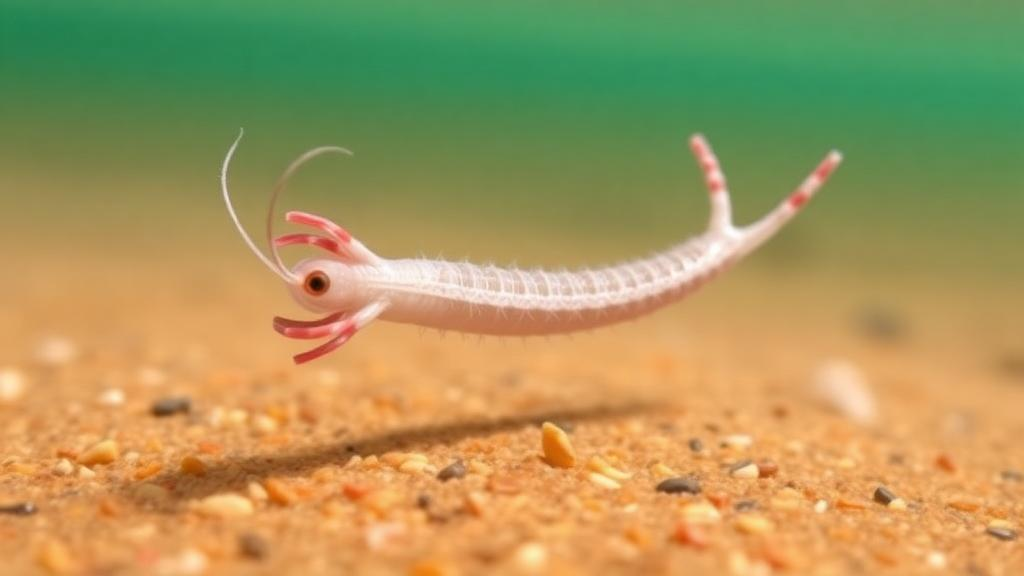
The anchor worm Lernaea cf. cyprinacea belongs to a group of parasitic copepods whose adult females abandon the free-swimming habits typical of most crustaceans and instead embed themselves permanently in host tissue. Once a fertilized female settles on a fish, her anterior end transforms into the characteristic anchor-like holdfast that penetrates the skin and muscles, while her body elongates into the worm-like form visible to the naked eye. This fixed mode of life explains why the parasites observed in the Naujan white goby were concentrated on fins and other regions where the anchor can grip firmly: the dorsal and pectoral fins offer both a physical substrate for attachment and access to well-vascularized tissue that supports feeding on blood and tissue fluids. The observation that gill and opercular attachments increased during the wet season fits this biology, since these sheltered, richly supplied sites provide protection from currents and abrasion that free-floating debris and turbulent water would otherwise impose on exposed parasites.
The life cycle of Lernaea involves several free-living nauplius and copepodid stages before the infective copepodid locates a host, and development from egg to adult is strongly temperature-dependent. In temperate systems, outbreaks are classically associated with warm summer months, when generation times shorten and parasite populations can multiply rapidly. The seasonal pattern documented in Naujan Lake, with prevalence and abundance peaking in May and June during the warmest ambient temperatures and declining through the cooler months from October to February, is consistent with this temperature-driven development. What makes the Philippine case notable is that infections never disappeared entirely at any point in the year. Tropical lakes lack the pronounced winter bottlenecks that suppress Lernaea populations in higher latitudes, so the parasite persists continuously and simply fluctuates in intensity. For any aquaculture initiative based on this species, year-round presence means that biosecurity cannot be relaxed during any season, only adjusted in degree.
The finding that larger fish carried higher parasite burdens aligns with well-established patterns in parasite ecology. Larger hosts present more surface area for colonization, have lived longer and therefore had more opportunities for exposure, and often experience physiological changes associated with maturation, such as increased mucus production, altered behavior, and greater movement through habitats where infective copepodids occur. The size-based pattern also has practical consequences for broodstock selection. Because broodstock programs typically favor large, sexually mature individuals, the very fish most attractive for culture development are also those most likely to introduce Lernaea into hatchery facilities. The recommendation to collect fish smaller than 10 cm during cooler months directly exploits both the size-dependence and seasonality of infection, targeting the life stage with the lowest parasite loads at the time of year when transmission pressure is weakest.
The distinction between prevalence, mean intensity, and mean abundance matters for interpreting the epidemiology. Prevalence describes the fraction of the fish community infected, mean intensity describes the average burden among infected individuals only, and mean abundance averages parasite numbers across all fish examined, infected or not. A population can show low prevalence but high intensity if parasites aggregate in a minority of hosts, a pattern common in many host–parasite systems where a small proportion of individuals carries the majority of parasites. Mean crowding, which was also computed in this study, quantifies this aggregation by estimating how many parasites the average parasite experiences in its host, effectively measuring whether infections cluster within particular fish. Aggregated distributions have management implications, because targeted removal of heavily infected individuals can disproportionately reduce the parasite population available to infect others.
The length–weight relationship provides a window into how parasitism interacts with growth. In fish biology, the exponent b in the equation W = aL^b summarizes how weight scales with length: values near 3 indicate that the fish maintains proportional body shape as it grows, while values below 3 indicate that the fish becomes more elongate or slender as length increases. Both infected and uninfected Naujan white goby showed negative allometric growth, meaning b was below 3 in both groups. This suggests that the slender, elongated body form typical of gobies is expressed regardless of infection status, and that the parasite did not fundamentally alter the growth trajectory of the population as a whole. However, infected individuals showed significant variation in weight relative to length, indicating that infection introduces variability into body condition rather than a uniform shift. Some infected fish may compensate for parasite burdens through increased feeding, while others suffer energetic drains from tissue damage, inflammation, and the metabolic cost of immune responses, producing a wider spread of condition among infected hosts.
Fulton’s condition factor, which expresses weight relative to length cubed, serves as a proxy for nutritional status and overall well-being. Changes in condition among infected fish can arise through several pathways. The anchor of Lernaea damages skin, fin, and muscle tissue at the attachment site, creating wounds that can ulcerate and become colonized by secondary bacterial or fungal pathogens. Feeding on blood and tissue fluids imposes a direct energetic cost. Chronic irritation may alter swimming behavior and foraging efficiency. In gills and opercular regions, attachment can impair respiratory function, compounding stress. The study’s suggestion that condition changes may also be linked to environmental stress and the host’s reproductive activity reflects the reality that wild fish juggle multiple energetic demands simultaneously; parasitism is one pressure among many, and its effects on condition may be most visible when reproduction or unfavorable environmental conditions already strain the energy budget.
The methodological caution surrounding species identification deserves emphasis. The genus Lernaea contains numerous morphologically similar species, and the anchor structures of adult females exhibit considerable plasticity influenced by host species, attachment site, and environmental conditions. Traditional taxonomy based on anchor morphology alone has therefore proven unreliable for distinguishing closely related species, and molecular approaches such as DNA barcoding are increasingly recognized as necessary for confident identification. The authors’ decision to designate their specimens as Lernaea cf. cyprinacea, with the abbreviation cf. signaling an uncertain but close affinity to the named species, reflects this taxonomic reality. This has broader implications for the field: many historical reports of L. cyprinacea from tropical Asia may actually involve cryptic or misidentified species, meaning the true diversity and host specificity of anchor worms in the region remain undercharacterized. Molecular confirmation of the Naujan Lake specimens would clarify whether the parasite infecting the white goby is truly the cosmopolitan L. cyprinacea or a related regional species.
The sampling design strengthens the reliability of the findings. Collecting fish monthly over a full annual cycle, with standardized effort of at least 50 fish per month and roughly 500 baited traps deployed per event, provides the temporal resolution needed to detect seasonal patterns rather than snapshots. The use of traditional fish traps, or bubo, baited with chopped coconut meat, sampled the same fishing ground on the western side of the lake throughout the study, and georeferencing of six sampling points documented the spatial extent of deployment. Pooling data across points was justified because the area represents continuous habitat with similar characteristics. Sampling under a permit from the Bureau of Fisheries and Aquatic Resources for the MIMAROPA region ensured regulatory compliance. This combination of local fishing practice and formal epidemiological protocol illustrates how collaboration with small-scale fishers can generate scientifically rigorous data on wild fish health.
The broader significance of this work lies in its contribution to a growing recognition that parasite baseline data must precede aquaculture development rather than follow it. When wild broodstock are moved into captivity, parasites acquired in nature can establish in culture systems where host densities are higher and conditions may favor transmission, turning a subclinical wild infection into an economically damaging outbreak. Prior work had already documented Lernaea infection in captive G. aureus originating from Naujan Lake, with evidence that infection was acquired before capture, and the present year-round assessment confirms that the wild population maintains continuous transmission. For a species being developed as a candidate for freshwater aquaculture in the Philippines, knowing the seasonal rhythm of infection, the anatomical sites of attachment, and the size classes at greatest risk provides the foundation for quarantine protocols, screening schedules, and treatment timing. The study also represents the first year-round epidemiological assessment of a tropical wild freshwater goby population in Southeast Asia, filling a geographic gap in a literature dominated by temperate aquaculture systems and offering a template for similar assessments in other native species under consideration for culture.
Finally, the ecological context of Naujan Lake itself frames these findings. As one of the significant natural lakes in the Philippines, it supports small-scale fisheries that contribute substantially to local food security and fisher livelihoods, and the Naujan white goby is among the commonly harvested species. Parasite dynamics in such systems are shaped by the interplay of host population structure, environmental seasonality, and fishing pressure, and changes in any of these can shift infection patterns. The documented association between warmer months and higher parasite abundance suggests that ongoing climatic warming could extend or intensify transmission seasons in tropical lakes, a possibility that future monitoring should consider. Baseline data of the kind generated here, gathered before aquaculture intensification proceeds, will be essential for distinguishing natural fluctuation from emerging disease problems and for designing health management strategies appropriate to the unique conditions of tropical inland fisheries.
Subject of Research: …
Article Title: Seasonal epidemiology and host–parasite dynamics of anchor worm, Lernaea cf. cyprinacea ( Copepoda , Cyclopoida , Lernaeidae ), in wild Glossogobius aureus ( Actinopterygii , Gobiiformes , Gobiidae ), from Naujan Lake, Philippines
Article References: Guibone, E. Y., Lumayno, S. D. P., Traifalgar, R. F. M., Ferriols, V. M. E. N., & del Castillo, C. S. (2026). Seasonal epidemiology and host–parasite dynamics of anchor worm, Lernaea cf. cyprinacea (Copepoda, Cyclopoida, Lernaeidae), in wild Glossogobius aureus (Actinopterygii, Gobiiformes, Gobiidae), from Naujan Lake, Philippines. Acta Ichthyologica et Piscatoria, 56, 255-267. https://doi.org/10.3897/aiep.56.190030
Image Credits: AI Generated
Keywords: Seasonal, epidemiology, host, parasite, dynamics, anchor, worm, Lernaea, cyprinacea, Copepoda, Cyclopoida, Lernaeidae
Cite Scienmag News
Phoebe Ingram. (October 16, 2026). Anchor Worm Parasite Thrives in Warm Waters of Philippine Lake, Study Finds. Scienmag. https://scienmag.com/anchor-worm-parasite-thrives-in-warm-waters-of-philippine-lake-study-finds/
Phoebe Ingram. "Anchor Worm Parasite Thrives in Warm Waters of Philippine Lake, Study Finds." Scienmag, 16 October 2026, https://scienmag.com/anchor-worm-parasite-thrives-in-warm-waters-of-philippine-lake-study-finds/. Accessed 16 October 2026.
Phoebe Ingram. "Anchor Worm Parasite Thrives in Warm Waters of Philippine Lake, Study Finds." Scienmag. October 16, 2026. https://scienmag.com/anchor-worm-parasite-thrives-in-warm-waters-of-philippine-lake-study-finds/


