


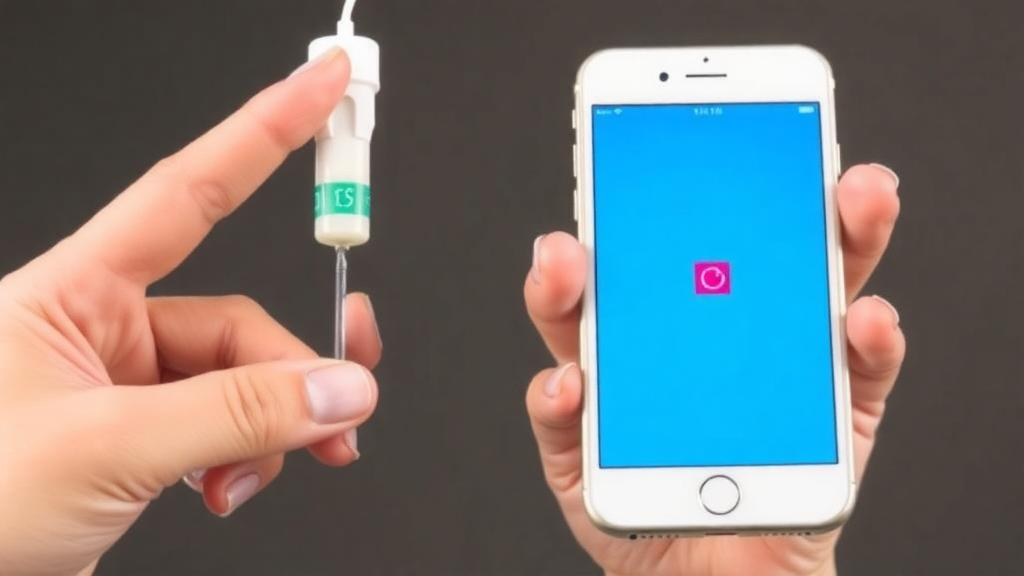
A new volume of SLAS Technology, the peer-reviewed journal of the Society for Laboratory Automation and Screening, has arrived with a collection that reads like a snapshot of where laboratory science is heading. Volume 40 brings together one review, seven original research articles, and contributions to a Special Issue on Revolutionizing Transcriptomics from Single-Cell Insights to RNA-Based Interventions. Among the highlights is a smartphone-based colorimetric glucose biosensor that leans on engineered nanomaterials to bring sensitive diagnostic testing within reach of ordinary mobile devices, a development that speaks directly to the growing global demand for affordable point-of-care monitoring.
The glucose sensing study describes a platform built around bimetallic cobalt-nickel nanoparticles supported on graphitic carbon nitride, abbreviated Co-Ni/g-C3N4. These nanoparticles act as peroxidase-mimicking nanozymes, synthetic catalysts that replicate the activity of natural peroxidase enzymes. In a classic colorimetric assay, peroxidase activity drives a color change whose intensity correlates with the concentration of an analyte such as glucose. By replacing costly natural enzymes with robust nanoscale catalysts and reading the resulting color change with a smartphone camera rather than a laboratory spectrophotometer, the researchers created a system suited to point-of-care glucose monitoring, where simplicity, low cost, and portability matter as much as analytical sensitivity.
The appeal of nanozyme-based biosensing lies in the weaknesses of the biological enzymes it replaces. Natural peroxidases are expensive to produce, fragile outside narrow ranges of temperature and pH, and prone to denaturation during storage, all of which complicate deployment in clinics, pharmacies, or homes, particularly in resource-limited settings. Bimetallic catalysts such as the cobalt-nickel system described in this volume offer greater chemical stability and tunable catalytic properties, and coupling them to graphitic carbon nitride nanosheets provides a high-surface-area support that can enhance catalytic performance. When the readout is a smartphone, the analytical instrument that once filled a benchtop becomes a device that billions of people already carry in their pockets.
Volume 40’s featured review takes on a far more data-intensive challenge: integrating the flood of molecular information generated in Crohn’s disease research. Titled AI/ML-Enabled Multi-Omics Integration of Host Genetics, Immunity, and the Gut Microbiome in Crohn’s Disease: From Diagnosis to Theranostics, the review examines how artificial intelligence and machine learning can weave together genomics, proteomics, transcriptomics, metabolomics, and microbiome data. The goal is to move beyond single-stream analyses toward biomarker discovery, improved diagnosis, and personalized treatment strategies for a disease whose complexity has resisted one-dimensional approaches. The authors are candid about the obstacles, noting the field’s need for standardized frameworks and interpretable models before such integrated pipelines can become routine clinical tools.
Several of the original research articles in the volume address the practical machinery of high-throughput science. One team reported the miniaturization of a Lumit p-ERK immunoassay, adapting a bioluminescent immunoassay to 384-well and 1,536-well formats to detect endogenous MAPK/ERK signaling in cells. The MAPK/ERK pathway is a central signaling cascade implicated in cancer and many other diseases, making it a frequent target of drug discovery campaigns. To validate the miniaturized assay, the researchers screened roughly 7,000 annotated compounds enriched for inhibitors of MEK, ERK, BRAF, and PKC, demonstrating that the compact format could support serious chemogenetic library screening without sacrificing signal quality.
Automation itself is the subject of another contribution. EasyPip is described as an equipment-agnostic, programming-free software application that transforms automated liquid handlers into efficient walk-up tools for routine plate-based pipetting. The application lets laboratory associates configure pipetting tasks across instruments from Tecan, Hamilton, and Beckman-Coulter Life Sciences without writing scripts, reducing idle instrument time and lowering the barrier to flexible laboratory automation. For labs that own multiple robotic platforms but lack dedicated programming staff, the ability to treat any liquid handler as a simple walk-up device addresses a persistent friction point in day-to-day operations.
Genomic data visualization also receives attention. XVCF, short for Exquisite Visualization of VCF Data from Genomic Experiments, is a user-friendly, graphical-interface-based tool for visualizing and summarizing Variant Call Format data and ANNOVAR-annotated genetic information, including cancer mutation plots. Because it requires no command-line expertise, XVCF aims to make variant interpretation accessible to researchers who generate sequencing data but lack bioinformatics training, a gap that often slows the translation of genomic experiments into biological insight.
Chemistry workflows feature prominently as well. A team presented an adaptable, microplate-integrated purification workflow tailored for high-throughput automated parallel amide syntheses. The approach uses custom mixed-bed ion-exchange and silica filter plates to purify reaction products directly in microplate format, delivering greater than 90 percent purity across a 24-member amide library. Amide bonds are the backbone of many small-molecule drugs, and the workflow offers a faster, solvent-efficient alternative to mini-prep HPLC, the traditional purification method that can become a bottleneck when hundreds or thousands of candidate compounds must be prepared and screened.
Disease biology rounds out the research lineup. In osteoarthritis, an integrated analysis combining transcriptome data, Mendelian randomization, immune infiltration assessment, and single-cell analysis identified CBLB and NQO2 as causal ubiquitination-related biomarkers, with pre-hypertrophic chondrocytes pinpointed as key cells and potential targets for personalized treatment. In hepatocellular carcinoma, spatial transcriptomics and single-cell analysis revealed that malignant cells expressing ALDH3A1 with high sorbitol metabolism scores drive immune evasion and localize at the tumor invasive front. That finding supports a prognostic model and points to Irofulven as a potential targeted therapy, illustrating how metabolic signatures within tumors can expose vulnerabilities that conventional bulk analyses miss.
Tying the volume together is the Special Issue on Revolutionizing Transcriptomics from Single-Cell Insights to RNA-Based Interventions, which examines gene and molecular interaction networks through high-throughput sequencing and multi-omics technologies. The issue emphasizes how integrated genomic and epigenomic approaches can advance personalized medicine, therapeutic target discovery, and biomarker identification, themes that echo throughout the rest of Volume 40. From pocket-sized biosensors to AI-driven multi-omics and RNA-based therapeutics, the collection reflects the journal’s mission of translating life sciences innovation across drug delivery, diagnostics, biomedical imaging, and precision medicine. SLAS Technology, led by Editor-in-Chief Edward Kai-Hua Chow of KYAN Technologies, reports a 2025 Impact Factor of 3.7, and the full volume is available through the journal’s website alongside active calls for papers from both SLAS Technology and its companion journal SLAS Discovery.
Subject of Research: Smartphone-based colorimetric glucose biosensing and laboratory automation research featured in SLAS Technology Volume 40
Article Title: Research featuring smartphone glucose sensing featured in SLAS Technology Vol. 40
Article References: Research featuring smartphone glucose sensing featured in SLAS Technology Vol. 40. (n.d.). Original publication
Image Credits: AI Generated
DOI: Not provided
Keywords: SLAS Technology, glucose biosensor, smartphone diagnostics, nanozymes, point-of-care testing, Crohn's disease, multi-omics, lab automation, liquid handling, transcriptomics, Mendelian randomization, hepatocellular carcinoma
Cite Scienmag News
Sylvia Mullen. (October 11, 2026). Smartphone Glucose Biosensor Headlines SLAS Technology Volume 40 on Lab Automation. Scienmag. https://scienmag.com/smartphone-glucose-biosensor-headlines-slas-technology-volume-40-on-lab-automation/
Sylvia Mullen. "Smartphone Glucose Biosensor Headlines SLAS Technology Volume 40 on Lab Automation." Scienmag, 11 October 2026, https://scienmag.com/smartphone-glucose-biosensor-headlines-slas-technology-volume-40-on-lab-automation/. Accessed 11 October 2026.
Sylvia Mullen. "Smartphone Glucose Biosensor Headlines SLAS Technology Volume 40 on Lab Automation." Scienmag. October 11, 2026. https://scienmag.com/smartphone-glucose-biosensor-headlines-slas-technology-volume-40-on-lab-automation/


