


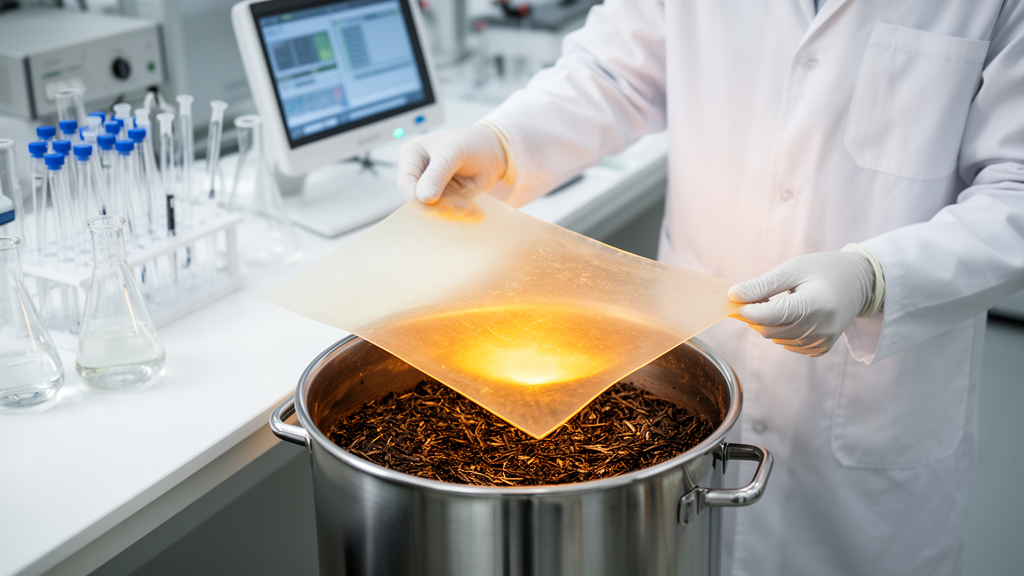
Chinese researchers report that a controlled fermentation system combining a functional polymer membrane with a compound microbial inoculant can substantially reshape the bacterial community of duck litter and reduce its load of antibiotic resistance genes and virulence factor genes. The study, published in Frontiers in Microbiology, applied shotgun metagenomics to litter from three independent commercial fermentation beds in Fujian Province and compared each bed against unfermented litter from the same batches. The findings give an increasingly popular dry-rearing technology a quantitative footing as a route to bedding with a lower burden of resistance and virulence determinants, while also exposing how strongly the outcome depends on position within the bed.
The background is the sheer scale of waterfowl production in China, the world’s largest producer, which markets more than four billion meat ducks a year and holds several hundred million laying ducks. Conventional waterfowl rearing depends on open water, with birds defecating directly into ponds and rivers and driving nutrient loading and eutrophication. As environmental regulation has tightened and access to water bodies has narrowed, producers have moved toward dry rearing, keeping ducks indoors or on yards bedded with litter that absorbs manure and keeps the floor dry. The deep-litter fermentation bed, typically built from rice husk and sawdust and inoculated with functional microorganisms that decompose manure in situ, now dominates this approach and is widely used in Guangdong, Fujian and Guangxi.
Continuous use, however, turns the bedding into a complex contaminated matrix. Feces, shed feathers, spilled feed and water accumulate over successive batches, and in warm, humid conditions the litter becomes rich in organic matter and microorganisms. Damp, moldy, biologically contaminated litter is a recognized trigger of aspergillosis, Riemerella anatipestifer infection and salmonellosis in ducks, raising both mortality and medication costs. Ecologically, the problem reflects a shift in community structure and the accumulation of harmful functional genes. In meat duck fermentation beds, the bacterial communities of fresh litter and of litter used for four and eight batches were 68.81% and 70.82% similar to one another, whereas the four- and eight-batch communities were 81.93% similar, meaning the community converges on a stable configuration as the bed ages. That stable state is dominated by spoilage organisms and opportunistic pathogens under continuous manure input.
Selection also comes from the farm itself. Antibiotics, disinfectants and the copper and zinc added to feed are largely unabsorbed in the gut and are excreted into the litter, where they exert sustained selective pressure. One survey of duck farm environments identified 823 antibiotic resistance gene subtypes across 18 classes, with floR the most abundant, followed by sul1, tetM, sul2 and tetL. A longitudinal comparison of broiler and Cherry Valley duck systems showed that the duck resistome is environment-centered: antibiotic resistance genes unique to environmental samples outnumbered those in the fecal litter fraction by about 2.6 times, and clinically relevant opportunists such as Pseudomonas aeruginosa, Escherichia coli, Acinetobacter baumannii and Staphylococcus aureus were repeatedly detected. Biocide resistance genes and virulence factor genes are widespread in litter as well, together defining the litter resistome and virulome with implications for animal health, food safety and public health.
The fermentation system tested here works as follows. Each bed measured 20 meters in length, 7 meters in width and 2 meters in height and was charged with a rice husk and sawdust mixture at a ratio of 6:4 to a loading depth of 70 centimeters. The bedding was inoculated with a compound microbial agent containing Bacillus subtilis, Bacillus licheniformis, Lactobacillus plantarum and Saccharomyces cerevisiae at a viable count of at least 1 × 10⁹ CFU per gram, applied at 0.1% by weight, roughly 1 kilogram per tonne. The material was then covered with a semi-permeable expanded polytetrafluoroethylene membrane 0.3 millimeters thick, and fermentation continued for 21 days without turning. Air was supplied through perforated pipes along the bottom in intermittent cycles of 30 minutes on and 60 minutes off, two to four cycles per day, at about 0.2 liters per minute per cubic meter of bedding.
Temperature and oxygen were monitored at each of four sampling positions with PT100 probes and electrochemical oxygen sensors recorded every 30 minutes. The highest temperature recorded was 85 °C at 60 centimeters below the surface, and the bed remained above 55 °C for 7 days, whereas the edge reached only 56 °C. Oxygen averaged 16–18% in the upper and edge layers and 10–12% in the deeper central litter. The researchers sampled four positions within each bed, center-lower, center-upper, edge-lower and edge-upper, with unfermented litter from the same three batches as the control. Each of the five groups contained three independent biological replicates, one per bed, giving 15 samples in total, and the bed served as the experimental unit for every comparison. The four positions were treated as within-bed spatial contrasts, not as independent replications of the treatment.
The community results were clear. Beta diversity separated the groups strongly: principal coordinates analysis and non-metric multidimensional scaling resolved significant differences in structure, with the first two axes accounting for 85% of the variation, and permutational multivariate analysis of variance on Bray–Curtis distances confirmed that group identity explained a significant share of the variation (R² = 0.919, pseudo-F = 28.41, P = 0.001). Two phyla, Pseudomonadota and Actinomycetota, dominated all five groups, but fermentation tilted the balance: Bacillota was enriched in all four fermented groups (P < 0.001) and Bacteroidota depleted in all four (P < 0.05). At the genus level, Thermohalobaculum, Planifilum, Paenibacillus and Bacillus were more abundant in every fermented treatment than in the control, while Streptomyces, Mycobacterium and Escherichia were depleted in all four (P < 0.001). Six of the 15 most abundant species, including Planifilum fimeticola, Thermasporomyces composti, Novibacillus thermophilus and Thermobifida fusca, were enriched in all four fermented treatments, and all are thermophilic or thermotolerant degraders consistent with active aerobic fermentation.
The resistance gene data showed a partial and selective decline. Relative to unfermented litter, the total antibiotic resistance gene burden fell in all four fermented positions, by 38.9% at edge-upper, 44.7% at edge-lower, 3.9% at center-upper and 29.7% at center-lower. Representative determinants were consistently depleted, including floR, qacEdelta1 and sul2 among the antibiotic resistance genes, and resistance to clinically important classes such as multidrug, beta-lactam, quinolone, polymyxin and rifamycin fell in every fermented group (P < 0.001). Against that trend, tet(L), fexA and bacA rose in the most active zones. The authors interpret this as structural remodeling of the resistance reservoir rather than uniform removal: in raw manure these genes sit largely on mobilizable plasmids in enterococci and Escherichia, whereas in the fermentation-enriched community, dominated by Bacillus, they are more likely chromosomal, and their enrichment can be explained by non-antibiotic selection such as high temperature and acidic metabolites. tet(L) encodes an efflux pump, so its rise reads most simply as a general stress response of the host cell.
Metal and biocide resistance responded more unevenly. The total metal resistance gene burden ranged from −19.1% to +18.4% across positions, and the total biocide resistance gene burden from −10.0% to +21.8%. Genes tied to chromium and mercury, ruvB and merA among them, were generally depleted, while copper genes copA, copP and actR rose sharply in the most active zones, likely because the dominant fermentation organisms such as Pseudomonas and Bacillus carry metal homeostasis systems as part of their basic physiology. The authors caution that the decline in merA should not be read as a reduction in methylmercury risk: merA encodes mercuric reductase, which detoxifies divalent mercury to volatile elemental mercury, whereas microbial methylmercury production is governed principally by the hgcAB gene pair in anaerobic bacteria, which was not quantified here. Most biocide resistance genes declined broadly, including those conferring resistance to quaternary ammonium compounds and triclosan, although fabV was higher in center-upper than edge-upper, possibly tracking the rise of core fermentation organisms carrying intrinsically encoded efflux genes.
Virulence factor genes followed the general decline. The total virulence gene burden fell in all four positions, by 26.5% to 39.5%, and six subtypes, htpB, clpV, katA, narH, sugC and glnA1, were less abundant in edge-upper, edge-lower and center-upper than in the control (P < 0.001). By functional category, nutritional and metabolic factors, effector delivery systems and immune modulation fell in every fermented group (P < 0.01). The authors suggest that interference with pathogen quorum sensing by the dominant fermentation organisms may be involved, and note that attenuating virulence rather than killing pathogens outright aligns with the anti-virulence concept now applied to resistant bacteria, which should in principle impose weaker selection for survival. Fermentation was not spatially uniform, however: the upper and edge layers were more active and the center-lower layer remained closest to the unfermented control, a pattern the researchers attribute to oxygen limitation in the deeper litter, since air moves more freely through the edge and upper zones.
Three constraints bear on how far these results generalize. Samples came from a single duck farm, so the conclusions need testing across farms of different scale and climate. The data are DNA-based, meaning they describe the abundance of resistance and virulence determinants and not resistance or virulence phenotypes; metagenomics cannot separate DNA from living and dead cells, nor demonstrate that gene transfer occurs. Pairing the data with metabolomics would establish how selective pressures from antibiotics and heavy metals actually change, and metatranscriptomics or culturomics would resolve the expression and host range of key resistance genes. Even so, the study concludes that compound microbial intelligent membrane fermentation enriched beneficial taxa, suppressed potential pathogens, and reduced the overall abundance of resistance and virulence determinants in the litter microbiome, though the reservoir was remodeled rather than purged. The shortfall lies in aeration rather than the inoculant, which gives producers a concrete lever: increasing the air flow through the bottom pipes to push thermophilic conditions deeper into the bed.
Subject of Research: Microbiology
Article Title: Compound microbial intelligent membrane fermentation reshapes the bacterial community and reduces antibiotic, metal, and biocide resistance genes and virulence factors in duck litter
Article References: Sun, T., Mei, G., Li, M., Mo, J., Zhang, C., Ma, Y., Zhao, J., Peng, S., Lin, F., Chen, J.-L., & Li, Z. (2026). Compound microbial intelligent membrane fermentation reshapes the bacterial community and reduces antibiotic, metal, and biocide resistance genes and virulence factors in duck litter. Frontiers in Microbiology, 17, Article 1997145. https://doi.org/10.3389/fmicb.2026.1997145
Image Credits: AI Generated
DOI: 10.3389/fmicb.2026.1997145
Keywords: antibiotic resistance genes, duck litter, fermentation bed, metagenomics, virulence factors, waterfowl production, Compound, microbial, intelligent, membrane, fermentation, reshapes
Cite Scienmag News
Juliet Wilcox. (October 26, 2026). Smart Membrane Fermentation Cuts Resistance Genes and Virulence Factors in Duck Litter. Scienmag. https://scienmag.com/smart-membrane-fermentation-cuts-resistance-genes-and-virulence-factors-in-duck-litter/
Juliet Wilcox. "Smart Membrane Fermentation Cuts Resistance Genes and Virulence Factors in Duck Litter." Scienmag, 26 October 2026, https://scienmag.com/smart-membrane-fermentation-cuts-resistance-genes-and-virulence-factors-in-duck-litter/. Accessed 26 October 2026.
Juliet Wilcox. "Smart Membrane Fermentation Cuts Resistance Genes and Virulence Factors in Duck Litter." Scienmag. October 26, 2026. https://scienmag.com/smart-membrane-fermentation-cuts-resistance-genes-and-virulence-factors-in-duck-litter/


