

Monday, October 26, 2026
Science
No Result
View All Result
  • Login
  • HOME
  • SCIENCE NEWS
  • CONTACT US
  • HOME
  • SCIENCE NEWS
  • CONTACT US
No Result
View All Result
Scienmag
No Result
View All Result
Home Science News Technology and Engineering

CHD9 3’UTR Regulates MicroRNAs to Protect Bone in Mice

October 26, 2026
in Technology and Engineering
Juliet Wilcox
By Juliet Wilcox Scienmag Editorial Profile - Human Genetics
Reading Time: 3 mins read
0
CHD9 3’UTR Regulates MicroRNAs to Protect Bone in Mice

CHD9 3'UTR Regulates MicroRNAs to Protect Bone in Mice

65
SHARES
587
VIEWS
Share on FacebookShare on Twitter
ADVERTISEMENT

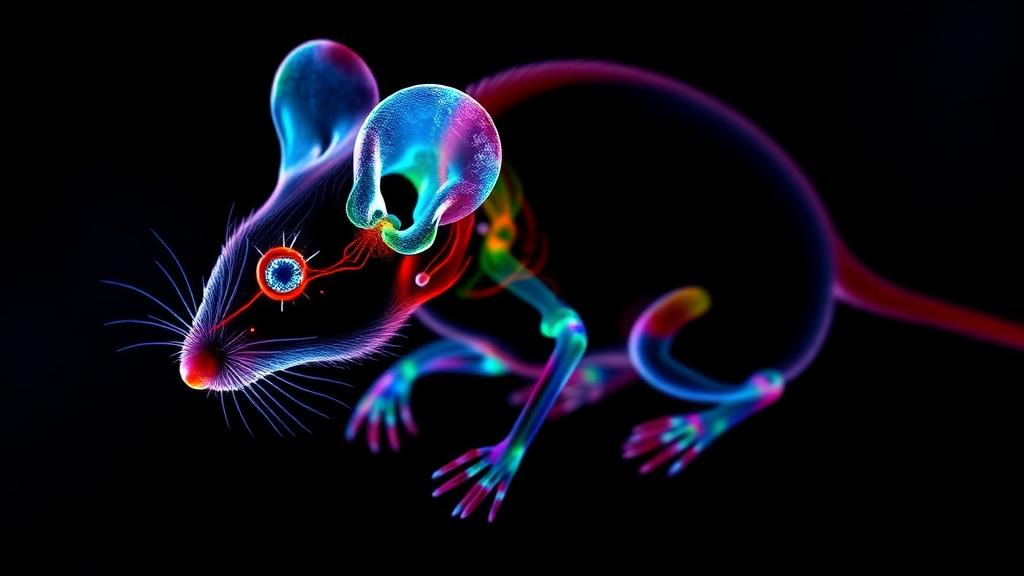
A study published in Scientific Reports identifies a molecular mechanism in which the 3'-untranslated region (3'UTR) of the chromodomain helicase DNA-binding protein 9 (CHD9) gene protects against menopause-induced osteoporosis. The research demonstrates that this specific genetic region sequesters target microRNAs, thereby regulating CHD9 expression. This mechanism was observed in preclinical models, including ovariectomized mice and mouse cell lines, providing a potential therapeutic strategy for postmenopausal osteoporosis (PMOP).

Osteoporosis is characterized by low bone mass, increased bone fragility, and elevated fracture susceptibility, affecting approximately one-third of postmenopausal women. The study notes that estrogen deficiency induces aberrant upregulation of microRNA (miRNA) expression. The 3'UTR of mRNAs can bind to and sequester target miRNAs, a process that the researchers aimed to exploit to identify target genes capable of inhibiting these miRNAs in PMOP.

The research team screened for candidate differentially expressed microRNAs by analyzing sequencing data from the whole blood and serum of PMOP patients. These candidates were subsequently validated in the serum of PMOP patients, as well as in the serum and bone tissue of ovariectomized (OVX) mice. Validation also extended to mouse osteoblasts and osteoclasts to ensure the findings were consistent across different biological contexts.

Through cross-validation, the researchers identified miR-144-5p and miR-532-5p as highly expressed in the serum of PMOP patients, the serum and bone tissue of OVX mice, and mouse osteoblasts. The common target gene for these two microRNAs was identified as CHD9. Argonaute 2 RNA immunoprecipitation (AGO2-RIP) assays were carried out to detect competing endogenous RNA (ceRNA) binding at the cellular level, supporting the interaction between the microRNAs and their target.

Luciferase reporter assays were performed to verify the specific binding sites between the candidate microRNAs and the CHD9 3'UTR. The assays confirmed that the p233-239 region within the CHD9 3'UTR is the specific binding site for miR-144-5p, while the p721-727 region is the binding site for miR-532-5p. In mouse osteoblasts, CHD9 positively regulates the expression of runt-related transcription factor 2 (RUNX2).

The study found that CHD9 achieves this by binding to the -450 to -400 region of the RUNX2 promoter. In vivo therapeutic animal experiments were implemented to test the efficacy of this mechanism. The results demonstrated that the CHD9 3'UTR ameliorates ovariectomy-induced osteoporotic phenotypes in mice.

The study highlights the role of the 3'UTR in regulating gene expression through microRNA sequestration. The findings are based on preclinical evidence from human patient samples and mouse models. While the study provides a clear mechanism for how the CHD9 3'UTR protects against osteoporosis in animal models, it does not establish clinical efficacy in humans.

Subject of Research: Molecular mechanism of CHD9 3'UTR in regulating microRNAs to protect against menopause-induced osteoporosis in preclinical models

Article Title: The 3’UTR protects bone against menopause-induced osteoporosis via regulating CHD9 expression

Article References: Zhang, Y., Huang, S., Guo, Z., Guo, X., Shen, T., & Shang, H. (2026). The 3’UTR protects bone against menopause-induced osteoporosis via regulating CHD9 expression. Scientific Reports. https://doi.org/10.1038/s41598-026-76413-z

Image Credits: AI Generated

DOI: 10.1038/s41598-026-76413-z

Keywords: osteoporosis, CHD9, 3'UTR, microRNA, miR-144-5p, miR-532-5p, RUNX2, postmenopausal, bone biology, ovariectomized mice, protects, bone

Cite Scienmag News

Juliet Wilcox. (October 26, 2026). CHD9 3’UTR Regulates MicroRNAs to Protect Bone in Mice. Scienmag. https://scienmag.com/chd9-3utr-regulates-micrornas-to-protect-bone-in-mice/

Juliet Wilcox. "CHD9 3’UTR Regulates MicroRNAs to Protect Bone in Mice." Scienmag, 26 October 2026, https://scienmag.com/chd9-3utr-regulates-micrornas-to-protect-bone-in-mice/. Accessed 26 October 2026.

Juliet Wilcox. "CHD9 3’UTR Regulates MicroRNAs to Protect Bone in Mice." Scienmag. October 26, 2026. https://scienmag.com/chd9-3utr-regulates-micrornas-to-protect-bone-in-mice/


Tags: 3'UTR3'UTR microRNA sequestrationbonebone biologybone fragility and fracture riskCHD9CHD9 gene regulationestrogen deficiency and microRNAsgene-microRNA interaction mechanismsmicroRNAmicroRNA expression in blood and serummicroRNA regulation in bone healthmicroRNA targets in bone tissuemiR-144-5pmiR-532-5posteoporosisosteoporosis preventionovariectomized miceovariectomized mouse modelspostmenopausalpostmenopausal osteoporosis therapyprotectsRUNX2therapeutic strategies for osteoporosis
Share26Tweet16
Previous Post

Four-Gene Mucosal Signature Fails to Predict Vedolizumab Response in Ulcerative Colitis

Next Post

Honey Wound Dressings Offer Coherent Antimicrobial Strategy

Related Posts

New weight function method sharpens stress intensity predictions for cracked disks
Technology and Engineering

New weight function method sharpens stress intensity predictions for cracked disks

October 26, 2026
Thirteen practical tips to improve bacteriophage genome annotation
Biology

Thirteen practical tips to improve bacteriophage genome annotation

October 26, 2026
Artificial Tongue Sensor Detects Cancer-Linked microRNA in Saliva at Femtomolar Levels
Science News

Artificial Tongue Sensor Detects Cancer-Linked microRNA in Saliva at Femtomolar Levels

October 26, 2026
Zinc-Enhanced Rice Husk Biochar Locks Cadmium in Contaminated Calcareous Soil
Technology and Engineering

Zinc-Enhanced Rice Husk Biochar Locks Cadmium in Contaminated Calcareous Soil

October 26, 2026
Bilayer conducting polymer coatings deliver chromate-free corrosion shield for steel
Technology and Engineering

Bilayer conducting polymer coatings deliver chromate-free corrosion shield for steel

October 26, 2026
Thermal Energy Storage Could Let Nuclear Plants Flex With the Grid
Technology and Engineering

Thermal Energy Storage Could Let Nuclear Plants Flex With the Grid

October 26, 2026
Next Post
Honey Wound Dressings Offer Coherent Antimicrobial Strategy

Honey Wound Dressings Offer Coherent Antimicrobial Strategy

  • Mothers who receive childcare support from maternal grandparents show more optimized

    Mothers who receive childcare support from maternal grandparents show more parental warmth, finds NTU Singapore study

    27656 shares
    Share 11059 Tweet 6912
  • University of Seville Breaks 120-Year-Old Mystery, Revises a Key Einstein Concept

    1061 shares
    Share 424 Tweet 265
  • Bee body mass, pathogens and local climate influence heat tolerance

    682 shares
    Share 273 Tweet 171
  • Researchers record first-ever images and data of a shark experiencing a boat strike

    546 shares
    Share 218 Tweet 137
  • Groundbreaking Clinical Trial Reveals Lubiprostone Enhances Kidney Function

    531 shares
    Share 212 Tweet 133
Science

Embark on a thrilling journey of discovery with Scienmag.com—your ultimate source for cutting-edge breakthroughs. Immerse yourself in a world where curiosity knows no limits and tomorrow’s possibilities become today’s reality!

RECENT NEWS

  • Smart Membrane Fermentation Cuts Resistance Genes and Virulence Factors in Duck Litter
  • Honey Wound Dressings Offer Coherent Antimicrobial Strategy
  • CHD9 3’UTR Regulates MicroRNAs to Protect Bone in Mice
  • Four-Gene Mucosal Signature Fails to Predict Vedolizumab Response in Ulcerative Colitis

Categories

  • Agriculture
  • Anthropology
  • Archaeology
  • Athmospheric
  • Biology
  • Biotechnology
  • Blog
  • Bussines
  • Cancer
  • Chemistry
  • Climate
  • Earth Science
  • Editorial Policy
  • Marine
  • Mathematics
  • Medicine
  • Pediatry
  • Policy
  • Psychology & Psychiatry
  • Science Education
  • Science News
  • Social Science
  • Space
  • Technology and Engineering

Subscribe to Blog via Email

Enter your email address to subscribe to this blog and receive notifications of new posts by email.

Join 5,151 other subscribers

© 2025 Scienmag - Science Magazine

Welcome Back!

Login to your account below

Forgotten Password?

Retrieve your password

Please enter your username or email address to reset your password.

Log In
No Result
View All Result
  • HOME
  • SCIENCE NEWS
  • CONTACT US

© 2025 Scienmag - Science Magazine

Discover more from Science

Subscribe now to keep reading and get access to the full archive.

Continue reading